Article
What should buyers know first?
Short answer: A buyer guide to defining fabric decisions before bulk production, from product role and material evidence to samples, labels, packing and repeat-order records.
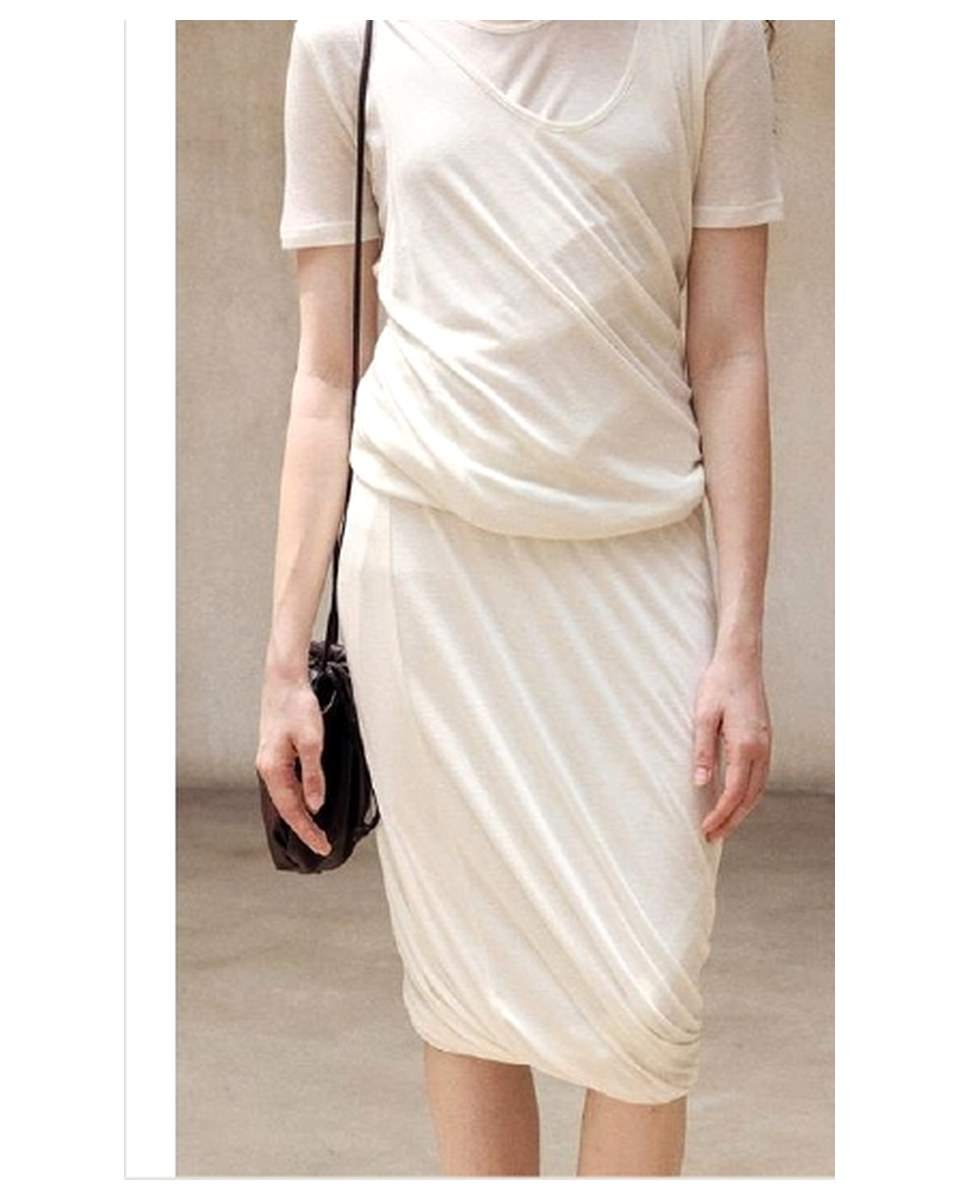
Fabric decisions before bulk production determine much more than the colour and surface of a garment. A fabric route affects how a dress hangs, how a blouse holds a collar, how a rib top recovers, how an active layer sits at the seam, how an all-over print meets a panel, and which components or packing choices still make sense. When a buyer leaves the material decision vague until bulk, the team can be forced to reopen fit, pattern, construction, decoration, label and costing assumptions at the same time.
Yinshan Fashion supports custom and private-label bulk programmes rather than unrestricted ready-stock wholesale. For a buyer, that means fabric discussion should begin with the actual product: the intended wearer and channel, garment role, reference, silhouette, sample objective, colour or print direction, components, quantity context and open questions. A material name alone is not a release instruction. Availability, commercial terms, testing, certification, claims and delivery outcomes remain programme-specific until the relevant product, evidence and approvals are confirmed.
This guide explains how a brand can make fabric decisions early without pretending every detail is known on day one. The aim is a controlled route: identify the product question, compare credible material options, use the right physical proof, record what has been accepted, and keep the next decision visible before bulk planning starts.
Which fabric decisions before bulk production affect the finished garment?
Fabric is part of the garment's construction, not a detachable purchasing line. A different base cloth can change drape, body, stretch, opacity, seam behaviour, print expression, lining interaction, pressing, handling and the relationship between the pattern and the wearer's body. It can also change which trim route is appropriate and whether a prior sample still answers the current question. A buyer who changes material after approving an early fit sample may be looking at a new product version, even when the style name has not changed.
Start by naming the job of the proposed fabric. Is it meant to create fluid movement in a dress, hold a tailored blouse shape, provide a soft homewear hand, support a close-fitting active layer, show a graphic print, create texture in a shirt, or carry a structured accessory? That purpose gives a factory useful context. It lets the team explain which input can be reviewed from a swatch and which needs an applied component proof or a constructed garment sample.
The casual-fashion category is a useful reference when a buyer is developing dresses, tops, shirts or blouses. It does not set a universal fabric specification. The buyer's own product record must define the style, material direction, fit basis, decoration, size context and sales route. The same principle applies to loungewear and active-fashion: category context can help frame questions, while the product-specific brief controls the decision.
An early decision does not mean forcing certainty. A buyer can mark a material as a preferred route, an alternative under comparison, a buyer-supplied reference, or an unresolved question. The important distinction is that everyone knows its status. This prevents a sample-room assumption from quietly becoming a bulk instruction.
How should buyers define the material question for one garment?
Write a material brief beside the garment brief. Include the style and colourway, intended wearer, channel, visual aim, expected handfeel, desired drape or body, stretch or recovery question where relevant, opacity or lining question, surface or print direction, component interaction, care context, sample purpose and decision owner. If the buyer has a swatch, supplier information or an earlier garment, name exactly what it is evidence for. If it is only inspiration, say so.
Avoid phrases that carry too many meanings. “Premium,” “soft,” “sustainable,” “stretchy” and “luxury” can express a commercial ambition, but they do not identify a material route. Turn them into a review question. A buyer may ask whether a selected fabric gives the desired fluidity at the skirt, whether a rib returns to the nominated neckline shape, whether a woven base works with the selected lining, or whether an artwork shows at the intended scale on the finished garment. A specific question produces a specific proof.
The fabrics and trims resource can organise a discussion about base cloth, lining, elastic, zip, button, tape, mesh, label, hardware and decoration. It should not be treated as a fixed materials catalogue or a promise that every input suits every design. Connect each material choice to its garment, sample version and open decision.
For a collection, use a small material map. List each garment or accessory, its product role, primary fabric route, secondary fabric or lining where relevant, key component, colour or print status, physical proof, current owner and next action. This reveals where materials can be shared deliberately and where a visual similarity hides a different construction need. It also gives a growing brand a way to limit first-order complexity without making every style identical.
How should buyers compare fabric options without comparing unrelated products?
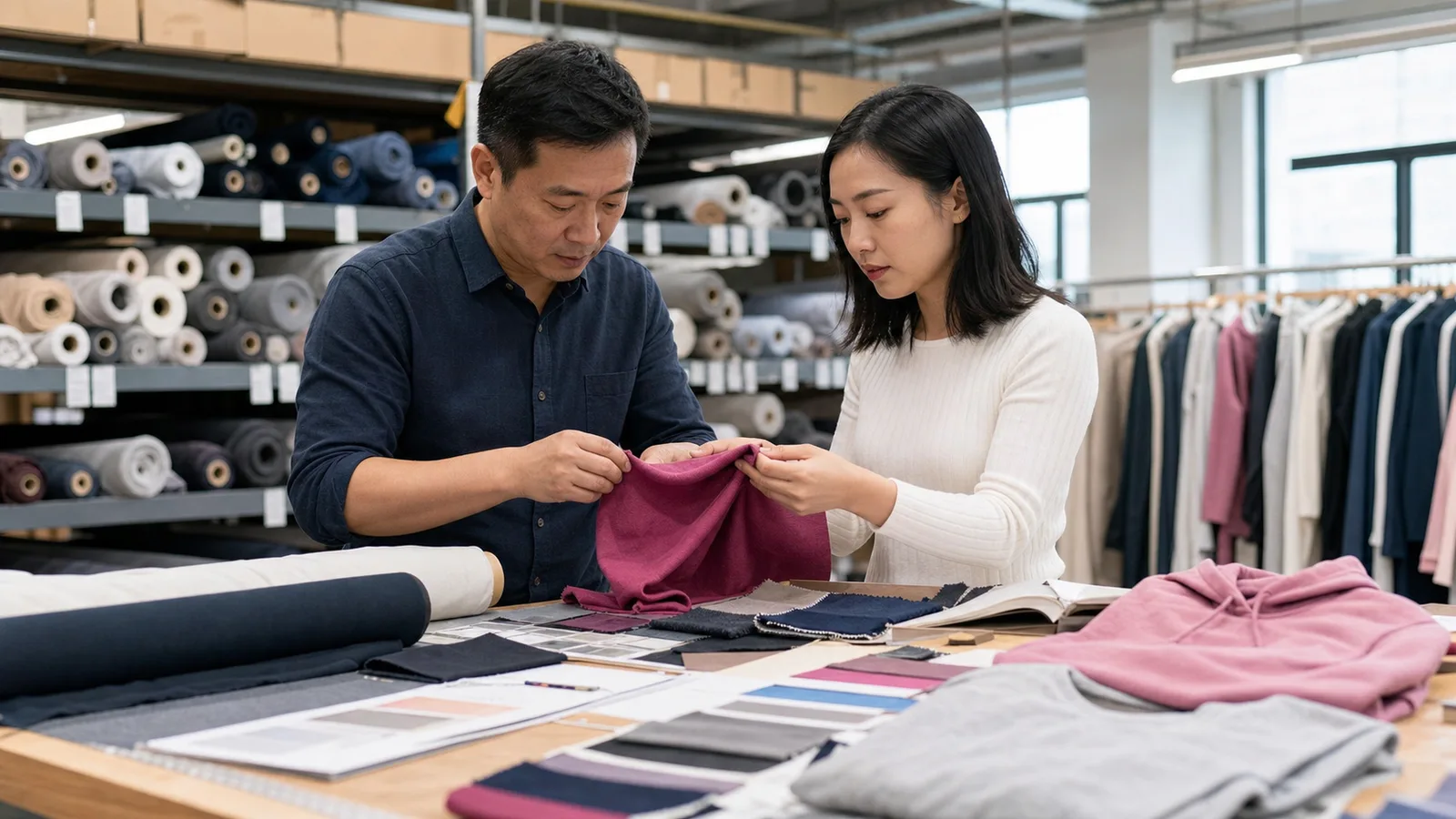
Compare candidates against the same garment question. If one supplier sees a photo of a loose dress, another sees a cut swatch, and a third receives an old sample without the intended fit, colour or lining, their proposed fabrics are not comparable. Create one dated comparison sheet that names the garment, intended use, reference, size context, visual target, components, colour or print concept and the evidence that exists for each candidate.
For each option, state what is known and what is not. A fabric heading or supplier specification may identify composition information supplied. A swatch may help review surface, weight impression, colour direction or initial hand. A garment sample can help assess the relationship between material, pattern, construction, lining and components. Do not let a single document or small cutting stand in for a result it cannot demonstrate.
Make alternatives visible. A buyer can identify a preferred route and one backup route, then say what would change if the preferred material is not confirmed for the programme. Would the silhouette need another review? Would the lining, print, closure or label route need to change? Would the brand accept a different handfeel or surface? Asking these questions early is not pessimistic. It keeps the factory from substituting a material without a defined buyer decision.
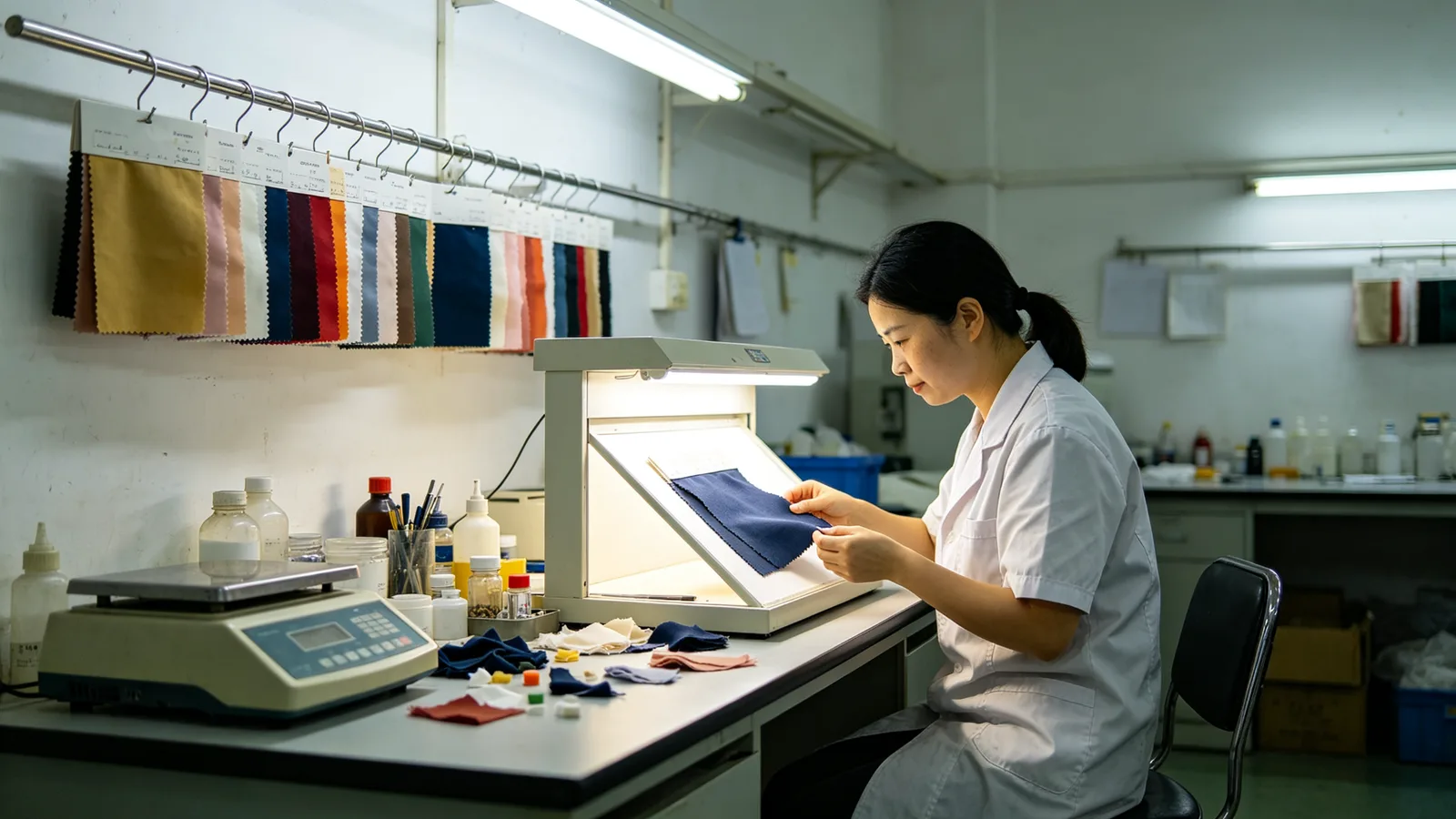
Colour should have the same status control. A digital board, reference photo and colour name may establish a direction, but they do not necessarily release a production colour. Use the appropriate lab dip, swatch, sample or other proof for the current product. For print, specify whether it is placed, all-over, engineered or limited to a component, and review the relationship with seams, panels, plackets, pockets, gathers and size changes.
What should a fabric swatch prove before a fashion sample?
A swatch is valuable because it narrows a decision. It can help a buyer assess surface, colour direction, apparent weight, initial hand, weave or knit structure, print clarity, pile, texture, stretch impression or the relationship between a base fabric and a component. It does not answer every garment question. It cannot fully demonstrate the fit of a dress, how a blouse collar sits, how a waistband behaves, how a print moves across a seam or how a lining changes the finished silhouette.
Give the swatch review one job. Record the swatch identifier, source, garment scope, version, date, reviewer, question, observation, decision and next proof. A useful note might say that the named swatch is accepted for an initial garment sample to review drape and lining interaction. It should not say “fabric approved” if the remaining product question is how the fabric performs in a constructed garment with the selected components.
Where multiple fabrics appear in one style, compare their relationship rather than reviewing them independently. An outer fabric, lining, contrast panel, rib, mesh, pocket bag and elastic can look compatible as separate pieces yet behave differently when sewn together. Ask the factory which relationship needs an applied proof. This is particularly relevant for dresses with lining, shirts with plackets and cuffs, sleepwear with piping, active garments with panels, or accessories with reinforcement and closures.
Yinshan Fashion can help buyers structure a fabric-and-sample discussion around the current product. The buyer retains responsibility for its product decisions, marketing language and final approvals. The useful factory contribution is to make the next physical question and any dependencies visible before a bulk decision is treated as settled.
How should buyers use fabric samples to review fit and construction?
Use a constructed sample when the decision depends on the relationship between material and garment. A fit review may need to assess shoulder balance, bust or waist ease, hem, sleeve, neckline, coverage, movement, drape, seam placement, lining, elastic, closure, pocket or panel relationship. A sample can also show how an artwork, embroidery, transfer or trim sits on the actual base fabric. The sample objective should identify the question that matters now, not try to certify every later production detail at once.
Attach the material route to the sample record. Name the style, colourway, sample size, pattern or measurement basis, fabric and lining identifiers, components, supplied artwork, purpose, reviewer, approval owner, feedback date and next action. If a buyer changes the fabric after reviewing fit, decide which comments remain applicable and which must reopen. A sample approved for an early material route is not automatically approved for a new one.
This discipline is important for small brands because several people may be making design, buying, merchandising and label decisions at once. A consolidated note gives the factory one controllable instruction. “Review the nominated fabric on sample two; retain the accepted neckline; compare the lining at the skirt seam; leave label placement open” is more useful than several messages saying the garment should be “softer” or “more premium.”
How do components, labels and packing depend on fabric decisions?
Fabric choices affect components and presentation. A zipper, button, elastic, binding, tape, embroidery backing, transfer, lining, label attachment or packing method may need a review against the actual material. An element that works on a stable woven can behave differently on a light knit. A decoration that reads clearly on one surface may need a different placement or proof on another. A buyer should not assume that a component approval exists outside the garment version on which it was reviewed.
Use the private-label service to frame labels, artwork, size identifiers, hangtags, product-information inputs and packing records as connected product decisions. Give every file a source, version, product scope, placement or packing route, owner, status and next proof. A garment sample can be approved for fit while the label, barcode, hangtag, fold or protective presentation still needs a different review.
Packing can also depend on the material's visual and physical presentation. The buyer can define whether the intended route uses a fold, hanger, protective material, size identifier, insert or carton instruction, but it should link that instruction to the actual style-colour-size and recipient. Do not infer retailer, destination or legal requirements from a generic product description. The responsible buyer, importer, retailer and advisers need to supply and approve the relevant market inputs.
Keep claims controlled too. If a brand is exploring a material-related statement, record the exact wording, product scope, source, evidence held, missing evidence and approval owner. Do not turn a material direction or a supplier statement into a customer-facing claim before the responsible brand has reviewed the product-specific information.
How should a factory handover show the current fabric route?
Before bulk planning, the factory needs a current record that distinguishes released decisions from open conditions. For the fabric route, it should connect the product identity, material and colour reference, lining and components, pattern or measurement basis, construction notes, sample history, artwork, labels, packing route, quantity context, buyer-defined quality priorities and release owner. It does not need to pretend every project uses the same sequence. It needs to identify the version that the next action may use.
The manufacturing overview gives a useful frame for this handover: materials, cutting, sewing, quality observations, finishing, packing and delivery preparation need to remain tied to the current product. It does not establish a fixed MOQ, price, timing, test result, certificate or shipping outcome. Those are project-specific matters that must be considered with the actual product and order details.
Ask the factory to separate confirmations, assumptions, alternatives, exclusions, dependencies and questions. This is useful when a buyer compares suppliers as well. Two early quotations or material suggestions are not directly comparable if they are based on different fabrics, construction, label packages, packing routes or quantities. A dated product brief lets the buyer see whether each response is addressing the same programme.
For repeat orders, begin with an approved record and a difference list. State what has changed in fabric, colour, lining, trim, print, size route, label, packing, recipient, quantity or quality priority. This turns a repeat into a controlled comparison rather than an assumption that an old material decision remains valid under every new condition.
How should a buyer handle a material change after sample approval?
Consider an illustrative blouse programme. The buyer approved a sample in a light woven fabric, including the collar shape, sleeve balance and appearance over the intended underlayer. Before bulk preparation, the proposed material becomes unavailable. The replacement has a similar colour and stated composition, but a different finish and usable width. The style code can remain the same for commercial purposes, yet the material record needs a new revision. A photograph showing a close colour match does not close the construction questions.
Start by holding the affected fabric release. Keep the approved sample and its specification available. Ask the supplier to identify the replacement reference, what has changed, what supporting information exists and whether the proposed bulk quantity belongs to one identifiable lot. Then ask the sample team which observations need repeating. Collar behaviour, seam appearance, opacity with the chosen underlayer, pressing response and the fit after the intended care procedure may all need attention. The actual checks follow the garment and the buyer's requirements.
The buyer should make separate decisions where the evidence supports them. It might accept the new colour direction while keeping construction and care review open. It might retain the sleeve measurement but request another look at the placket and collar. Record those decisions individually. If the replacement changes usable width, the factory should also review material consumption and the cutting plan before the buyer assumes that the earlier quantity or quotation still applies.
The release note should identify the accepted replacement and the evidence reviewed, retire the old material instruction for the affected scope, and tell the relevant teams which sample, measurement sheet and component records remain current. This example is a planning exercise, not a reported Yinshan customer outcome. Its purpose is to show how an early fabric decision stays useful when the original sourcing route changes.
How can buyers separate a material finding from an approval to continue?
A material finding needs a disposition: a documented decision about what happens to the affected material. A report saying that a roll differs from the approved reference is useful evidence, but it does not tell the cutting team whether that roll can be used. Name the roll or lot, the comparison reference, the observed difference, affected quantity where known and the person authorised to decide. Keep the affected material identifiable while the question is open.
For example, if a buyer notices a shade difference between two submitted lengths, the first question is whether they represent different lots, different finishing stages or different viewing conditions. Ask for comparable references before deciding that one submission is acceptable or defective. A phone photo can help locate the issue, but it should not silently replace the agreed physical review or measurement method. Where laboratory work is needed, define the method, sample scope and acceptance criteria with the relevant specialist.
Possible dispositions include rejecting the affected material, requesting another submission, approving a limited and clearly identified use, or revising the product route. Each has a different consequence. Acceptance for an internal component does not imply acceptance for the visible shell. Acceptance for one colourway does not release every colour. A concession should describe exactly what is accepted and where it applies, so that a later shipment or reorder does not inherit the exception by accident.
Ask the factory to acknowledge the final instruction and connect it to receiving, cutting and inspection records as appropriate. The buyer's job is to provide a usable decision. The factory's job is to explain how the relevant instruction reaches the people handling that material. The existing sample approval guide gives further detail on turning an accepted reference into a controlled bulk handover.
Which records should survive after the fabric is cut?
Keep enough evidence to explain the finished product later. The approved swatch or header, fabric identification, lot references, garment sample, current specification, release note and relevant findings answer different questions. A retained cutting may help compare appearance. The release note explains the scope of the buyer's decision. The receipt or lot record helps identify which material entered the programme. None should be expected to replace all the others.
Agree who retains each record, where it can be found and what identifier connects it to the order. Avoid relying on a single employee's inbox. If a retailer reports an issue, the team should be able to establish which product version and material lot were involved before offering an explanation. Records make investigation possible; they do not prove the cause in advance or guarantee a particular remedy.
For a repeat order, compare the newly proposed material with the retained reference and the current requirement. Separate unchanged design decisions from renewed availability, colour, construction and care questions. The fashion repeat-order planning guide supports that comparison. This article's focus remains the release of an identified material into bulk production; initial supplier discovery belongs in the fabric sourcing before sampling guide.
What should buyers check before accepting a fabric route for bulk production?
- Name the current style, colourway, intended wearer, channel, revision and sample objective.
- Identify the fabric, lining and component sources and what each supplied proof can actually answer.
- Separate a preferred material route, an alternative and any buyer-supplied reference.
- Confirm which garment question the next swatch, applied proof or sample must resolve.
- Keep pattern, fit, construction, print, trim and label decisions linked to the material version reviewed.
- Record the scope, owner, date and conditions of every acceptance.
- Link presentation and packing files to the correct style-colour-size and recipient.
- Log changes and state which prior approval must reopen after a fabric switch.
What should factories check before using a fabric route in bulk planning?
- Read the current brief and identify the controlling style, sample and material reference.
- Confirm which details are released, conditional, unavailable or still awaiting buyer input.
- Connect fabric, lining, trims, decoration, labels and packing to the same garment version.
- Identify when a swatch is sufficient and when a constructed or applied proof is needed.
- Keep buyer-defined quality priorities tied to the actual product instead of offering generic assurances.
- Ask for a clear release owner and a difference list when a previous sample or order is being reused.
Prepare a fabric release discussion with Yinshan Fashion
Send the current style reference, intended market and channel, material identifier, available swatch or sample, proposed quantity split and the decision that is still open through the Yinshan Fashion contact page. Include any difference from the previously approved sample. Ask which physical proof and buyer approval are needed before the affected material can move to the next production stage. This gives the discussion a defined product and decision, even when the final sourcing or commercial terms are still being confirmed.
How should buyers answer common fabric decisions before bulk production questions?
Why should fabric decisions happen before bulk production?
Fabric affects fit, drape, construction, components, decoration, labels and presentation. Deciding the route early allows a buyer and factory to use swatches and samples to answer the right product questions before the material becomes a bulk instruction.
Can a buyer approve fabric from a swatch only?
A swatch can support a limited decision about surface, colour direction or initial hand. If the question depends on garment fit, drape, construction, lining, print placement or components, use a constructed sample or applied proof and state exactly what it reviews.
What happens if the fabric changes after a fit sample?
Treat the change as a review trigger. Identify which previous fit, construction, component, decoration, label or packing decisions still apply and which require a new proof. Keep the change and decision owner in the product record.
How should a small fashion brand keep fabric choices manageable?
Use a material map that shows each product role, primary fabric, supporting materials, colour or print, components, proof, owner and next action. Share materials intentionally where they serve the product story, while keeping styles with different construction needs separate.
Can Yinshan Fashion help with fabric decisions before bulk production?
Yinshan Fashion can help coordinate buyer-defined fabric, fit, sample, component, private-label and factory-handover questions for a custom programme. Availability, commercial terms, testing, customer-facing language, market obligations and delivery outcomes remain specific to the confirmed product and buyer approvals.
Fabric-release control kit
Three controls that keep a material choice connected to the garment being made
Use one fabric route, one named physical proof and one current release record before a buyer treats a material choice as ready for bulk planning.
Name the garment and fabric together
Connect style, colourway, wearer, channel, material, lining, components, sample revision and the question the proof must answer.
Give each proof one job
Use a swatch, applied component proof or constructed sample to review a stated surface, fit, drape, construction, print or presentation question.
Release only the current scope
Keep accepted fabric, components, labels, packing and conditions tied to the current product version rather than to an earlier sample or email.
Buyer actions and factory questions before a fabric route moves toward bulk
Material availability, commercial terms, testing, claims, market obligations and delivery outcomes remain specific to the confirmed product and buyer approvals.
| Decision area | What the buyer should prepare | What to ask the factory |
|---|---|---|
| Product and material identity | Provide style, colourway, wearer, channel, revision, fabric route, lining, components and current reference. | Which brief, swatch, sample and material record control this version? |
| Physical proof | Name the fit, drape, surface, opacity, construction, print or component question that needs review. | Is a swatch sufficient, or does the question need an applied proof or constructed sample? |
| Brand and presentation | Supply artwork, labels, size ID, packing route, recipient, source file, owner and approval status. | Which item needs a product-specific proof before it is released? |
| Change control | Record substituted fabrics, conditions, differences, affected approvals and next owner. | Which earlier fit, construction, component or packing decision must reopen? |
Continue the production conversation
Fabric decisions before bulk production: buyer controls and factory questions
| Decision | Buyer-owned input | Useful proof | Question before the next gate |
|---|---|---|---|
| Product purpose | Garment role, wearer, channel, reference and sample objective | Dated brief with fixed and open points | What must this material help the finished product do? |
| Material route | Preferred fabric, alternatives, lining, components, colour or print direction | Swatch, supplied specification or other source record | What does this evidence show and what remains unknown? |
| Garment proof | Pattern or measurement basis, size context and review owner | Constructed sample or applied-component proof | Which fit, drape, construction or placement question should it answer? |
| Private-label and packing | Artwork, labels, size ID, presentation and recipient | Applied proof or packing review | Which product version do these files actually cover? |
| Bulk handover | Released scope, quantity context, quality priorities and conditions | Current material and product record | What is released, conditional or superseded? |
| Repeat comparison | Prior record and visible differences | Difference list linked to the new request | Which earlier approval must reopen after a change? |
Buyer FAQs
Why should fabric decisions happen before bulk production?
Fabric affects fit, drape, construction, components, decoration, labels and presentation. Decide the route early so the buyer and factory can use swatches and samples to answer the relevant product questions before the material becomes a bulk instruction.
Can a buyer approve fabric from a swatch only?
A swatch can support a limited decision about surface, colour direction or initial hand. When the question depends on garment fit, drape, construction, lining, print placement or components, use a constructed sample or applied proof and record what it reviews.
What happens if the fabric changes after a fit sample?
Treat the change as a review trigger. Identify which earlier fit, construction, component, decoration, label or packing decisions still apply and which require a new proof. Keep the change, scope and decision owner in the current product record.
How should a small fashion brand keep fabric choices manageable?
Use a material map showing each product role, primary fabric, supporting material, colour or print, components, proof, owner and next action. Share materials deliberately where they serve the product story while keeping different construction needs visible.
Can Yinshan Fashion help with fabric decisions before bulk production?
Yinshan Fashion can coordinate buyer-defined fabric, fit, sample, component, private-label and factory-handover questions for a custom programme. Availability, commercial terms, testing, customer-facing language, market obligations and delivery outcomes remain specific to the confirmed product and buyer approvals.