Article
What should buyers know first?
Short answer: A buyer-focused guide to turning label, trim, decoration, barcode, and packaging ideas into controlled private-label specifications, approvals, and repeat-order records.
Custom labels, trims, and packaging for fashion accessories and apparel should be specified as controlled product components, not left as styling notes. A factory-ready pack identifies each item, its material, dimensions, colour, artwork, placement, supplier route, SKU use, approval evidence, packing role, and current version. This prevents a correct garment from being delayed or misidentified by the wrong brand component.
Yinshan Fashion supports custom and private-label bulk programmes rather than unrestricted ready-stock wholesale. Label, trim, and packaging feasibility therefore depends on the product, material, colour, quantity, style-colour-size matrix, decoration, destination market, sales channel, approvals, and delivery objective. No universal MOQ, price, component availability, or lead time applies to every programme.
This guide is for brand founders, product developers, retail buyers, technical teams, and sourcing managers preparing branded apparel or soft fashion accessories. It focuses on the handover between design intent and factory execution: what the buyer should define, what the factory should confirm, and what evidence should exist before components are purchased or bulk goods are packed.
Direct answer: Build one component register linked to the current product and SKU matrix. Treat artwork, label text, trim construction, barcode data, packing instructions, and approvals as version-controlled production inputs. Reconfirm anything that affects market information, product function, warehouse receiving, or repeat-order consistency.
How should buyers define a custom labels, trims, and packaging specification pack?
A specification pack is the controlled set of information that lets the factory source, sample, attach, check, and pack every branded or functional component correctly. It is more than a mood board. A mood board can communicate look and feel; a specification must identify what will be purchased or made, how it will be used, and which evidence authorises production.
Begin with a component register. Give every item a code and a plain-language name: main label, size label, care or content label, woven patch, heat-transfer mark, button, zipper, elastic, drawcord, stopper, eyelet, hangtag, barcode sticker, individual bag, tissue, insert, carton label, or other relevant item. State which styles, colours, sizes, destinations, and delivery splits use it.
Add one owner for buyer-supplied information and one factory contact for feasibility and status. The buyer owns accurate brand files, product information, barcode data, market instructions, and approval decisions. The factory confirms construction, sourcing route, sample method, application, purchasing status, production use, and checks. These responsibilities can vary by project, but they should never remain implicit.
Use revision dates rather than file names such as “final” or “latest.” A register should show requested, sampled, revised, approved, ordered, received, issued to production, and closed statuses where relevant. This makes a private-label component visible through the same production chain as the garment instead of treating it as a late marketing addition.
What should buyers check about separate brand identity from product and warehouse data?
Brand identity and product data often share one physical item, but they have different control needs. A neck label may carry the logo. A care or content label may carry product information. A hangtag may combine brand story, style, size, and retail data. A barcode sticker may connect the physical unit to a warehouse SKU. Separating the information layers makes errors easier to detect.
Brand-controlled data includes approved logo artwork, typography, colours, label appearance, tag layout, packaging graphics, and brand tone. Product-controlled data may include fibre information, size, care direction, product code, colour, or other required information. Warehouse-controlled data may include SKU, barcode, purchase order, carton number, quantity, destination, routing identifiers, and delivery split.
For example, a blouse programme can use one brand label across several styles while using different content labels, size labels, barcodes, and carton assortments. The Casual Fashion blouse collection can help a buyer frame the product direction, but it is not a pre-approved label or ready-stock programme. The current fabrics, sizes, colours, quantities, branding, and packing still require project-specific confirmation.
Create a data source column beside each printed or encoded field. It should say who supplies the value and where the approved source lives. This prevents the packaging artwork, purchase order, product spreadsheet, and retailer portal from carrying conflicting names or numbers. If a value changes, the team can locate every affected component rather than update only the most visible file.
How should buyers map every component to the style-colour-size matrix?
The component register becomes executable when it connects to the current style-colour-size matrix. Start with the order quantities, then add a component-use rule. Is the item common across the brand, unique by style, colour specific, size specific, destination specific, channel specific, or supplied only for one delivery? A simple yes/no matrix can expose hidden complexity before purchasing.
A woven main label may be common to all products. A size label changes by size. A care label may change by fabric composition or destination. A zipper or button may change by garment colour. A barcode changes by SKU. A retail price sticker can change by market or channel. A carton mark can change by purchase order and delivery address. Each rule affects quantity calculations and sorting.
Reconcile the component total with an explicit basis. The ordered quantity may include a project-specific allowance for sampling, application loss, damage, replacement, or future use, but the amount should be stated and commercially agreed rather than invented as a standard percentage. If a supplier minimum creates surplus, record who owns it, where it will be stored, and whether it can be reused.
Add an exception row for every SKU that does not follow the common rule. A contrast-colour garment may need another thread, zipper tape, label ground, or hangtag string. An extended size may need different label data or component dimensions. A second destination may need another language or barcode file. Showing these exceptions beside the matrix is safer than hiding them in artwork comments.
Before the matrix is released, reconcile four totals: ordered garments, component use per garment, destination or channel splits, and the quantities proposed for purchase. Ask the factory to return any unmatched SKU, duplicated allocation, missing size, or component shortage assumption. This review is a data-control gate; it should happen before the team relies on physical sorting to discover inconsistencies.
The private-label programme page helps buyers identify decoration, labels, hangtags, and packaging topics to discuss. The working register should go further: it must show the exact product allocation, source file, approval, and current status. This is the bridge between a private-label idea and a controlled bulk component.
How should buyers specify label types by function, material, and construction?
Choose label construction according to the job it performs. A main label may be woven, printed, heat transferred, embroidered, or integrated into another component. A size label may be separate or combined. A care or content label may need enough printable space for accurate information and readable languages. A patch may be decorative, structural, or both. The appropriate route depends on the product and market.
For each sewn label, specify finished dimensions, fold type, base material, weave or print method, edge treatment, ground colour, artwork colours, text, orientation, seam allowance or attachment area, placement, and visible face. Include a diagram that shows distance from a stable product point. “Inside neck” is not precise enough when a garment has binding, a facing, a hood, or a different back-neck construction.
Comfort matters. A label that looks premium on a presentation board can feel stiff, scratchy, thick, or bulky against the wearer. The factory should review edge, backing, fold, attachment, and contact area on the actual garment. For sleepwear, loungewear, T-shirts, or close-fitting products, the buyer may choose a different construction from an outerwear or bag application.
For heat transfers or printed marks, state artwork, colour, dimensions, placement, application surface, and the evidence needed to approve appearance and durability for the project. The selected fabric and finish can affect adhesion and appearance. Do not assume a method that worked on one fabric will behave identically on another without review.
How should buyers keep care, content, origin, and responsible-party data buyer controlled?
Product-information labels can carry market-sensitive data. Depending on the product and destination, the buyer may need to address fibre information, care instructions, origin, responsible-company or importer details, language, size, warnings, or other requirements. The exact obligation is not universal. It should be confirmed by the buyer with its importer, retailer, compliance adviser, or applicable official guidance.
The factory can format and produce approved information, but it should not invent legal wording or infer market responsibility from an old label. The buyer should provide the approved text and identify the source. The factory should check whether it fits the proposed label, remains legible, matches the product record, and is applied in the agreed location.
When a fabric, lining, filling, coating, or product construction changes, review the label data again. A composition line copied from an earlier sample can become inaccurate after sourcing changes. The product bill of materials and approved market label should point to the same current version. If several destinations require different files, separate them by code and quantity.
The page’s buyer references link to official U.S. textile and care-labelling resources and European textile information. Use those sources as starting points, not as a substitute for product-specific legal review. Keep the final approved wording, language set, artwork, and sign-off date in the production pack so merchandising, quality, and packing teams are not asked to interpret regulations during bulk.
What should buyers check about control buttons, zippers, elastic, drawcords, and hardware as product materials?
Functional trims influence appearance, fit, use, sewing method, safety, durability, and cost. Record them in the bill of materials rather than an informal photo sheet. A useful specification includes component type, supplier or proposed source, material, finish, colour, dimensions, size or gauge, construction, mating parts, logo or artwork, placement, quantity per garment, and approved reference.
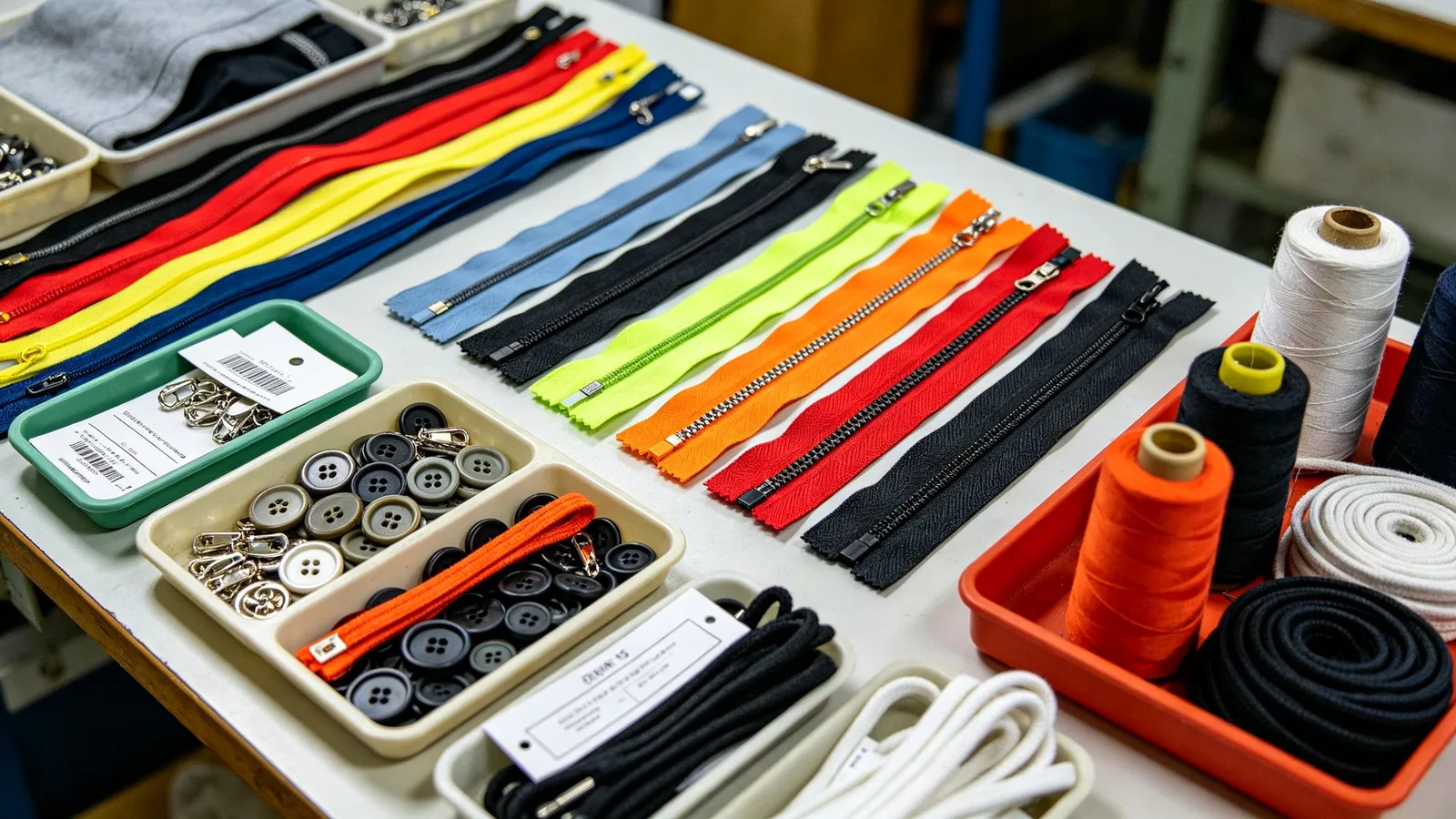
Buttons need more than colour and diameter. Confirm hole or shank type, thickness, edge, finish, logo orientation where relevant, sewing thread, attachment method, position, and spare-button requirement if the buyer requests one. Zippers may require length, chain type, teeth or coil, tape colour, slider, puller, end construction, opening direction, and application method. These details change the product and should be reviewed on a sample.
Elastic, rib, binding, drawcords, stoppers, buckles, snaps, eyelets, patches, and other hardware also interact with the fabric and construction. Confirm stretch and recovery where relevant, dimensions, handfeel, colour matching, attachment, reinforcement, surface contact, and finish. The team should identify sharp edges, staining, abrasion, weight, or other product-specific risks during development rather than after components arrive for bulk.
Use the fabric and trim sourcing page to discuss the desired product behaviour and material route. It does not guarantee that every illustrated option is continuously available. The factory still needs to check the current source, purchasing conditions, sample availability, substitution route, and approval evidence for the actual programme.
What should buyers check about translate decoration and brand files into production controls?
Logo files should identify the approved artwork version, dimensions, colours, placement, orientation, and application method. A vector file is useful, but it does not by itself define the finished result. Embroidery, screen print, transfer, patch, woven mark, and other methods translate artwork through different materials and processes. Each may need a project-specific sample or strike-off route.
Add stable placement references. Use a measurement from a seam, centre line, edge, or other controlled product point. State whether the placement follows the garment before or after finishing and how it should scale across sizes. For asymmetric products or accessories, use a diagram showing the viewing direction. This reduces disagreement when a logo looks centred in a flat drawing but shifts on the finished product.
Colour approval should distinguish artwork colour from the result on the selected base. A light print on a dark garment, a metallic thread, a rubber patch, or a heat transfer on textured fabric may not look like the digital file. The buyer should approve the relevant physical or documented evidence and record acceptable appearance, not simply resend the original colour code.
The Private Label Wholesale Apparel guide explains how product direction connects with branding and retail-ready presentation. This specification guide has a narrower execution role: it converts each approved brand choice into a component code, application instruction, evidence record, and bulk checkpoint.
What should buyers check about design packaging around the product, channel, and receiving route?
Packaging starts with product protection and identification. Define how the item is folded or shaped, what protects its surface or hardware, whether components can rub or transfer, how moisture or crushing risk is managed where relevant, and how the unit remains identifiable. A soft blouse, decorated sweatshirt, structured accessory, and hardware-heavy pouch may need different protection.
Next, define channel needs. An online order may prioritise individual identification and courier handling. A boutique programme may prioritise presentation and easy unpacking. A wholesale or retail warehouse may prioritise barcode accuracy, size and colour visibility, carton assortment, routing labels, and efficient receiving. One pack does not automatically suit every channel.
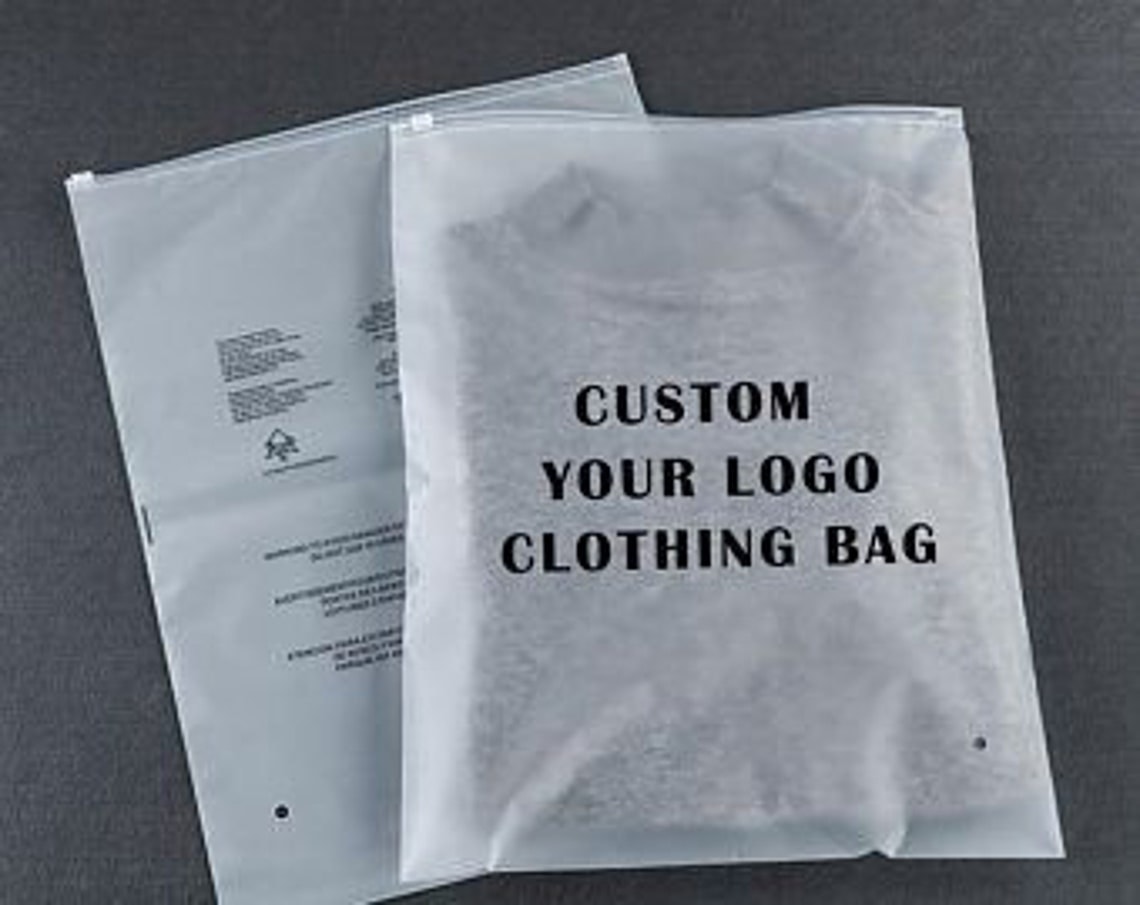
Record individual bag or wrap dimensions, material or format, closure, warnings or information where applicable, stickers, inserts, tissue, hangtag position, folding guide, units per pack, assortment, carton dimensions or limits, marks, labels, and packing-list relationship. Where packaging claims or market requirements apply, the buyer should define the evidence and approved wording rather than ask the factory to create a general sustainability statement.
The wholesale apparel packing requirements guide goes deeper into barcode, size-sticker, carton-mark, warehouse, and store-ready decisions. Use it for receiving and delivery control while keeping the component register as the source of current packaging files and SKU allocation.
How should buyers build approval evidence before purchasing or bulk application?
Approval should identify what the evidence proves. A digital artwork approval may confirm content and layout. A supplier proof may confirm construction and dimensions. A physical trim sample may confirm material, finish, colour, handfeel, or function. An applied garment sample may confirm placement, sewing, appearance, comfort, and interaction with the product. These approvals are related but not interchangeable.
Create an approval matrix with component code, evidence type, version, date, approver, comments, and status. If approval is conditional, state the condition and next proof. A message saying “looks okay” should not leave the factory guessing whether it authorises artwork, colour, material, placement, bulk purchasing, or only the next sample.
Use a sealed or otherwise identified reference where the project benefits from one. Attach a tag or record linking it to the current style, order, component version, and approval. If a physical reference cannot be retained, use controlled photographs and measurements that show the decision clearly. Do not let an unlabelled sample become the production standard through familiarity.
Plan approvals before the purchasing decision. Some items may be available, some made to order, and some buyer supplied. The factory should show which component is on the critical path and which order cannot be placed until approval. The buyer should name the decision owner and response route so an unresolved hangtag does not silently hold all packing materials.
How should buyers plan component purchasing, surplus, substitution, and replacement?
Component quantities do not always match garment quantities one for one. The factory should calculate use per unit, style-colour-size allocation, sample needs, application or handling allowance where agreed, replacement needs where agreed, supplier pack sizes, and any minimum purchasing condition. The commercial quotation should state what is included and what remains provisional.
If a supplier minimum creates surplus, decide before purchase how it will be handled. Options may include allocation across compatible styles, buyer ownership, controlled retention for a future repeat, separate shipment, or another agreed arrangement. The choice depends on the component, storage suitability, brand data, future plans, and commercial terms. Do not assume unused labels can be held indefinitely or used for another product.
A proposed substitution needs its own identity. Record why the original is unavailable, what changes, which product points are affected, and what evidence the buyer must approve. A visually similar button can differ in material, thickness, edge, finish, or attachment. A different bag can alter presentation or carton use. No substitute should enter bulk only because a previous message described it as “close.”
Ask for a purchasing status report tied to the component register: approved source, quotation basis, order status, expected availability, received quantity, inspection status, and open exception. This gives merchandising and production teams a shared picture without claiming a fixed lead time before current suppliers and approvals are confirmed.
How should buyers connect incoming checks, application QC, and packing release?
Quality control should follow the component through three stages. Incoming review checks identity, quantity, version, colour or finish, dimensions, artwork or data, and obvious condition against the approved evidence. Application review checks the correct style and SKU, placement, orientation, sewing or attachment, appearance, function, comfort, and interaction with the garment. Packing review checks identity, barcode, assortment, individual presentation, cartons, and documents.
Sampling should identify the critical points, but bulk checks need current records. Attach the component code to the bill of materials, production instruction, first-piece review, inline checks where relevant, final product inspection, and packing release. If multiple versions exist for different markets or deliveries, keep them physically and digitally separated.
Define exception handling. The record should state affected component, style, colour, size, quantity or batch where known, finding, containment, proposed correction, buyer decision where required, recheck, and release status. A concession for one order should not silently rewrite the standard for every repeat.
Yinshan Fashion’s manufacturing process connects approved inputs with sourcing, cutting, sewing, finishing, inspection, and packing. The exact checkpoints depend on the product and risk. The important control is continuity: the same approved component identity should be visible from receipt through final packed SKU.
How should buyers create a repeat-order library and a factory-ready handover?
After shipment, close the component record. Retain the approved artwork, specifications, source or supplier reference where appropriate, sample identity, colour or finish, placement, quantity logic, packing file, quality findings, and final changes. Mark obsolete files clearly. The next order should begin from the released version, not from the earliest sample request.
The fashion wholesale reorder planning guide explains how to retain colour, labels, packing, and quality records across orders. For custom components, also record availability assumptions and ownership. A previous code proves identity, but it does not guarantee that the same material, supplier, price, minimum, or timing remains available.
Prepare one concise handover for the factory: product and order identity, style-colour-size matrix, component register, current artwork and data files, bill of materials, placement diagrams, packaging master, approval matrix, buyer-supplied items, open decisions, destination, channel, quality priorities, delivery objective, and named approvers. Every attachment should use the same version date.
When the pack is ready, contact Yinshan Fashion with product references or a tech pack, product category and construction, fabric and colour direction, quantities by style and colour, size range, logo files, labels, hangtags, barcodes, trims, packaging, destination market, sample needs, and target receiving window. The team can review feasibility and propose a project-specific custom or private-label bulk route.
Component control kit
Three controls that connect brand artwork with factory execution
Custom components stay manageable when every item has one identity, one current approval route, and one traceable SKU use. These controls turn brand direction into sourcing, production, quality, packing, and reorder records.
Control the component identity
Give each label, trim, decoration, barcode, and packaging item a code, current specification, product allocation, data owner, and version.
Control the approval evidence
State whether artwork, supplier proof, physical component, applied sample, packing sample, or another reference authorises the next step.
Control the SKU handover
Map every component to style, colour, size, destination, channel, and delivery split so production and packing use the same current order data.
Buyer action and factory confirmation before component release
Use this checklist before labels, trims, decoration, or packaging are purchased or applied. Exact commercial terms, testing, market requirements, and approval routes remain programme specific.
| Decision area | What the buyer should prepare | What to ask the factory |
|---|---|---|
| Product and SKU identity | Provide the current product code, style-colour-size matrix, destination, channel, delivery split, and component-use mapping. | Does every label, trim, barcode, and packing item map to the same current order quantities and product versions? |
| Artwork and product information | Send approved logo files, text, languages, fibre and care information, origin or responsible-party data where relevant, and barcode sources. | Which data is final, who owns it, does it fit legibly, and which file replaces every superseded version? |
| Construction and placement | Define material, dimensions, colours, fold or finish, application method, orientation, placement, and product-specific function. | Can the proposed component be sourced, made, attached, and checked on the selected fabric and construction? |
| Approval route | Name the approver and the evidence required for artwork, material, colour, handfeel, function, application, and packing appearance. | Which proof authorises sourcing, purchasing, bulk application, or packing, and which points remain conditional? |
| Quantity and exception control | Confirm use per unit, component allocation, agreed allowances, buyer-supplied items, surplus ownership, and replacement or substitution decisions. | What purchasing condition, quantity, received status, shortage, surplus, or proposed substitute needs buyer confirmation? |
| QC, packing, and reorder record | Define critical checks, barcode and assortment rules, exception authority, final release owner, and files to retain for repeat orders. | How will incoming items, application, finished SKU, packed carton, corrective action, and release evidence remain traceable? |
Continue the production conversation
Component specification and approval decision table
| Component group | Buyer-controlled inputs | Factory confirmation | Release evidence |
|---|---|---|---|
| Main, size, care, and content labels | Artwork, text, languages, data source, product and market allocation | Construction, dimensions, material, placement, sourcing, legibility, and application | Approved proof or sample linked to the current product version |
| Buttons, zippers, elastic, drawcords, and hardware | Appearance, function, dimensions, colour, logo, and product use | Source, material, finish, attachment, compatibility, quantity, and substitution route | Approved component and applied sample where relevant |
| Print, embroidery, transfer, patch, or decoration | Current artwork, dimensions, colours, orientation, and placement | Method, base compatibility, setup, appearance, attachment, and production control | Approved strike-off, proof, or applied reference |
| Hangtags, stickers, barcodes, and inserts | Brand layout, SKU data, price or market fields, barcode source, and allocation | Print construction, readability, attachment, scan or data check, sorting, and quantity | Approved file plus verified physical or scan evidence |
| Individual protection and presentation | Fold, tissue, wrap or bag, stickers, warnings or claims, and channel objective | Product protection, dimensions, material route, packing method, and unit identity | Approved packing sample or documented packing master |
| Cartons, marks, labels, and packing list | PO, destination, assortment, warehouse and routing data | Carton plan, physical marks, label mapping, quantities, dimensions, and document match | Approved carton master and traceable packed-carton check |
| Repeat-order library | Released files, ownership, retention expectation, and authorised changes | Accessible records, remaining stock identity, current availability, and change status | Closed order pack with obsolete versions separated |
Buyer FAQs
What belongs in a custom labels, trims, and packaging specification for fashion accessories and apparel?
Include a component code, item name, product and SKU allocation, material, construction, dimensions, colour, artwork or data file, placement, quantity logic, supplier route, approval evidence, current status, and version date. Packaging components should also identify folding, individual protection, barcode, assortment, carton, destination, and receiving requirements where relevant.
When should custom labels and trims be approved?
Approve the relevant evidence before the purchasing or bulk-application decision that depends on it. Artwork approval may not prove material, colour, handfeel, attachment, or finished appearance. The buyer and factory should define whether a proof, physical component, applied sample, packing sample, or another project-specific reference is required.
Who is responsible for care-label and barcode information?
The buyer should supply and approve accurate product, market, responsible-party, retailer, and SKU data using the appropriate advisers or official sources. The factory can check fit, legibility, file status, production use, and mapping, but should not invent legal wording, product composition, or barcode data.
Can one label or trim be shared across several styles?
Yes, when its artwork, data, construction, colour, dimensions, application, product information, and market use are compatible. Map it to the style-colour-size matrix before ordering. Size, composition, colour, destination, barcode, or placement differences may require separate component codes.
What should be retained for a repeat order?
Retain the released component specifications, approved artwork and data, physical or documented references, source information where appropriate, placement, quantity logic, packaging master, quality findings, final changes, and ownership or storage terms. Reconfirm current availability and commercial conditions instead of assuming the previous order guarantees them.