Article
What should buyers know first?
Short answer: A practical B2B guide for evaluating a custom fashion clothing manufacturer through product briefs, category fit, fabric decisions, sampling, quotations, private label, production control, and repeat-order records.
A custom fashion clothing manufacturer guide should help a buyer judge how a factory turns product direction into an approved, repeatable garment. The useful test is not whether a supplier says it can make clothing. It is whether the team can explain the brief, material, fit, sample, commercial assumptions, private-label details, bulk controls, packing, and records needed for the buyer's actual category.
Yinshan Fashion supports custom and private-label bulk programmes rather than unrestricted ready-stock wholesale. The practical route depends on the product, fabric, colours, quantities, size plan, artwork, labels, packing, destination market, approval process, and delivery objective. Buyers do not need every technical answer before contacting a factory, but they should separate confirmed requirements from references and open decisions.
Direct answer: Evaluate a custom manufacturer through the quality of its questions and records. A useful partner should make product assumptions visible, test them in samples, carry approved decisions into bulk production, and identify changes before they affect cost, quality, packing, or delivery.
How should buyers use this custom fashion clothing manufacturer guide before comparing factories?
The phrase custom fashion clothing manufacturer can describe different levels of work. One supplier may cut and sew from a complete tech pack with nominated materials. Another may help interpret reference images, develop a pattern, propose fabric directions, make samples, coordinate decoration, and prepare private-label packing. A third may mainly offer existing blanks with a logo option. These routes can all serve a business, but they should not be compared as if they provide the same product-development responsibility.
Begin with the outcome the buyer wants. Is the project a new silhouette, a fit correction to an existing garment, a change of fabric, a private-label version of an available base, or a repeat of an approved style? State what the factory is expected to decide and what remains the buyer's responsibility. A supplier cannot be evaluated fairly when one quotation assumes finished files and another assumes development work.
This distinction also protects the commercial comparison. A ready-stock route may be useful when speed and existing specifications matter more than product control. Custom manufacturing is more appropriate when the buyer must define fit, material, construction, branding, packing, or repeat-order records. The manufacturer versus wholesale supplier guide explains that sourcing-model decision in more detail.
Ask each candidate to restate the proposed scope in plain language. The answer should name the product, development starting point, material status, sample purpose, private-label elements, quantity assumptions, approvals, and expected handover. If important work is absent from the restatement, it is probably absent from the quotation too.
How should buyers start the evaluation with one factory-ready product brief?
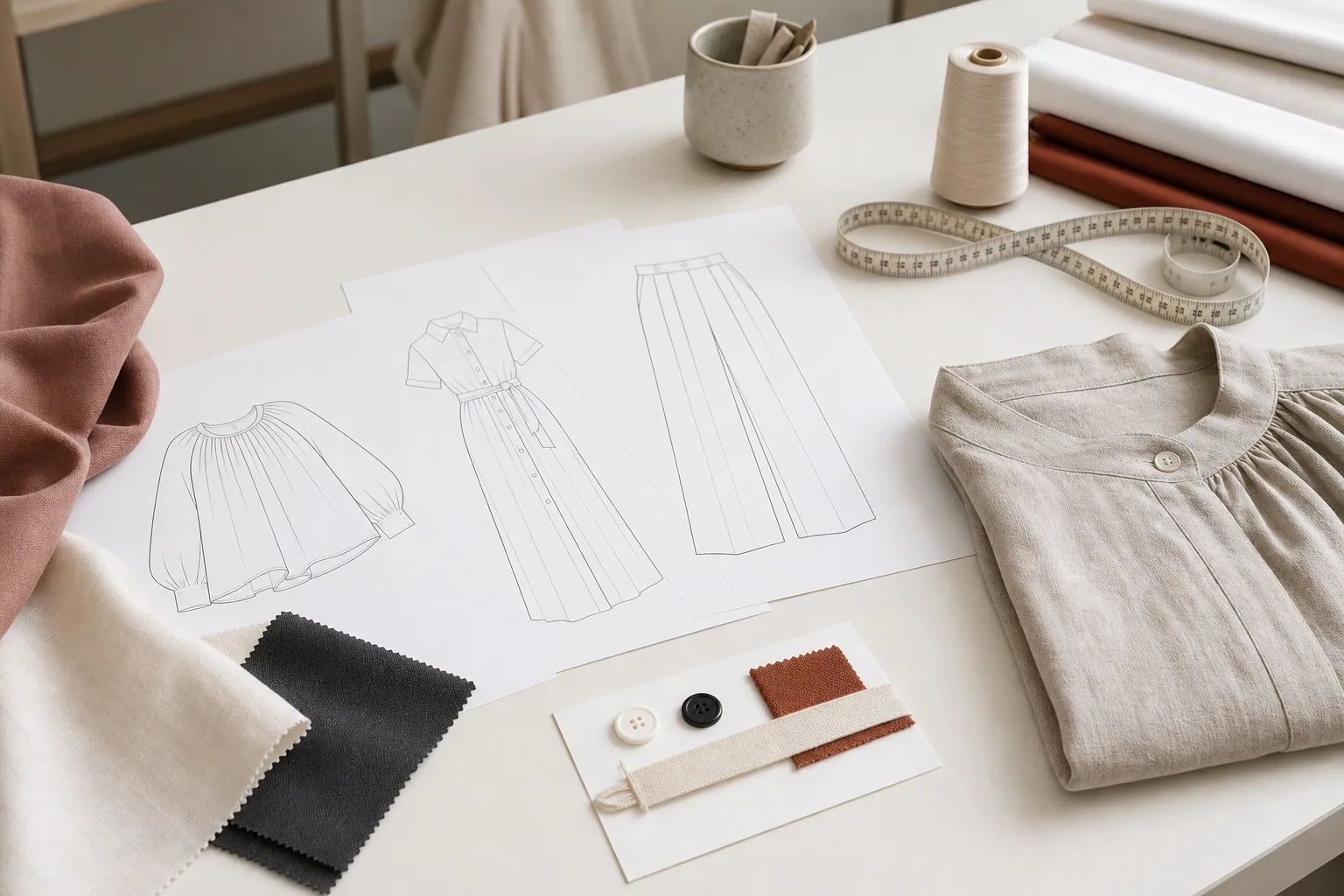
A long factory list does not improve a weak enquiry. A focused brief gives every candidate the same decision context and makes the replies comparable. The brief should identify the product category, target customer, reference images or tech pack, intended silhouette, target material behaviour, colours, size range, quantities by style and colour, decoration, labels, packing, destination, sample objective, and desired delivery window.
Mark each field as confirmed, preferred, reference only, or open for factory advice. This simple status prevents a mood-board image from being mistaken for an exact construction instruction. It also gives the factory permission to propose a workable option without silently changing the product. A buyer may be fixed on a relaxed shoulder and opaque fabric while remaining open on fibre blend or fastening. That is more useful than saying every detail is flexible.
The factory-ready product brief guide shows how reference images, measurements, close-ups, materials, branding, and open questions can be organised before a sample. Use the same brief for each manufacturer, then compare the questions they return. Strong questions identify what is missing and explain why it matters to the garment.
Avoid asking for a final price before the assumptions are visible. An early range can support feasibility, but it should state what product, material, quantity, decoration, labels, packing, and approval route it assumes. When a supplier gives a precise answer without enough product information, the number may reflect an imaginary version of the order rather than the buyer's intended item.
How should buyers test category fit through a real garment conversation?
Category fit is more specific than a list of garments on a website. A manufacturer that understands casual shirts may not use the same reasoning for a draped dress, structured overshirt, brushed lounge set, or stretch active style. The buyer should test whether the factory notices the product behaviour that matters in the intended category.
Choose one representative style and ask the candidate to identify the main development risks. For a blouse, useful questions may concern opacity, drape, placket stability, sleeve volume, seam finish, and pressing. A dress may require discussion of lining, waist position, closure, hem movement, print scale, and pocket construction. A fleece layer may raise weight, shrinkage, brushing, rib recovery, seam bulk, and wash-finish questions.
The Casual Fashion product programme can help a buyer make this test concrete through shirts, blouses, dresses, T-shirts, trousers, and coordinated separates. The purpose is not to ask a factory to copy an existing product. It is to describe the category and see whether the reply connects design intent with material, pattern, construction, finishing, and approval.
Ask what the first sample is expected to prove for that style. If the answer is only “we will make it,” the evaluation is incomplete. A stronger reply distinguishes silhouette, fit, material behaviour, construction feasibility, trim placement, and later retail details. Category experience becomes credible when it appears in the decision process, not only in a sales claim.
How should buyers evaluate fabric reasoning in the finished garment?
Fabric should be discussed as part of the product, not as an isolated composition name. The same fibre blend can behave differently when weight, yarn, knit or weave, finishing, stretch, colour, and garment construction change. A manufacturer should be able to explain which material properties need to be seen in a swatch, header, test sample, wash review, or finished garment.
Give the desired behaviour first: crisp or fluid, light or substantial, matte or lustrous, stable or stretchy, opaque or intentionally sheer, smooth or textured. Then add use conditions such as season, layering, movement, care expectations, target market, colour depth, decoration, and retail position. This lets the factory compare material routes against the garment rather than search only for a composition label.
The fabric and trim support page provides a useful framework for discussing handfeel, weight, drape, stretch, colour, trims, labels, and sampling. Buyers should ask which facts are known from the proposed material and which still require confirmation. They should also ask whether the quotation assumes an available fabric, a new colour, a mill minimum, or custom development.
Do not treat a swatch approval as complete garment approval. A fabric that feels suitable by hand can change the fit, collar, sleeve, hem, print, or transparency once cut. The factory should name the product points that need to be checked in the sample. This is especially important when a reference garment uses a different material from the proposed production route.
How should buyers use sampling to measure decision quality, not only workmanship?
Sampling reveals how a manufacturer manages incomplete information. The first sample may test silhouette, pattern, construction, or material direction; it does not automatically approve the retail product. Before work begins, state the purpose of the sample and list the decisions that will remain open afterward.
A practical sample record identifies the style version, sample date, material reference, target size, measurement sheet, construction notes, trims, artwork, label status, packing status, comments, owner, and next action. Comments should be located and measurable where possible. “Reduce cuff opening by the agreed amount while keeping sleeve length” is usable. “Improve the sleeve” leaves the interpretation unresolved.
Ask how the factory separates a pattern change from a material problem. A tight armhole, twisting side seam, unstable neckline, bulky pocket, or uneven hem can have more than one cause. The answer does not need to be perfect before the garment is handled, but it should show a method: inspect the sample, compare the pattern and measurements, review fabric behaviour, propose one controlled change, and record the next version.
Sampling also tests communication discipline. The factory should confirm which comments are understood, which require clarification, and which may affect material consumption, construction, appearance, cost direction, or timing. A buyer should not approve bulk because a photograph looks acceptable while measurements, fabric, labels, or open comments remain unresolved.
Physical samples are valuable because they show drape, handfeel, balance, stretch, construction, and finishing in a way that photographs may not. Images are still useful for quick comments and record keeping. The right combination depends on the decision being made.
How should buyers align MOQ, quotation, and timing assumptions before comparing price?
MOQ, price, and timing are outputs of a product route. They can be affected by material availability, dyeing or printing, colour count, size allocation, pattern complexity, decoration, trim minimums, private-label components, individual packing, carton rules, sample revisions, approvals, and current production conditions. A responsible comparison makes these assumptions visible instead of treating one number as a universal factory term.
Build a comparison sheet with one row for every quotation assumption. Record the fabric reference, colour route, style and colour quantities, size range, decoration method, trims, label package, packing, sample scope, quality checkpoints, shipping basis, exclusions, and validity date. If one candidate assumes available fabric and another assumes a custom colour, the unit prices do not describe the same product.
Ask what would make the quotation change. The answer may include a revised fabric, different colour count, smaller allocation, new artwork, extra sample stage, different packing, or a change to the delivery request. This question is more useful than asking whether the price is “final” before the product is final.
Timing should be mapped to approvals rather than stated as one uninterrupted promise. Material confirmation, sample comments, artwork, labels, packing files, and buyer decisions can all affect the route. The factory should explain what it controls, what it needs from the buyer, and which open decision prevents a firmer plan.
How should buyers connect private-label details to product identity?
Private label is a system of product information and presentation. It may include main labels, size labels, care information, hangtags, artwork, barcode or SKU data, folding, individual protection, inserts, carton marks, and packing lists. These components should point to the same style, colour, size, market, and version.
The private-label clothing programme is useful when a buyer needs to organise brand components alongside product development. Ask who supplies each file, who confirms the content, when it becomes final, where it is applied, and how the packing team will verify the match. The factory can coordinate approved components, but the buyer remains responsible for its commercial data and final market obligations.
Review branded components in the relevant sample stage. A hangtag attachment can mark a delicate surface. A label can affect comfort or show through a light fabric. A logo method can change handfeel, stretch, or drape. A barcode can be correct in the file but applied to the wrong colour or size. These are product-control questions, not decorative details to postpone until cartons are ready.
Keep version control simple: approved file name, date, owner, product reference, placement, and status. If one component changes, identify exactly which styles, colours, sizes, samples, or packed units are affected.
How should buyers check how approved decisions move into bulk production?
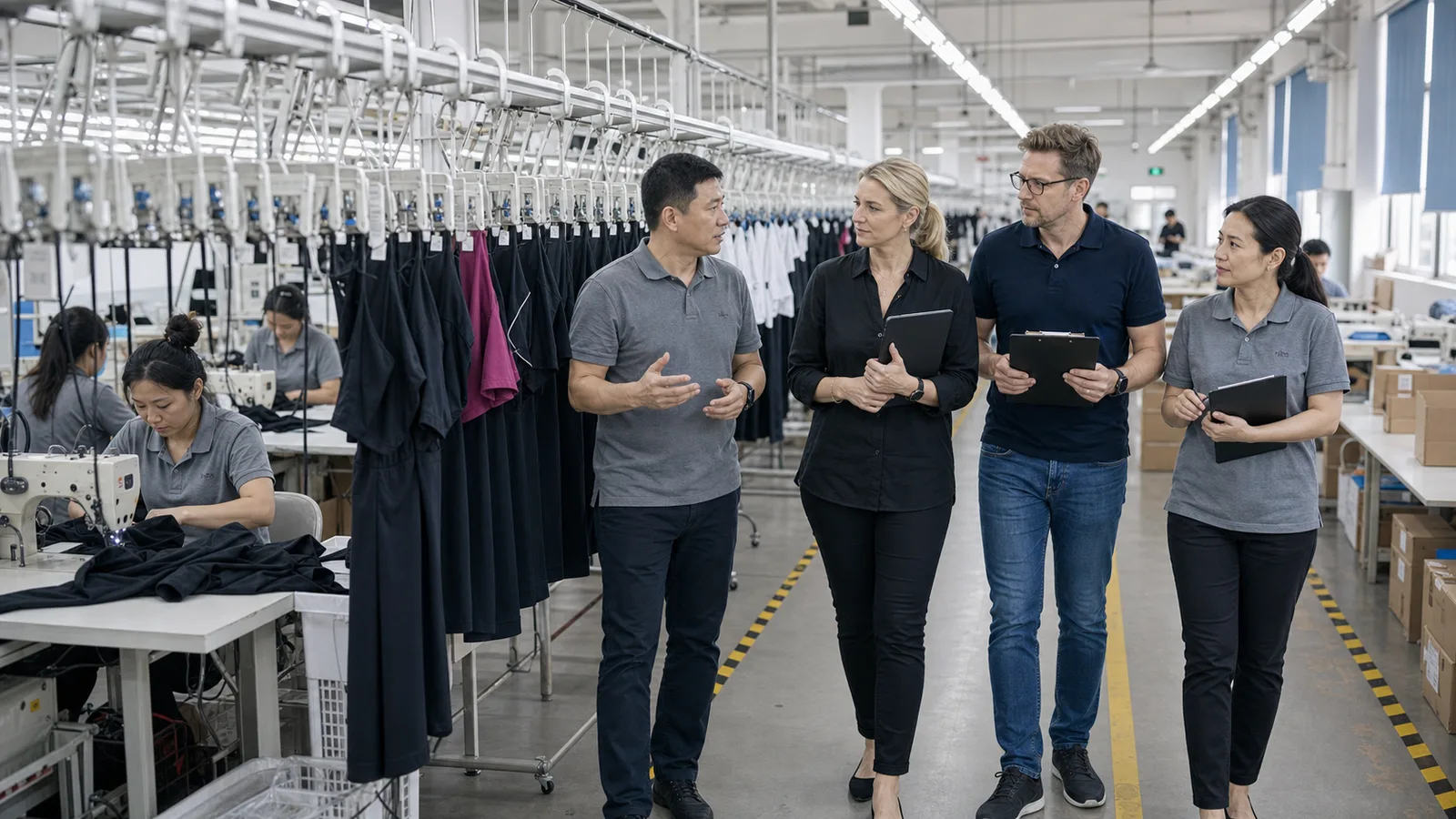
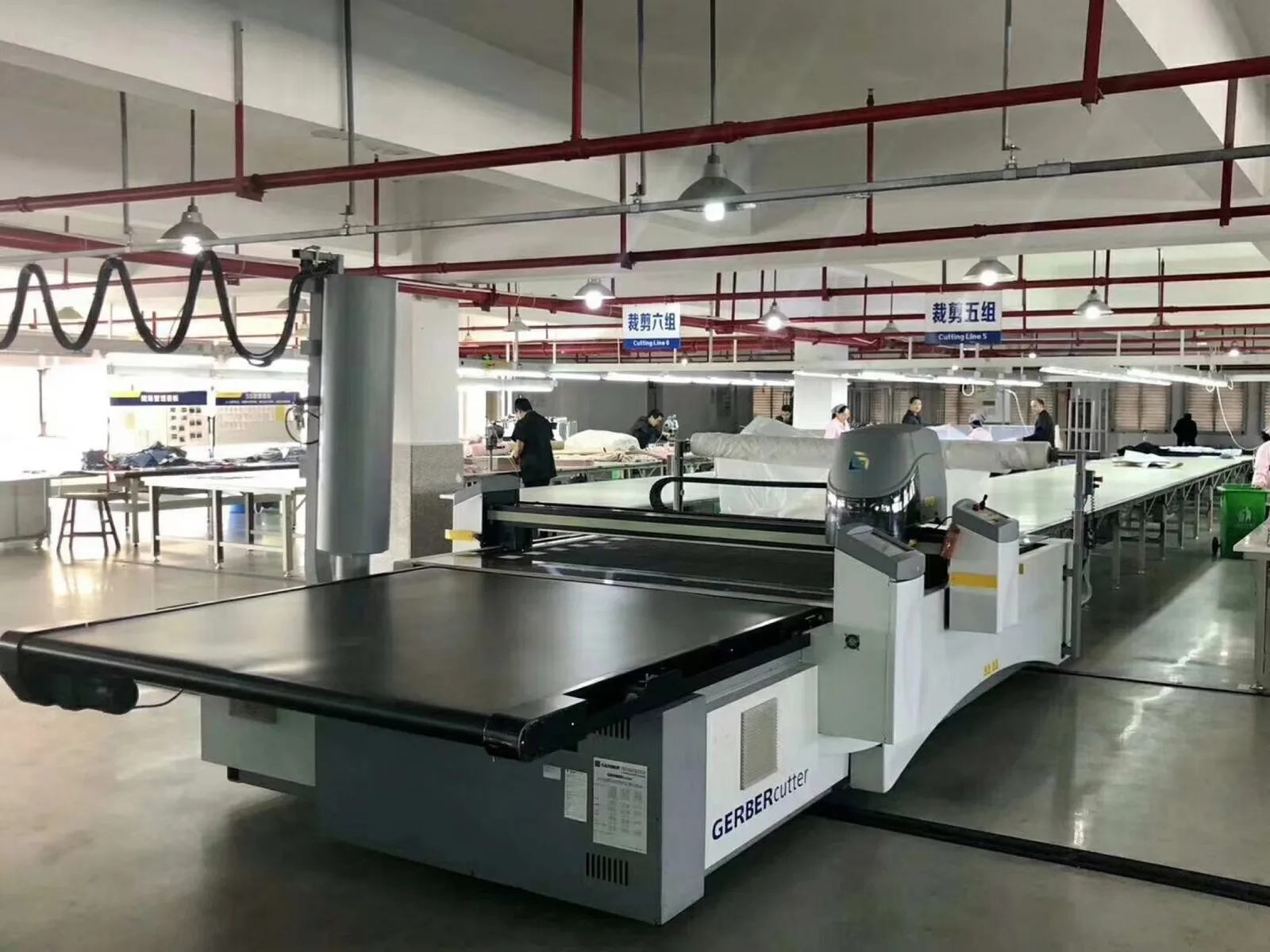
A capable sample room does not by itself prove a controlled bulk route. Ask how the approved sample, measurements, material, construction notes, trims, artwork, labels, packing, and quality points become production instructions. The factory should be able to describe a handover from approval to material preparation, cutting, sewing, in-line checks, finishing, packing, and release.
The fashion manufacturing process shows the main control stages that buyers can discuss. The relevant question is not whether every factory uses the same form. It is whether the current product standard is available to the people making and checking the order, and whether changes are recorded before they spread through production.
Ask which characteristics deserve stage checks. A critical measurement may be checked after an operation that affects it. A printed placement may be reviewed before many panels are processed. A fabric shade relationship may be controlled before cutting. A label or barcode identity may be checked before individual packing. The project determines the points; the supplier should explain the logic.
Final inspection remains important, but it cannot economically rebuild an order whose material, pattern, construction, or identity was wrong earlier. Buyers should look for prevention, in-line visibility, exception records, corrective action, and a named release reference. Avoid assuming that a general statement such as “strict QC” answers those questions.
How should buyers compare communication through change control?
Fast replies are useful, but communication quality is better measured by how a supplier handles change. Fashion projects change as fabric, fit, artwork, quantities, labels, packing, and market requirements are confirmed. The risk is not change itself. It is an undocumented change that reaches only part of the team.
Use a short change log with the item, old reference, new instruction, reason, owner, affected styles or units, approval date, and consequence for sample, cost direction, quantity, timing, or bulk status. Ask the factory to confirm receipt and identify any conflict with work already completed.
Pay attention to the questions a supplier is willing to ask. A manufacturer that says every request is easy may be avoiding the decisions that protect the buyer. Useful questions can feel slower at the start because they expose missing data. They often make the later quotation and sample more reliable.
Escalation should also be visible. The buyer should know who owns the product discussion, who confirms commercial assumptions, who coordinates the factory, and how a material or production exception is reported. A single contact can still coordinate the project, but the record should not depend on one person's memory.
How should buyers decide whether a factory-led or coordination-led route fits the programme?
Some buyers need direct development around a focused apparel category. Others need one coordinator for unrelated products, multiple factories, or broader sourcing work. The best route depends on the range, technical depth, number of categories, internal buying resources, need for direct factory feedback, and importance of repeat records.
A factory-led route can be useful when pattern, fabric, sampling, production, QC, packing, and improvement need to stay close to one product team. A coordination-led or trading route can be useful when the buyer values aggregation and supplier management across different products. Neither label proves execution quality.
Ask who actually makes the product, who develops the sample, who selects or buys the fabric, who holds the approved records, who performs checks, and who is accountable when an issue appears. The answers reveal the operating route more clearly than the company title.
Do not assume that direct factory access removes the need for project management. Buyers still need clear files, approvals, responsibilities, and commercial terms. Likewise, do not assume an intermediary cannot add value. Compare the specific work, visibility, records, and accountability offered for the intended order.
How should buyers build a supplier scorecard from evidence, not adjectives?
A useful scorecard turns broad claims into observable evidence. Score the same decision areas for every candidate: category reasoning, brief interpretation, fabric discussion, sample method, commercial assumptions, private-label control, production handover, quality checkpoints, communication, packing, and repeat-order records. Add an “open” status when evidence is not yet available instead of guessing a score.
Use the decision table below as a handover tool, not as a mathematical promise. The buyer should write what it has provided, then ask the factory to confirm the corresponding action. A persuasive website can support initial screening; it cannot replace a product-specific reply, sample, quotation assumptions, and approval record.
Look for consistency between the sales answer and the working documents. If the quotation says one fabric but the sample note shows another, the conflict must be resolved. If a supplier claims flexible quantities but does not explain material or colour constraints, the buyer still lacks a planning answer. If the sample is strong but bulk handover is vague, the programme remains exposed.
The final decision should identify both strengths and conditions. One factory may be suitable if the brand narrows colours. Another may be suitable after a second fit sample. A third may be rejected because it will not document changes. Conditions make the choice operational and give the selected team a clear path to approval.
Weight the scorecard according to the order rather than giving every criterion the same importance. Fabric and fit may dominate a fluid blouse programme. Decoration, wash, and measurement control may carry more weight for streetwear. Label identity and packing can be critical for a retailer allocation. Write the priority before reviewing suppliers so that an attractive presentation does not quietly replace the product decisions that matter most.
Use a sample or limited development stage to test unresolved claims before making a larger commitment. The test should have named outputs: a pattern or fit answer, an approved material direction, a construction decision, a clear revision record, and updated commercial assumptions. It should not be treated as proof of every future order. The buyer is evaluating whether the team can close decisions and preserve them when the product moves forward.
After choosing a candidate, convert the evaluation into the working brief. Transfer every condition, open point, promised document, approval, exclusion, and responsibility into the project record. A scorecard that stays in a selection spreadsheet cannot protect the sample or bulk order. Its value comes from shaping the questions, evidence, and handover used by the selected team.
What to send before asking a manufacturer for the next step?
- Product category, style list, target customer, sales channel, and the purpose of each garment.
- Tech pack, annotated reference images, physical sample details, measurements, and a clear list of fixed versus open decisions.
- Fabric behaviour, colour direction, trims, decoration, care concerns, and any known material reference.
- Quantity by style and colour, size range or ratio, destination market, target retail position, and delivery objective.
- Main, size, and care labels; artwork; hangtags; barcode direction; folding; individual packing; and carton requirements.
- Sample purpose, approval owners, quality priorities, required records, and any decision that must be closed before bulk.
- A list of quotation questions covering inclusions, exclusions, assumptions, change triggers, and buyer-supplied inputs.
Yinshan Fashion can review this input for a custom or private-label fashion programme. Share the product references, material direction, quantities, size plan, branding, packing, market, sample objective, and target timing through the contact page. The next response should identify what is clear, what remains open, and which practical sample or quotation step can reduce the most uncertainty.

Manufacturer evaluation
Three controls that turn a factory introduction into a product decision
A credible manufacturer evaluation links the buyer's product brief to a sample, a controlled bulk handover, and a record that can support packing and repeat orders. General capability claims are only the starting point.
Product evidence
Test category understanding through one real style, its fabric behaviour, fit, construction, sample purpose, and open decisions.
Approval record
Keep the current sample, measurements, material, trims, artwork, labels, packing, comments, owner, and status connected to one style version.
Bulk handover
Ask how approved decisions reach cutting, sewing, in-line checks, finishing, packing, release, and the record retained for a repeat.
Custom manufacturer evaluation checklist
Use this before choosing a development partner or releasing bulk work. The buyer owns the commercial and product direction; the factory should confirm how it will interpret, sample, execute, and record that direction.
| Decision area | What the buyer should prepare | What to ask the factory |
|---|---|---|
| Product brief and category | Provide the category, style purpose, references, measurements, target customer, fixed decisions, open questions, and the purpose of the first sample. | Which product assumption needs confirmation, and what should the sample prove before the next stage is approved? |
| Material and fit | Describe handfeel, weight, drape, stretch, opacity, colour, care direction, silhouette, size range, and any known material reference. | Which material route is proposed, what evidence is available, and how may it affect pattern, fit, construction, or appearance? |
| Quotation and timing | Give style-colour-size quantities, decoration, trims, labels, packing, destination, delivery objective, and the comparison assumptions. | What is included, excluded, conditional, buyer supplied, or capable of changing the quotation and approval-based schedule? |
| Private label and packing | Provide current label, artwork, barcode, placement, folding, individual protection, carton, market, and retailer instructions where relevant. | How will each component be approved and matched to the correct style, colour, size, selling unit, and carton? |
| Bulk control and repeat record | Name the approved product reference, quality priorities, evidence needs, exception owner, packing standard, and records required after shipment. | How do approvals reach production and QC, how are exceptions released, and what will be retained for the next order? |
Continue the production conversation
Custom fashion manufacturer evaluation: buyer and factory handover
| Decision area | Buyer should prepare | Factory should confirm |
|---|---|---|
| Product scope | Category, style purpose, references, measurements, fixed decisions, open questions, target customer, and sales channel. | How the brief is interpreted, which information is missing, what the first sample should prove, and which assumptions are being used. |
| Fabric and fit | Required handfeel, weight, drape, stretch, opacity, colour, care direction, silhouette, and product behaviour. | Which material route is proposed, what is known, what requires a swatch or sample, and how fabric may affect pattern, fit, construction, or appearance. |
| Sampling | Sample purpose, target size, measurement sheet, comment owner, approval path, and the open items that remain after each version. | Sample stages, version record, action on comments, product risks, and the reference that must be approved before bulk handover. |
| Commercial assumptions | Style-colour-size quantities, material status, decoration, trims, labels, packing, destination, delivery objective, and comparison format. | Quotation inclusions, exclusions, minimum drivers, change triggers, buyer-supplied inputs, schedule dependencies, and validity date. |
| Private label and packing | Approved label and artwork files, product data, barcodes, placements, fold, individual protection, carton marks, and market instructions. | How every component is linked to style, colour, and size; what requires a sample; and how identity is checked before packing release. |
| Bulk and repeat control | Approved product reference, quality priorities, evidence needs, exception owner, packing standard, and records required after shipment. | How approvals reach cutting, sewing, finishing, QC, and packing; how exceptions are recorded; and what is retained for a repeat order. |
Buyer FAQs
What should a custom fashion clothing manufacturer guide help a buyer evaluate?
A custom fashion clothing manufacturer guide should help a buyer evaluate product-brief interpretation, category fit, fabric reasoning, sampling, quotation assumptions, private-label control, bulk handover, quality checkpoints, communication, packing, and repeat-order records. It should turn general factory claims into questions and evidence connected to the buyer's actual garment.
Can a buyer contact a manufacturer without a complete tech pack?
Yes. A buyer can begin with annotated reference images, measurements, a physical sample, fabric behaviour, colours, quantity direction, size range, branding, packing, market, and sample objective. The important point is to mark what is fixed, preferred, reference only, or open. The factory should identify which missing decisions are needed before a reliable sample or quotation.
How should buyers compare quotations from custom fashion manufacturers?
Compare quotations only after aligning the assumed product, fabric, colours, size allocation, decoration, trims, labels, packing, sample scope, quality controls, delivery basis, exclusions, and buyer-supplied inputs. Ask what would change the quotation. A lower number is not comparable when it omits work or assumes a different garment.
What should be approved before custom fashion clothing enters bulk production?
The buyer and factory should identify the approved sample or product reference, measurements, bulk material and colour, construction, trims, decoration, labels, barcode data, packing, carton requirements, quality points, commercial assumptions, and open exceptions. The exact route depends on the programme, but approvals should be written and linked to the current style version.
Does Yinshan Fashion offer ready-stock wholesale through this manufacturer guide?
This guide describes Yinshan Fashion's custom and private-label bulk programme, not unrestricted ready-stock wholesale. A project is reviewed according to the product, materials, colours, quantities, size plan, artwork, labels, packing, market, sample needs, and target timing. The team can then identify a practical next step for development or quotation.