Article
What should buyers know first?
Short answer: A B2B guide to separating bio-based and recycled polyester claims, setting evidence scope, and using samples before a private-label apparel order moves to bulk.
Bio-based vs recycled polyester is not a choice between a universally better fabric and an inferior one. They describe different material routes and therefore create different questions for a fashion buyer. Bio-based polyester concerns the renewable biological share used to make a material; recycled polyester concerns recovered input material that has been reprocessed. Neither phrase, standing alone, tells a buyer the exact composition of a fabric, the scope of a finished-garment claim, its drape, its colour behaviour, its availability, or whether it is appropriate for a given style.
Yinshan Fashion supports custom and private-label bulk programmes rather than an unrestricted ready-stock wholesale catalogue. That means a useful material enquiry begins with the product being developed: the style, wearer, use, silhouette, handfeel, construction, colour direction, components, sample purpose, quantity context, intended market, proposed wording and open decisions. With that brief in place, a supplier can help compare candidate fabrics without treating a sustainability phrase as a finished specification.
Bio-based vs recycled polyester: the direct buyer answer
The two descriptions answer different questions. A bio-based description addresses the origin of some of the carbon or feedstock in a material route. A recycled description addresses the use of recovered material as input. A fabric can have a particular material story while still needing separate confirmation of its construction, finish, companion fibres and supporting evidence. A buyer should not assume that a bio-based route is recycled, that a recycled route is bio-based, or that the two terms can be used interchangeably in product copy.
The United States Department of Agriculture defines biobased content as the ratio of new organic carbon to total organic carbon, and distinguishes renewable biological resources from fossil-derived carbon. That is a useful framing for a buyer, but it is not a garment approval. Ask what the supplier means by the term for the candidate fabric, what component it covers, which version or lot the information relates to, and what evidence can be shared within the project.
For recycled routes, traceability is the central question. Textile Exchange explains that the Recycled Claim Standard and Global Recycled Standard set criteria for third-party certification of recycled materials and chain of custody. The same source also makes clear that standards are about content and documented movement through a supply chain; a certificate is not automatic proof of every performance, durability or environmental claim a finished dress or jacket might make. Keep evidence, physical performance and customer-facing wording as three connected but separate review tracks.
Start with the garment decision, not a headline material claim
A fashion buyer can save a great deal of rework by naming what the material must do in the garment before comparing origins. A fluid dress, a structured woven overshirt, a lightweight blouse, a stretch top and a lining each create different questions. State the silhouette, intended movement, target coverage, desired surface, lining relationship, seam direction, print or colour requirements, care direction and commercial context. Mark each item as fixed, preferred, open for proposal or requiring a physical sample.
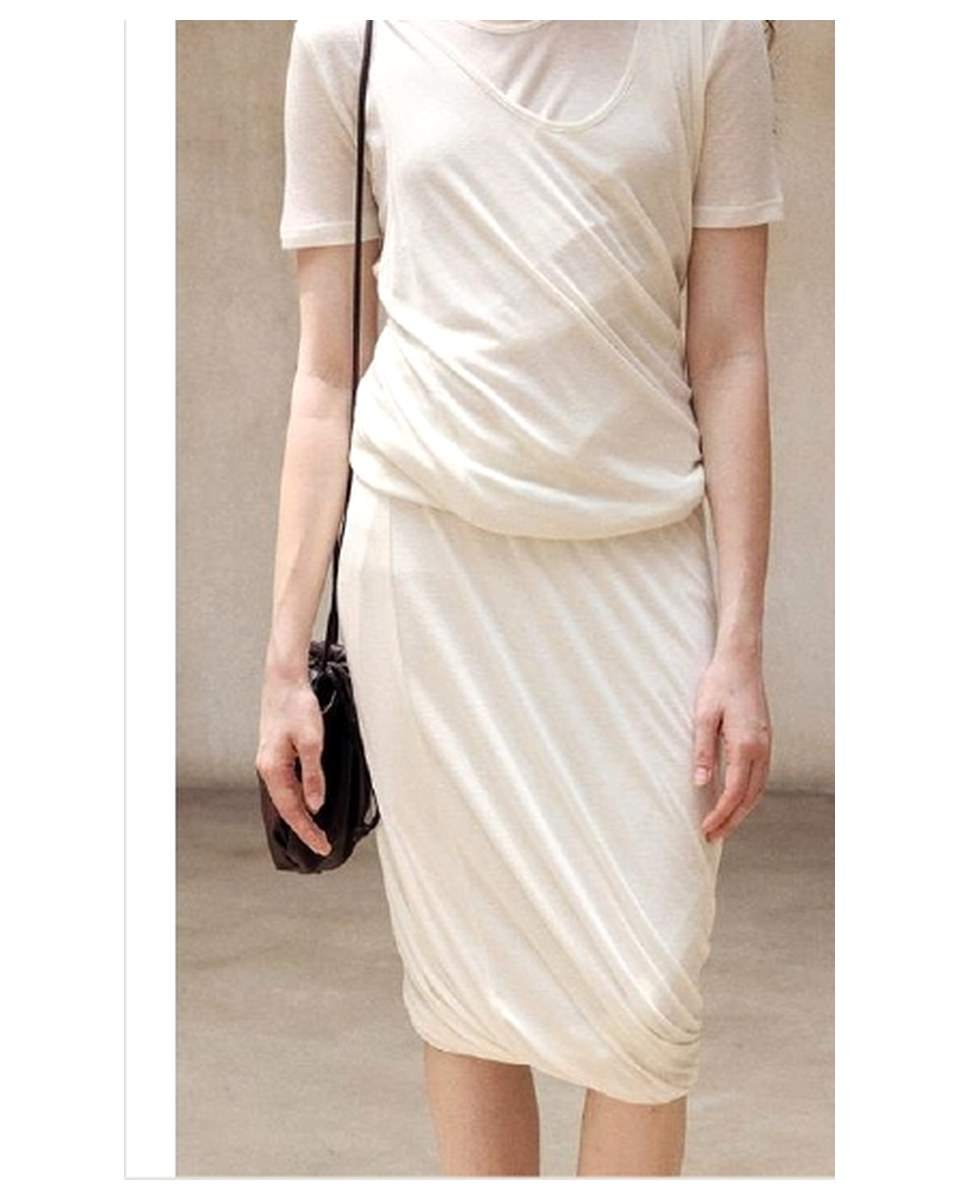
For example, a brand developing a satin-look evening dress may care about fluidity, show-through, seam appearance, colour depth and lining interaction before it can decide whether a bio-based or recycled polyester route is commercially suitable. The dress collection can help a buyer name the silhouette and construction conversation, but it is not proof that any displayed style uses a particular fibre route. The proposed fabric reference and representative sample remain the evidence for the live programme.
The same discipline applies to performance-led products. An active-fashion programme may involve stretch, recovery, coverage, panel placement, lining, binding and use context. A material-origin term does not predict how those parts work together. Begin with the garment problem, then ask the mill or supplier to propose a candidate fabric route that can be sampled against it.
Compare claim scope before comparing fabrics
The phrase on a supplier presentation is often broader than the statement a brand wants to make on a product page or hangtag. Before approving a candidate, write down exactly what is being claimed. Is the statement about the shell fabric, a percentage of the shell, a yarn, a fabric route, the whole garment, or a wider collection? A concise scope prevents a useful but limited fact from expanding into an unsupported marketing assertion.
A complete garment includes more than its main shell. Lining, elastic, sewing thread, labels, tapes, zippers, buttons, padding and packaging can all have their own material records. If a fabric supplier supplies evidence for the shell, that does not establish the same status for the other parts. Keep the bill of materials visible when the brand drafts copy. The narrowest accurate claim is usually the most durable one during sample changes and repeat orders.
Create a short claim register with the candidate fabric code, component, composition, intended wording, document or test reference, owner, date and status. Use statuses such as “supplier proposal,” “evidence received,” “copy under brand review,” “approved for sample” and “approved for bulk.” These terms prevent a preliminary material direction from being mistaken for a released product statement.
Do not treat bio-based polyester as biodegradable polyester
Bio-based, recyclable, recycled and biodegradable describe different concepts. A biological feedstock route does not by itself establish that a specific polyester fabric or garment will biodegrade in a particular setting. Recyclability also depends on collection, sorting, composition, construction and the actual systems available to the intended customer. Recycled content is an input-and-traceability statement, not an end-of-life promise.
This distinction matters because a garment can contain multiple materials and finishes. A finished style may use a polyester shell alongside elastane, coatings, prints, labels or hardware. A buyer should avoid collapsing that complexity into an unqualified “biodegradable polyester clothing” statement. Instead, describe only what the supplier documentation and the current product scope can support, then have the brand’s appropriate technical, legal or market advisers review final public language where required.
Clear language also makes supplier communication better. Rather than asking whether a fabric is “eco,” ask whether it is being proposed with a recycled-content route, a bio-based content measure, a certification or other document, and what each item actually covers. That gives the supplier a question it can answer and exposes what still needs confirmation.
Build an evidence pack that stays tied to the candidate fabric
An evidence pack should be small enough to use and specific enough to audit. Start with the fabric reference, full composition, construction, finish, colourway or development colour, supplier identity, document type, version or date, claimed scope and project owner. If a certification or chain-of-custody document is relevant, record the current facility and transaction relationship that applies to the candidate rather than filing a general corporate certificate without context.
Textile Exchange’s Content Claim Standard overview describes a framework for tracking certified materials with documentation, volume reconciliation and controls for material segregation. A buyer does not need to publish all of that administration. The practical lesson is to keep each piece of evidence connected to the material and product version it is meant to support. A general supplier statement may start a conversation; it should not silently become proof for a different fabric, colour or order.
For a bio-based claim, confirm whether the supplier is providing a stated biobased-content basis, a test basis, a brand-specific programme reference or another form of evidence. For a recycled claim, confirm the proposed content basis and applicable chain-of-custody information. Do not ask the factory to invent missing records, and do not suggest that Yinshan Fashion can certify a mill’s material. The factory can organise the project record, while the evidence owner remains responsible for its accuracy and scope.
Sample the complete garment, not only the swatch
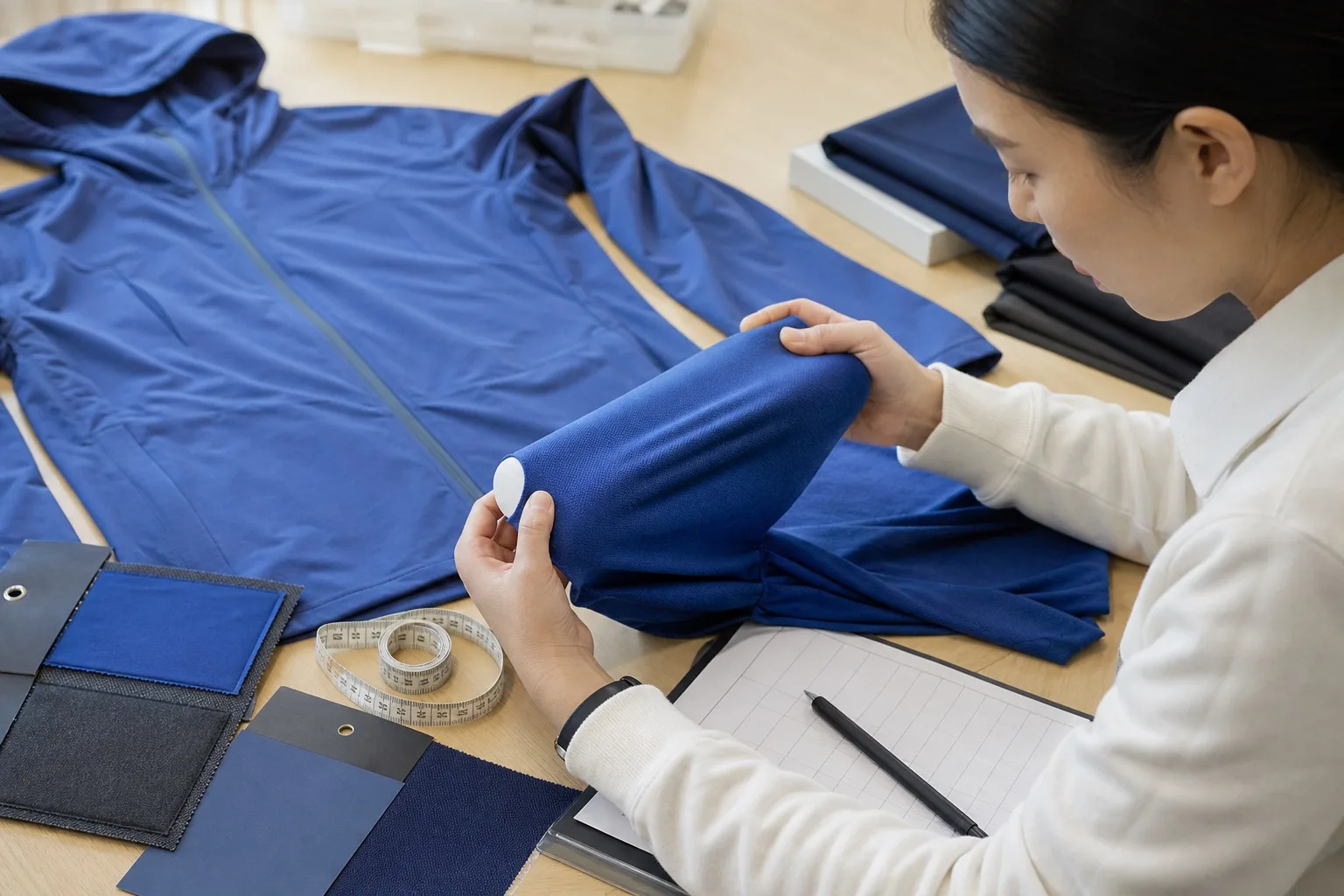
A swatch is valuable for first decisions: touch, surface, weight impression, colour direction and initial construction comparison. It cannot settle every garment question. A shaped seam, a gathered panel, a lining, a binding, a print, a zipper or a waistband can change how the material reads in the finished product. When a decision concerns opacity, drape, fit, seam appearance, recovery or component interaction, use a representative garment or targeted construction sample.
Give every sample one named job. A first sample could compare two fabric candidates under the same pattern and lining. A second could confirm the selected candidate in the intended colour. A third could resolve a changed binding or a specific coverage concern. Record the style, revision, fabric code, colour, components, question, reviewer observation, decision and next action. “Select a fabric candidate for the next fit sample” is a clearer outcome than an unqualified “approved.”
The fabric and trims workflow is the appropriate place to bring shell, lining, components and colour into one development conversation. The aim is not to prove a material through a photo or a generic label. It is to put the physical reference and the material record beside each other before bulk decisions are made.
Evaluate performance as a product question
A bio-based or recycled route does not determine all fabric performance. Construction, yarn arrangement, fabric density, finish, companion fibre, colour, garment pattern and components can influence drape, coverage, handfeel, seam behaviour, wrinkle appearance, stretch, recovery and care response. Two candidate fabrics with similar headline composition can behave differently in the same style.
Translate vague requests into review questions. Instead of “Is it durable?”, identify the use condition, garment area and observation needed: does the lining show through at a particular panel; does a hem twist after the proposed finish; does a print change the surface; does the bodice keep the intended shape; is a seam too bulky for the design? If a project needs a named test or standard, agree the method, sample stage, conditions and party responsible for interpretation before presenting the result as a product claim.
Do not use material origin as a shortcut to claims such as “more breathable,” “longer lasting,” “low impact,” “non-toxic,” “carbon neutral” or “better for the planet.” Those conclusions require a defined scope and relevant evidence. A factual development record is more useful than a generic promise because it tells the buyer what actually needs to be approved next.
Choose the route that fits the programme’s stated priorities
A buyer may have a strong reason to prefer one route, but the reason should be written down. A brand could prioritise a particular recycled-content claim and documented supply-chain route. Another may be investigating a bio-based content direction for a specific product story. A third may need a certain fabric hand, colour or price framework and will use the material route as one weighted factor rather than the only one. There is no responsible universal ranking when the brief, evidence and candidate fabrics differ.
Use a decision table with the same questions for every candidate: what does the material description mean; what evidence is available; what component does it cover; what needs physical sampling; what public wording is proposed; what remains conditional on colour, quantity or timing; and who owns the next answer. This method makes an honest comparison possible even when the buyer has not yet selected a winner.
Textile Exchange’s Fiber and Materials Matrix is another useful reminder that material comparisons have multiple dimensions. The organisation describes the tool as a way to see what different options cover and what they do not cover across several pillars. For a brand brief, that means documenting which question is being answered rather than expecting one material label to resolve every climate, nature, people, chemistry, performance and commercial decision.
Use factory questions to prevent a claim gap at bulk handover
Before bulk, convert the approved material route into a current product record. It should identify the style, colourway, controlling sample, shell and lining references, component list, approved material wording, evidence reviewed, open conditions, quantity context, packing route, quality priorities and decision owner. This is especially important for small-batch programmes, where a late substitution can change both the physical garment and the marketing statement.
Ask the factory which changes should reopen the review. A new fabric code, composition, finish, colour, lining, elastic, print process, trim or claim scope may need a new buyer decision. A change-control rule does not guarantee availability, cost or timing. It makes the dependencies visible before a previous approval is applied to a different version.
The manufacturing process works best when material and sample records travel with the product. Yinshan Fashion can organise the development conversation around the current brief, samples and handover references. Material certification, legal claim approval, testing scope, price, lead time and availability remain specific to the confirmed project and should be verified there.
A practical comparison workflow for brands and buyers
First, define the product and the claim question. Second, request candidate fabric references and the evidence the supplier can reasonably share for each. Third, separate what the document answers from what a swatch or sample must answer. Fourth, make a representative sample with the relevant lining and components. Fifth, record the physical observations and update the proposed customer wording. Sixth, approve the current scope only when the sample, material record and copy all point to the same product version.
This sequence works whether the buyer starts with a bio-based route, a recycled route or two candidates that must be compared side by side. It protects a small brand from overclaiming before it has seen the garment, and it gives the factory precise inputs for the next development step. It also makes a repeat order easier to control because the original assumptions are recorded rather than remembered.
How Yinshan Fashion can support the comparison
Yinshan Fashion can help turn the buyer’s stated priority into a working garment-development brief: fabric direction, silhouette, fit, sample question, colour, lining, trims, labels, packing and production handover. The right starting point is not a promise that one polyester route is best for every product. It is a clear current product record and a controlled sample plan.
Send the style or tech pack, target category, intended use, candidate material direction, desired hand, construction or coverage question, shell and lining scope, colour direction, components, quantity context, intended market, wording the brand hopes to use and documents already held. The team can then discuss suitable fabric proposals and sampling steps while keeping unresolved evidence questions visible. Talk to Yinshan Fashion about a custom material and sample brief.
Keep commercial assumptions separate from the material comparison
A material comparison can inform a quotation without becoming a fixed commercial promise. When two candidates are discussed, ask each supplier to state the basis of its proposal: the fabric reference, composition, construction, colour route, finish, components, quantity context, packing assumptions, requested documentation and open inputs. A lower number may describe a different package of assumptions; a more documented route may have a different development path. Compare the basis before comparing the commercial result.
Do not publish fixed MOQ, price, availability, lead time or testing commitments in a general polyester guide. Each depends on a supplier, fabric, colour, quantity, order timing, sample stage and the agreements actually made for the programme. In a live project, the quotation and its assumptions should sit beside the material register. If the fabric code, finish, colour, component list or quantity context changes, the team can see which part of the commercial discussion must be reopened.
The same distinction helps a small brand describe its priorities clearly. “Prefer a recycled route if the evidence and garment sample are suitable” allows a documented comparison. “A stated recycled-content scope is mandatory for the shell” gives the supplier a specific sourcing constraint. Neither statement establishes a whole-garment claim, a fixed commercial term or an approval of a different sample. Recording the difference keeps a flexible brief from turning into a loose instruction.
Use a review meeting to connect document, sample and copy
Before a material route is released for the next stage, hold a short review around the same current product version. Put the candidate fabric reference, swatch or garment sample, bill of materials, evidence register and proposed customer wording in one place. Ask five direct questions. What exactly is the product version? What does the material document cover? What did the physical sample show? What wording is accurate today? What change would require another decision? The meeting can be brief, but its output should be specific.
Write observations before conclusions. “The pale colour needs another coverage check with the intended lining” identifies a next action. “The shell evidence does not extend to the elastic” limits a copy claim. “The sample is approved for silhouette only” stops a fit comment being treated as a bulk material release. These statements are more useful to the buyer and factory than a broad declaration that a fabric is sustainable or ready.
At the end of the review, assign one owner to each open item. One person may request the next evidence record, another may coordinate a colour sample, and the brand may retain final control of public wording. Yinshan Fashion can organise the development and handover record, but the buyer should remain clear about who approves claims, commercial terms and product-market decisions. A visible owner makes a small team more reliable without adding unnecessary bureaucracy.
Plan for substitutions and repeat orders before they happen
Approved material information is most useful when a programme changes. A substitute is not automatically unacceptable, but it should be compared with the approved record. Does it change the composition, claimed recycled or bio-based scope, construction, finish, colour response, lining interaction, sample outcome or planned wording? If it does, record the difference and decide whether the physical sample, evidence pack or product copy needs another review.
For a repeat order, start from the last approved fabric and sample records rather than a remembered material name. Confirm the current fabric code, colour, finish, components, claim wording and documents, then ask what has changed. A new lot, changed finish, revised lining or alternative trim may be manageable, but it should be visible. A prior approval is a reference point, not a permanent guarantee that every future input will be identical.
This approach also protects the customer-facing statement. If the scope changes, the wording should be checked before the brand reuses labels, product-page text or sales decks. If the current record remains aligned, the team can move forward with confidence about what has actually been approved. The goal is not to create a universal answer for polyester. It is to keep the material route, the garment sample and the claim scope truthful to the order being produced.
Frequently asked questions about bio-based vs recycled polyester
Is bio-based polyester the same as recycled polyester?
No. Bio-based and recycled polyester refer to different material routes. Bio-based language concerns renewable biological content or feedstock; recycled language concerns recovered input material. Confirm the exact composition, evidence and component scope for the candidate fabric.
Is bio-based polyester biodegradable?
Do not assume so. A bio-based feedstock route does not automatically establish biodegradability for a particular polyester fabric or finished garment. Treat biodegradability as a separate product claim that needs its own defined scope and evidence.
What documents should support a recycled polyester claim?
Keep the candidate fabric reference, composition, claimed recycled-content basis and applicable chain-of-custody or transaction documentation connected to the proposed material. Check what component, facility, date and product version each document covers.
Can a brand call the whole garment recycled or bio-based?
Only if the wording and evidence support the stated whole-garment scope. Shell, lining, elastic, thread, labels, hardware and packaging can have different material routes and records.
Should a buyer choose bio-based or recycled polyester before sampling?
Set the preferred direction early, but use sampling to decide whether the proposed fabric is suitable for the actual garment. Drape, coverage, construction, colour, lining and component interaction are product questions that a material label alone cannot answer.
What to send for a polyester material comparison
Send Yinshan Fashion the product brief or tech pack, target category, intended wearer and use, material priorities, proposed claim scope, candidate fabrics or documents, handfeel and construction direction, colour range, lining and trim plan, sample objective, quantity context, target market and unresolved questions. This provides a practical basis for comparing the material route, the physical sample and the wording before bulk planning.
Polyester-claim decision kit
Three actions that keep a material claim connected to the garment
Use a defined product scope, one evidence register and one representative sample plan before a supplier proposal becomes product copy or a bulk instruction.
Define the component scope
Name whether the decision concerns the shell, lining, a trim or the complete garment, and keep material wording no broader than the current record.
Separate proof from performance
Use material documents to answer content and traceability questions, then use swatches and a representative sample to answer garment questions.
Release one current version
Attach the approved fabric, colour, components, sample comments, claim wording and change triggers to the same product record before bulk planning.
Buyer actions and factory questions for a polyester-material comparison
Certification, public claims, test scope, availability, pricing and delivery outcomes remain specific to the confirmed material, product and order.
| Decision area | What the buyer should prepare | What to ask the factory |
|---|---|---|
| Product brief | State the category, silhouette, intended wearer, use, handfeel, colour, lining and open physical question. | Which fabric and sample format can answer that specific garment question? |
| Claim scope | Name the component and exact customer-facing wording the brand hopes to use. | Which current fabric reference and evidence can be connected to that limited scope? |
| Evidence register | Provide held documents and identify which records need review before public copy is approved. | Which document, date, supplier or transaction reference applies to the proposed candidate? |
| Representative sample | Approve the purpose, construction, lining, colour and observations to record for the sample round. | What will the sample answer, and which questions still require another stage or specialist review? |
| Bulk change control | Identify which substitutions or component changes require a fresh buyer decision. | Which material, finish, colour, lining or trim change affects the current approval or wording? |
Continue the production conversation
Bio-based vs recycled polyester: keep the buyer questions separate
| Decision area | Bio-based route: ask | Recycled route: ask | Do not infer |
|---|---|---|---|
| Material description | What renewable biological content or feedstock description applies to this fabric? | What recovered input and recycled-content basis applies to this fabric? | That the two descriptions mean the same thing |
| Evidence | Which document, basis, version and component scope can the supplier identify? | Which content and chain-of-custody documents relate to the proposed fabric? | That a general company statement covers this garment |
| Garment performance | How does the candidate fabric perform in the agreed style and sample? | How does the candidate fabric perform in the agreed style and sample? | Drape, coverage or durability from origin alone |
| Product copy | What narrow wording can the current evidence support? | What narrow wording can the current evidence support? | That shell evidence covers lining, trims or the whole garment |
| Bulk handover | Which fabric, colour, sample and claim wording are current? | Which fabric, colour, sample and claim wording are current? | Availability, price, timing or certification for an altered order |
| Change control | Which fabric or component changes reopen the review? | Which fabric or component changes reopen the review? | That a prior approval applies after a substitution |
Buyer FAQs
Is bio-based polyester the same as recycled polyester?
No. Bio-based and recycled polyester describe different material routes. Confirm the specific composition, evidence and component scope for the fabric being proposed.
Is bio-based polyester biodegradable?
Do not assume it is. A bio-based feedstock route does not automatically establish biodegradability for a particular fabric or finished garment.
What should support a recycled polyester claim?
Keep the candidate fabric reference, composition, claimed recycled-content basis and applicable chain-of-custody or transaction documentation connected to the proposed material.
Can a brand call a whole garment recycled or bio-based?
Only when the evidence and wording cover the whole-garment scope. Shell, lining, elastic, thread, labels and hardware can have separate material routes.
Should buyers sample before choosing a polyester route?
Yes. The material route can guide sourcing, but drape, coverage, construction, colour and lining interaction should be checked in a representative garment sample.