Article
What should buyers know first?
Short answer: Prepare a fashion T-shirt brief covering fabric weight, fit, neckline, seams, print compatibility, care review, grading and bulk-production approvals.
The useful question is what the customer should experience after the garment leaves the photo studio. Should it hold a boxy shape, fall softly against the body, work beneath a jacket or support a large print? Those decisions belong together. A sampling brief should explain them clearly enough that the factory can propose materials and construction, the buyer can judge the result and both teams can identify what must be approved before bulk production.
How should buyers give the fashion t-shirt manufacturer a defined silhouette?
Describe the intended customer, occasion and fit. Identify whether the style is fitted, regular, boxy, cropped, longline or oversized, then support that description with drawings and measurements. A fit label alone is not a specification. Two brands can use the word oversized for very different shoulder, sleeve and body proportions. Include a reference garment or approved block where available and explain which features should change.
Show the front, back, neckline, sleeve and hem details. Mark side slits, dropped shoulders, panels or other design features that affect construction. Explain whether the shirt will be worn tucked, loose or layered. These decisions influence length, volume and the way the garment should move. The T-shirt collection can help identify relevant product references, while the buyer's own drawing should define the actual style being developed.
State which decisions remain open. A buyer may know the silhouette but need material options, or may have an approved fabric but need pattern development. Making that distinction helps the factory respond with focused questions. It also prevents a provisional sampling proposal from being mistaken for a final specification. A useful first brief does not need to pretend every answer is known; it needs to make the known requirements and unresolved decisions easy to distinguish.
How should buyers use fabric weight as one input rather than a quality ranking?
Record the proposed fabric weight together with composition, construction, finished width, finish and supplier reference. Weight helps describe the material, but it does not independently establish softness, opacity, durability or suitability for printing. Compare actual swatches and garments where the decision affects the product. A dense material may support a boxy outline while feeling different from the lighter drape the customer expects.
Explain what the fabric must achieve in the design. A close-fitting top may need a different stretch and recovery review from a relaxed graphic tee. A pale colour may need specific coverage assessment. A garment intended to sit under another layer may need less bulk at the neck and seams. These requirements should guide the material comparison rather than asking the factory to select the heaviest quality within a target price.
Keep sample and bulk material identities connected. If a prototype uses an interim quality, document it and identify which approvals remain open. Do not transfer fit or print approval automatically to a replacement fabric because it has a similar stated weight. The actual surface, construction and finish may differ. Ask for a comparison that shows the product consequences, then update the specification when the buyer selects the intended production material.
How should buyers review handfeel, coverage and surface as separate decisions?
Choose a physical reference for handfeel and explain which aspects matter. The buyer may want a smooth face, a dry touch, a soft reverse or a particular amount of body. Those descriptions should lead to a retained swatch, not remain subjective praise in a message. Handle the complete sample as well as the fabric because seams, neckbands, labels and decoration can change the experience of wearing the garment.
Assess coverage on the relevant colours and in representative wearing conditions. A fabric can look opaque when held loosely but reveal more when stretched across the body. Review the intended underlayer and normal movement where appropriate. Record the accepted outcome without promising universal opacity under every light or body position. If coverage is essential to the product, make it a defined approval point rather than leaving it to the final photography session.
Inspect the surface for features that could affect decoration or retail appearance. Texture, raised fibres, irregularity and finishing can change how a graphic is perceived. Ask the factory which observations need a print trial or a formal material test. A visually smooth sample is not proof of long-term performance. Keep practical development observations useful while ensuring that stronger customer-facing claims have evidence appropriate to the actual product.
How should buyers develop the neckline as part of the garment's identity?
Define neckline shape, width, depth and edge treatment. Specify whether the design uses a separate band, binding or another construction, and record the relevant material reference. Review the neckline on the body and after normal handling. A neck opening that looks correct when carefully arranged on a hanger may sit differently when worn, especially when the body fabric and edge material have different behaviour.
Inspect the relationship between the neckband and adjoining body. Look for unwanted waviness, pulling, uneven thickness or a shape that changes the intended silhouette. Do not ask for a tighter band solely to make a flat photograph look cleaner. The opening must still be practical to use and appropriate for the customer. Ask the technical team to explain its proposed adjustment and review the assembled result rather than judging a loose strip of rib.
Keep neckline approval connected to care review. The band, seam and body material form one system, and a change to any part may affect the result. If the factory substitutes the rib or alters the finish, identify which evidence needs renewal. The buyer should retain the actual accepted reference and measurement method. This supports a repeat order more effectively than a general instruction to keep the neck looking premium.
What should buyers consider about fit the shoulder, sleeve and body together?
Review the sample standing, reaching and sitting as appropriate to the intended use. Check the shoulder position, armhole, sleeve angle and body balance. A T-shirt can have sufficient chest width yet still restrict movement because of the upper-body relationship. Describe the observed issue before prescribing a correction. The pattern team needs to understand whether the problem appears at rest, during reach or only when layered beneath another garment.
For boxy or oversized styles, define the relationship between width and length deliberately. A wider body does not necessarily require an equally longer sleeve or a deeper neckline. Review the side profile and back as well as the front. If the style is cropped, check the effect of movement and the intended lower garment. A photograph of one pose should not be treated as proof that the customer will experience the planned coverage in ordinary use.
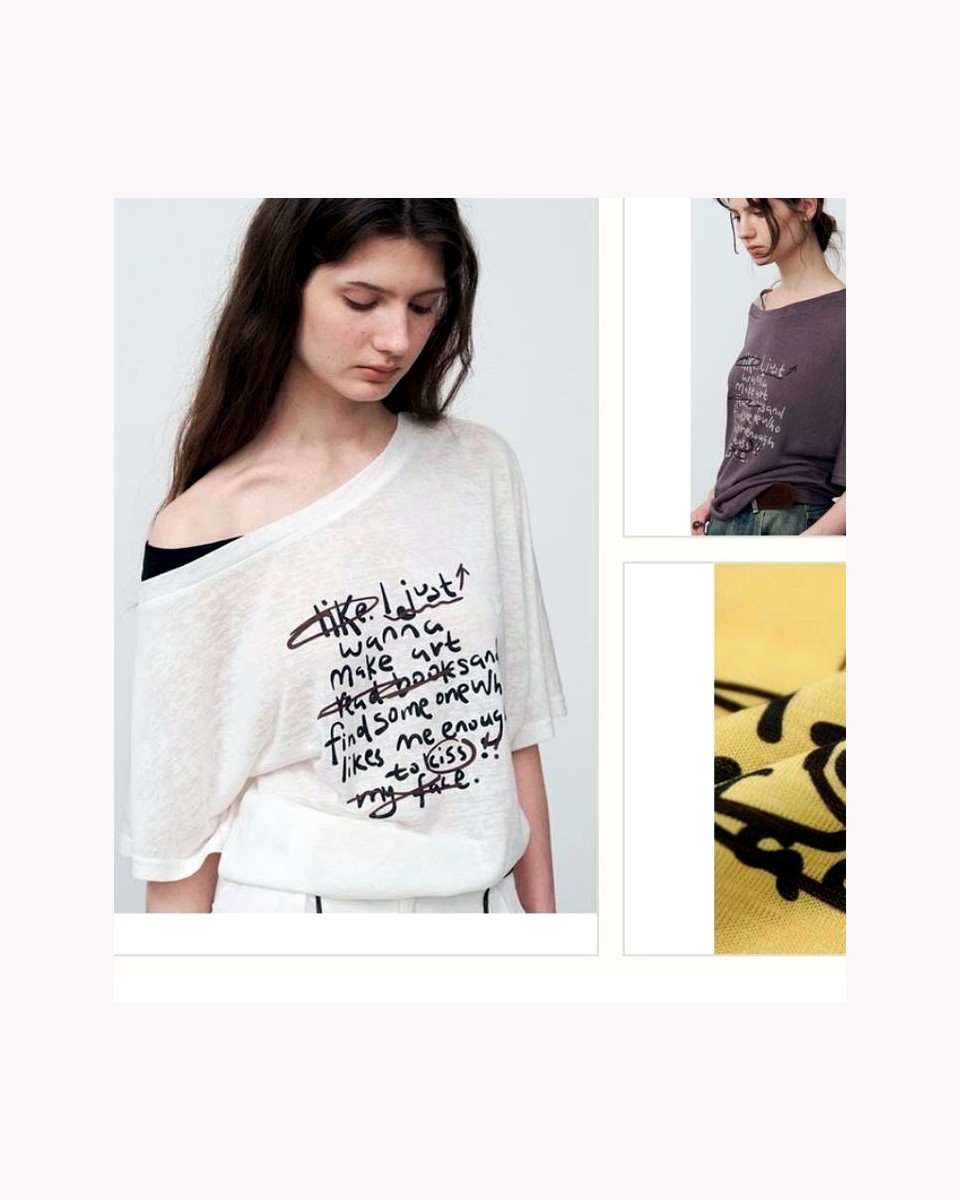
For graphic-led products, the graphic tee programme provides relevant references for discussing silhouette and decoration together. Use the actual development sample to approve the placement area and fit, however. A graphic's apparent scale changes with body width, sleeve proportion and the way the fabric hangs. Fit approval and artwork approval should inform each other rather than being completed by separate teams with conflicting assumptions.
How should buyers specify seams and hems for the intended appearance?
Show the seam and hem details that are visible or important to comfort. Identify where topstitching is part of the design and where a clean, unobtrusive finish is expected. Ask the factory to propose an appropriate construction for the material and use. The buyer does not need to assume one stitch or seam type is best for every T-shirt, but should understand the resulting appearance, stretch and feel.
Inspect the assembled seams on both sides. Look at bulk, alignment, surface distortion and the effect of movement. A seam that appears neat on a flat sample may feel different against the body or restrain a stretch area. Record the observation and review the proposed correction on the actual quality. Do not rely on pressing or posing to conceal an issue that returns as soon as the garment is handled.
Define hem depth, shape and any side opening with measurements and drawings. Review whether the hem changes the drape or creates an unintended flare. If the design uses a raw or decorative edge, describe the accepted effect and the review needed to support it. Keep intentional styling separate from an unfinished construction problem. The inspection reference should explain what the buyer chose rather than requiring production staff to infer the design from an unusual edge.
How should buyers prepare the artwork with dimensions and garment references?
Supply the actual artwork file, colour references, dimensions and intended placement. Identify whether the graphic is a chest mark, full front, back print, sleeve detail or a combination. Use stable garment reference points for positioning. A placement described only as centred may be ambiguous when the artwork itself is visually asymmetric or when the garment contains panels and seams that change the apparent centre.
State whether artwork dimensions remain fixed across the size range or follow an approved scaling rule. A large design that fits comfortably on the reference size may approach the armhole or side seam on a smaller garment. Review the relevant sizes before treating the placement as final. Keep the artwork revision and the garment pattern revision connected so a later fit change does not accidentally invalidate a previously approved print location.
The buyer should confirm its authority to use all supplied graphics, names and marks. A reference image from another brand can illustrate a visual direction without authorising reproduction of that brand's identity. If the factory proposes simplifying fine details or changing a process, review the result at the actual finished size. A large monitor preview can make details look more legible than they will be on the garment.
How should buyers approve decoration on the selected fabric?
The decoration sample should identify the substrate and process used. A successful trial on one fabric does not automatically approve another with a similar colour or weight. Ask the factory to review compatibility with the actual composition, surface and finish. If a substitute is used for an early trial, record the limitation and repeat the affected approval on the intended material before treating the product as ready for production.
Inspect the decoration for appearance, placement, feel and its effect on garment movement. A large area may change drape or comfort even when the graphic looks correct. Review edges, fine details and the relationship between print and seams. For embroidery or an applied component, inspect the reverse, backing and attachment as well as the exterior. The customer experiences the complete garment, not a flat photograph of the design.
Agree what care or durability evidence is needed for the claims the brand intends to make. An informal wash observation can help development, but it should not be recorded as a named test that was not performed. If the material, process, artwork coverage or finish changes, determine whether the previous result still applies. The streetwear manufacturing solution is a useful route for discussing those decoration and product-development decisions at programme level.
How should buyers review care effects before approving the final measurements?
Identify the sample and complete material combination used for care review. Record dimensions and appearance before the process, using the agreed measurement method. The review should include the body, neckband, seams, labels and decoration rather than treating the shell fabric as the whole product. If the buyer requires a formal test, agree the appropriate method and reporting with the responsible party.
After the review, examine length, width, sleeve relationship, twisting, neckline shape, seam appearance and decoration. Compare the actual observations with the intended customer experience and acceptance criteria. Do not assume that every dimensional change can be corrected by applying one percentage to the pattern. Different areas and components may behave differently, and some issues require a material or construction change rather than a size adjustment.
Retain the result and decision together. A report should identify the fabric, sample version, process and observations, then explain whether the buyer accepted the result or requested another action. If a finish or component changes later, identify the approvals affected. Accurate records allow the brand to use development evidence without turning a limited review into an unsupported promise that every T-shirt in every colour will behave identically under all customer care conditions.
How should buyers define the size chart and tolerance method clearly?
Show each point of measurement and how it is taken. Use consistent units and distinguish finished garment dimensions from body measurements. A width measured flat should not be confused with a circumference, and a body length should identify its start and end points. These simple definitions reduce misunderstandings when buyer and factory compare sample comments or inspection results.
Agree the grading plan and which sizes need physical review. Check neckline access, shoulder position, sleeve proportion and graphic placement at the sizes most likely to reveal a problem. A fixed artwork size may be acceptable, but it should be an intentional decision. Similarly, a cropped fit needs a considered length rule rather than an assumption that all dimensions change in the same way across the range.
Discuss measurement tolerances with suitable technical input for the material and design. This guide does not prescribe a universal tolerance for every T-shirt. Identify the dimensions that matter most to fit, function and appearance, and define the conditions under which the garment is measured. Save the approved chart and method with the sample. The final inspection team should not have to invent an acceptance rule after production is complete.
How should buyers compare quotations against a common product specification?
Provide a quantity matrix by style, colour and size, along with the selected fabric, neck construction, decoration and packing. Ask the manufacturer to identify assumptions that remain provisional. A quote using an available plain fabric and a small chest graphic is not directly comparable with a custom-dyed quality and large multi-area decoration. Explain the design requirements so the commercial discussion concerns the same product.
Separate garment minimums from material and decoration conditions. Different colours, fabric finishes, labels or print designs may create separate commitments. Sharing a silhouette does not automatically combine those requirements. Ask what happens to residual materials or components and whether they can be used for a later order under agreed conditions. Confirm the actual programme terms rather than interpreting a general statement about flexible production as a fixed promise.
When exploring cost options, ask for the specification consequence of each proposal. A fabric change may affect shape or print behaviour. A simplified graphic may alter the brand's design. A different neck construction may change comfort or appearance. The buyer can choose among these options, but the final specification and quotation should reflect the same accepted version. An informal agreement to reduce cost is not enough if the product file still describes the earlier design.
How should buyers make labels and packing part of sample approval?
Review the brand label, care information, size identification and any printed internal mark on the actual garment. Check position, feel, visibility and legibility. The buyer or its responsible advisers should provide the required market information, while the factory needs a controlled artwork version and placement instruction. Text approval and physical placement approval are separate decisions; both should be complete before production uses the component.
Confirm retail identifiers against the brand's own data. Similar colours or fits should not be distinguished only by a marketing name that packing staff may interpret differently. Supply the style, colour and size mapping and approve a readable proof where barcodes are used. The garment, hangtag, outer package and packing list should describe the same retail unit. A correctly sewn T-shirt can still create a costly fulfilment problem if those identifiers disagree.
Inspect a packed sample after opening it. Review folds, compression and the effect on large prints or surface treatments. Choose protective materials for a defined reason rather than adding layers automatically. If the brand makes environmental claims about packaging, keep the wording tied to appropriate evidence. The manufacturing brief should state the packing supplied by the factory and distinguish it from any later e-commerce fulfilment steps managed elsewhere.
How should buyers check first production pieces against the approved system?
The first assembled pieces should be compared with the actual approved sample and current specification. Focus on the details that define the style: silhouette, neckline, seams, dimensions, graphic placement and decoration appearance. Confirm that the intended material and components are being used. A sample made with one quality cannot serve as an unqualified approval of a different bulk fabric merely because the style code is unchanged.
If an issue appears, document the affected style, colour, size or material lot where relevant. Ask the factory to explain the cause and proposed response. A correction to print placement may be different from a pattern correction, and a finish adjustment may require renewed care review. Keep the buyer's decision attached to the evidence. If an exception is accepted, define its scope so it does not become a permanent unspoken change to the product standard.
Prepare the final inspection reference from these resolved decisions. Avoid maintaining one original specification and a separate set of contradictory messages. The inspection team should be able to identify the accepted garment, current measurements, artwork and permitted variation. This makes the review more reliable and gives both parties a practical basis for discussing an observation without relying on memory or a carefully selected photograph.
How should buyers retain the right records for the next drop or reorder?
Keep the approved garment, fabric and neckband references, measurements, artwork files, care evidence and packing instructions together. Record any issue discovered during the first delivery and distinguish product problems from unclear online descriptions or size advice. A customer complaint about an oversized fit may reflect a mismatch in communication rather than a manufacturing deviation. The brand should understand the cause before changing the pattern.
For a new colour or graphic, identify which parts of the previous approval remain useful and which need review. The silhouette may be unchanged while the material finish or decoration coverage creates a new question. Confirm availability and identity of all retained components. A reorder can reuse a controlled file, but it should not assume that every supplier input is unchanged or that one decoration result covers every new design.
Send the current drawings, fit reference, artwork, material direction and quantity allocation through the Yinshan Fashion contact page. State the decisions that need support and the customer experience the brand wants to preserve. A clear T-shirt brief makes sampling a sequence of useful decisions rather than repeated requests to make a generic tee feel more premium.
Keep a clear reference for judging graphic placement when the garment is not perfectly flat. A printed chest design may appear higher or lower because of the way the neckline and shoulders are arranged for measurement. Agree the preparation and reference points before comparing results. The inspector should assess the specified placement rather than reposition the garment until it resembles a styled photograph. When the artwork is intentionally off-centre or follows a seam, include an annotated reference that explains that choice. This lets the production team distinguish a deliberate design feature from a genuine positioning error.
How can buyers discuss next steps with Yinshan Fashion?
Before selecting the T-shirt material route, compare the questions in the fabric sourcing guide.
Select material candidates and define the fit and decoration questions. Send Yinshan Fashion a T-shirt development brief with artwork, quantities and the decisions that remain open.
Factory Production buyer guide
Fashion T-Shirt Manufacturer: From Fabric Weight to Print-Ready Sampling
Prepare a fashion T-shirt brief covering fabric weight, fit, neckline, seams, print compatibility, care review, grading and bulk-production approvals.
Define the fabric outcome
Describe the intended silhouette, feel and coverage, then identify the material reference used to assess those decisions.
Link artwork to the pattern
Provide dimensions, placement and size-range rules. Recheck them if the garment proportions change.
Close the approval record
Align material, fit, decoration, care, labels and packing with the same release version.
Buyer and factory handover checklist for fashion t-shirt manufacturer
Use these prompts to make the current product decision reviewable. Confirm market requirements and commercial details for the specific programme.
| Decision area | What the buyer should prepare | What to ask the factory |
|---|---|---|
| Approval point 1 | provide drawings, customer reference, size range and quantity matrix. | identify material and component references and explain substitutions. |
| Approval point 2 | approve material feel, fit, artwork rights and retail information. | document decoration trials, sample changes and production exceptions. |
| Approval point 3 | identify claims that require additional evidence. | Which proof or record should confirm this decision before the next stage? |
Continue the production conversation
T-shirt development decision table
| Decision | Evidence | Approval question |
|---|---|---|
| Fabric | Identified swatch and garment | Does weight support the intended shape and feel? |
| Neckline | Assembled and care-reviewed sample | Is access, shape and appearance acceptable? |
| Fit | Measurements and movement observations | Do proportions match the customer brief? |
| Artwork | Final file, dimensions and placement rule | Is each size and location clearly specified? |
| Decoration | Trial on identified substrate | Do appearance, feel and required evidence align? |
| Retail unit | Label proof and packed sample | Are identifiers and presentation correct? |
Buyer FAQs
What should a fashion t-shirt manufacturer receive first?
Send the silhouette, drawings, fabric direction, fit reference, artwork and quantity allocation. State which material or construction decisions need support.
Does higher fabric weight always mean better quality?
No. Weight is one input. Evaluate the actual material's suitability for the intended drape, coverage, feel, construction and decoration.
Can a print trial on another fabric approve this T-shirt?
It can inform development, but the final combination needs appropriate review on the selected or clearly representative substrate.
Should artwork scale with every garment size?
Use an approved rule. Fixed artwork can be suitable, but placement and proportion should be reviewed on relevant sizes before release.
What should be checked again for a new colourway?
Review the changed material or colour, coverage, decoration contrast, component relationships and any care evidence affected by the change.