Article
What should buyers know first?
Short answer: A B2B guide for brands preparing Germany-facing fashion production with controlled product data, German-language assets, labels, packing and order-version handoffs.
Fashion production for the Germany market is easier to control when a fashion brand treats product data, language versions, labels and packaging as part of the garment record, not as files that can be completed after the sample is approved. A blouse, jersey dress, active set or printed skirt may have one physical construction while its sales channel, product-page assets, packaging route and buyer-owned market information change across colourways or destinations. The factory needs to know which version is current before cutting, applying labels or preparing a pack.
Yinshan Fashion supports custom and private-label bulk programmes for brands rather than unrestricted ready-stock wholesale. That means the buyer owns the product proposition and final Germany-facing market decisions. Yinshan Fashion can help translate a reference, tech pack or collection direction into a controlled development route: material and component references, pattern and sample comments, product-data inputs, applied artwork and packing instructions. It is not a substitute for the brand's legal, marketplace, retailer or local-adviser review.
This is a production-planning guide. A requirement can depend on the exact garment, materials, intended user, sales route, country scope and role of the relevant economic operator. The useful factory habit is not to label every file as “Germany compliant.” It is to keep the source, owner, status and approved product version visible so the brand can confirm what applies before a market-facing instruction or bulk release is issued.
How should buyers start with one product identity, not a collection nickname?
The first production question is deceptively simple: which exact item are we discussing? “Summer dress,” “green top” or “German launch capsule” may work in an internal mood board, but they do not control a sample or packing instruction. Give every sellable route an identity that links the style, colourway, size context, fabric and trim route, current sample revision, target channel and decision owner. When the same silhouette has a different print, lining, label language or individual pack, show that change rather than assuming a general style name is enough.
A practical identity can be short: style code, colour reference, size family, revision date and market/channel tag. The value is not the code itself. It is the ability to tell whether a customer image, a size sticker, a packing insert and a factory file all refer to the same garment. A small brand can manage this in a controlled brief, spreadsheet or product-data register. A larger programme may use connected technical, merchandising and purchase-order systems. Both approaches need one current reference that people can find.
Yinshan Fashion can use that identity throughout custom development. The pattern comment, fabric swatch, sample photograph, label artwork and packing proof should point back to the buyer-defined style version. If a fabric substitution, altered neckline, changed colour or revised care input affects the product, create a new visible revision. It is safer than asking the team to remember which attachment in a message thread superseded the previous one.
What should buyers check about the short answer: make six records agree before bulk preparation?
For Germany-facing production, a factory-ready handover should connect the physical garment with the information and packing route that belong to it. The following table is a decision tool, not a legal checklist. It shows where a buyer can avoid a common problem: an accurate garment paired with an outdated product file, image or package.
| Record area | Buyer decision | Factory execution input | Control question | | --- | --- | --- | --- | | Product identity | Style, colourway, size context, channel and revision | Current reference on sample, order, labels and packing | Which exact version is being released? | | Material and components | Fabric, lining, trims, colour and supplied composition inputs | Supplier references, swatches and applied component callouts | Does the sample use the intended route? | | German-language assets | Source text, translation owner, audience and approval status | Approved file only where an applied item needs it | Is this customer copy, a draft or a released instruction? | | Product information | Buyer-owned fibre, care, origin, brand or market inputs | Current artwork and placement supplied by the buyer | What source and owner support this field? | | Packaging route | Fold, bag, label, barcode, insert and carton version | Issued packing specification linked to the order | Which style-colour-size and channel does it cover? | | Change and release | Approval owner, date, conditions and next decision | Current technical and packing files | What change reopens an earlier approval? |
The table does not mean every programme needs a complex approval system. It means a factory can identify what it is allowed to use. A customer-facing German description can be very useful to a sales team, yet it does not replace fabric or construction information. A sample can be approved for fit while its label, packing, photography or product wording remain open. Separate statuses prevent a working draft from becoming an accidental bulk instruction.
How should buyers keep German-language work connected to its source and purpose?
Germany-facing product content often introduces more than a translation task. A product may have a buyer's original copy, a German version, retailer terminology, image captions, hangtag wording, care notes, packing instructions and production labels. These do not all serve the same audience. The factory should not infer an applied label from product-page copy, and the online team should not assume that a technical fabric note is a customer-ready statement.
For each language file, record its source, intended audience, style scope, version, owner and approval status. For example, “German product description for online draft” is meaningfully different from “German label artwork approved for style DR-104, colour 03, revision 5.” That distinction matters when the garment, fabric or component route changes. The affected wording may need a new buyer-side review rather than automatic reuse.
Avoid treating a translated fabric name as proof of composition, care behaviour, origin, performance or a product claim. Ask the buyer to provide the source information and determine who approves the customer-facing language. Yinshan Fashion can keep the approved artwork and its placement connected to the production version. The brand or relevant market operator should confirm the final market scope and wording.
What should buyers check about turn product data into a sample question before it becomes a bulk instruction?
Product data should inform sampling, not arrive only after fit comments are closed. Start with the style identity, then add the information that could influence material choice, component placement, labelling, packing or the product's intended presentation. A woven dress with a lining, a printed blouse with contrast buttons and an active-fashion top with a branded elastic may each need different records and applied proofs.
Ask what the sample actually proves. It may answer a fit, drape, coverage, neckline, seam, trim, print-placement, label-placement or fold question. It does not automatically prove that every customer statement, fibre field, care instruction or market-specific asset is ready. Record the sample version, material and component references, intended size, objective, reviewer, observations, approved scope and open conditions.
The casual-fashion product range can help a buyer define a dress, blouse, shirt or top category before the market files are developed. For an active line, the active-fashion range provides a separate product context, where materials, fit, labels and use descriptions should be equally controlled. These are starting points for a development conversation, not claims that every displayed product is available for an unrestricted order.
What should buyers check about treat labels, artwork and applied information as versioned production components?
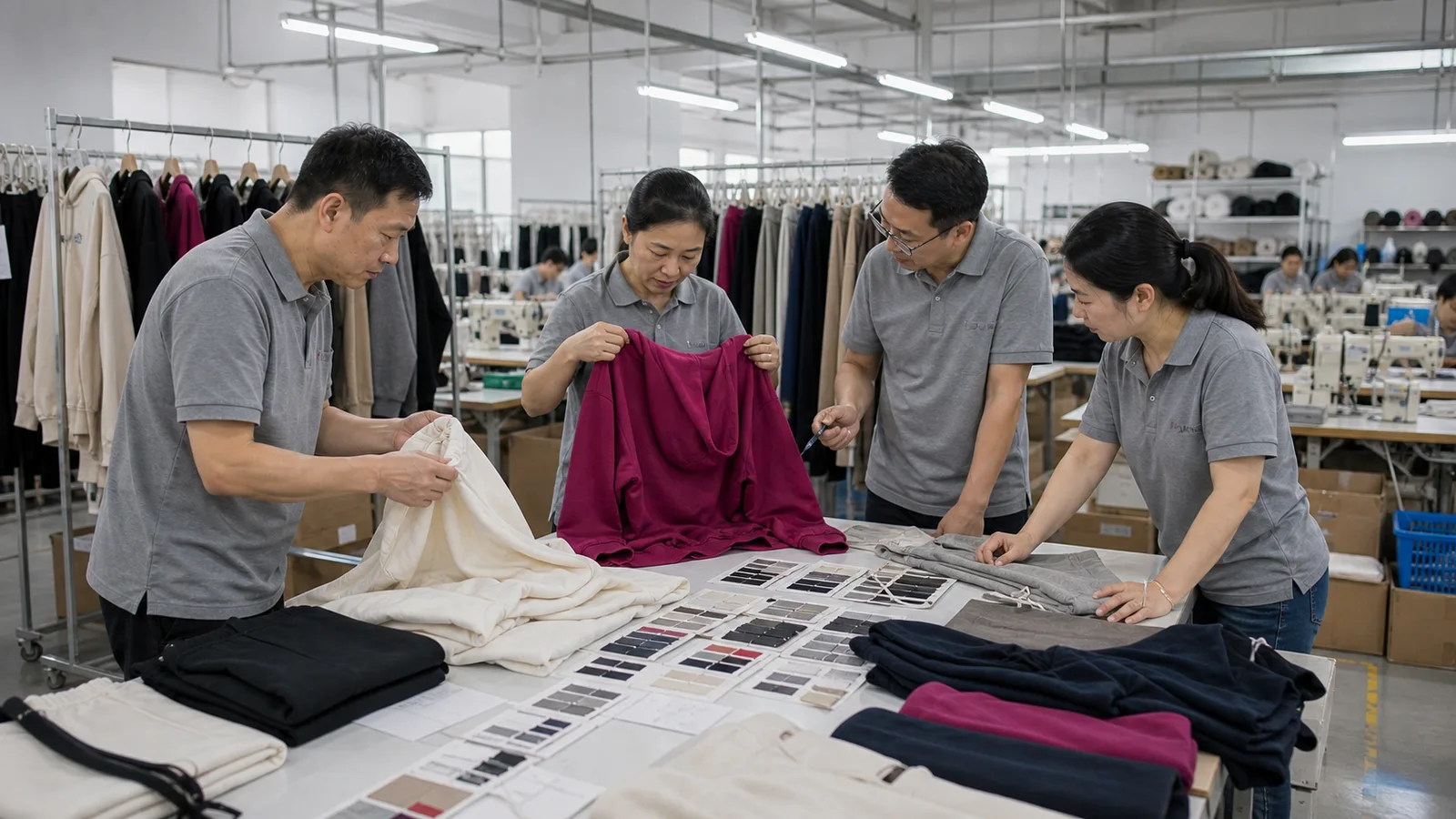
Many production delays come from a correct garment waiting for a missing or conflicting applied file. A size label may be complete while the main label is still under review. A hangtag may carry an earlier colour name. A barcode file may be owned by the retailer. A packaging insert may be relevant only to one channel. Put every applied item in the product record with its file name, revision, placement, scope, owner and release status.
This removes an unhelpful choice between “all files are final” and “nothing can move.” A buyer can state: approved for sample placement; German language review open; packing artwork pending; retail barcode supplied by customer; or bulk release conditional on a named file. The factory can then prepare what is supported without inventing missing information. If a later change affects the material, style, channel or market scope, the team can see which applied item must be reopened.
The private-label workflow is useful for connecting a brand identity, label package and approved artwork to a practical manufacturing handoff. Do not rely on a generic logo archive or old product-page screenshot. Attach the current file to the specific style-colour-size route, and distinguish visual references from files that may be applied to garments or packing.
How should buyers build the packing route around the channel, not a generic polybag note?
Packaging is part of the product record because it changes what arrives at the buyer, retailer or customer. A Germany-facing programme may include a fold method, individual bag, tissue, belly band, branded insert, size identifier, barcode label, protective material, carton mark or channel-specific receiving instruction. The exact combination depends on the confirmed programme. No fixed packing method, price, test, quantity or delivery outcome should be assumed from the product category alone.
Begin with a simple question: who receives the garment and in what presentation? Direct-to-consumer stock, a department-store programme and a marketplace replenishment may need different inputs. Define the style, colourway, size, set composition, belt or accessory handling, label location, fold direction, individual-pack components, carton information and buyer owner. Where the same garment uses more than one packing route, give each route a separate version rather than relying on a shared file name.
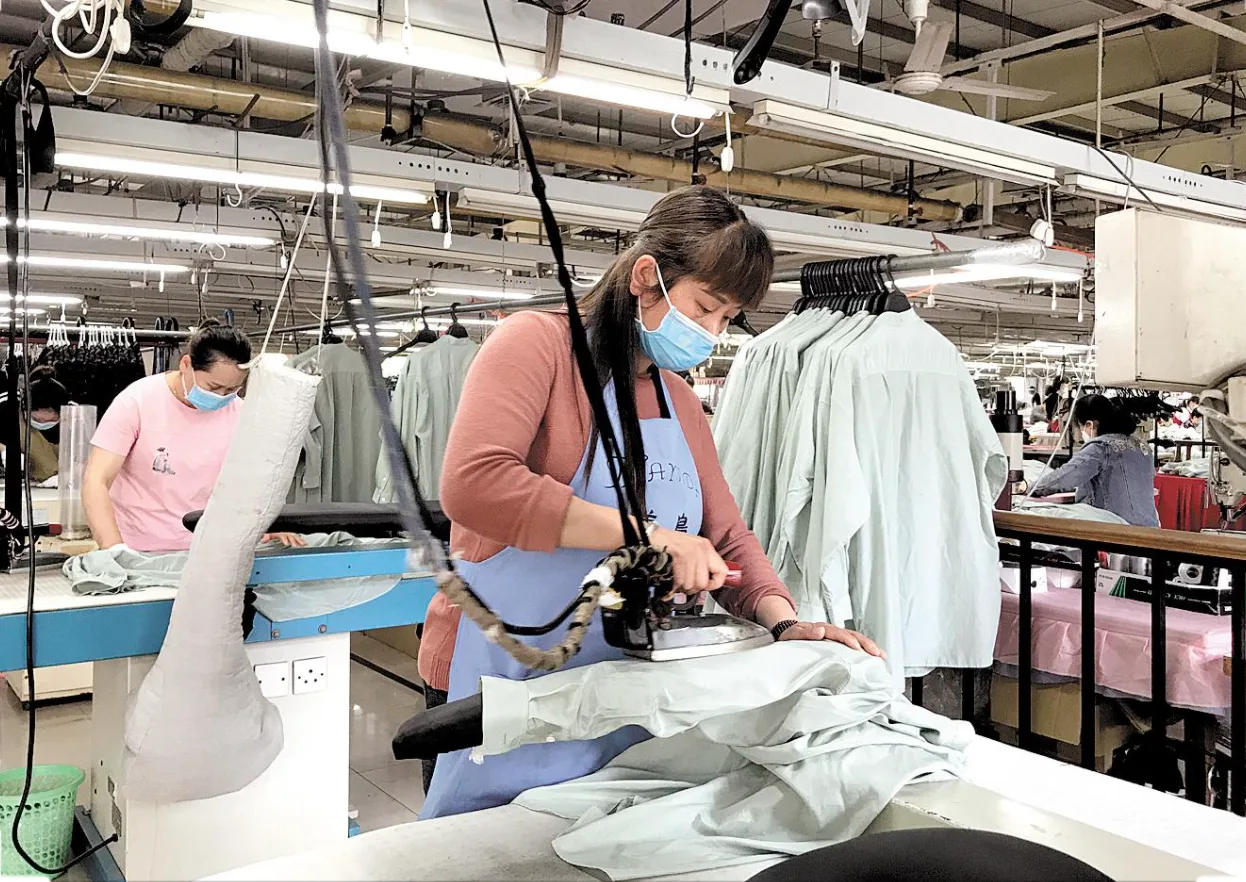
The manufacturing overview shows why finishing, inspection and packing belong to a connected order flow. Yinshan Fashion can coordinate factory-ready packing instructions with the garment and current product files. The buyer should confirm its retailer, brand and Germany-market requirements before the route is treated as final.
How should buyers use a release register that names the owner and the open condition?
A release register need not be lengthy. For each product version, list the item, source or file, status, owner, date, scope, decision and next action. One row might say “fit sample revision 2, approved for silhouette; fabric colour confirmation open.” Another might say “German language product copy, online draft only; not approved for hangtag.” A third may say “packing version P-04, approved for e-commerce channel only.”
This language prevents a partial approval from being mistaken for a full order release. It also gives a buyer a way to let the project progress where evidence exists. The factory can request the missing file or a documented decision rather than guessing. The brand can see whether a change in material, trim, product copy, language, size range or packing reopens a previous review.
For private-label programmes, Yinshan Fashion can help structure the questions around the current product, sample and production handoff. The brand should name the person who can approve design, material, product-data, label, packing and market-review decisions. That ownership becomes especially valuable when several colleagues, agencies, retailers or suppliers contribute files to the same launch.
How should buyers keep material, component and product information in the same change log?
Material changes are not only sourcing changes. A new fabric or trim can affect a garment's drape, fit, coverage, print result, seam behaviour, care-information source, label review, product photography and packing. A controlled change log should show the prior route, proposed route, reason, styles affected, sample or proof needed, buyer reviewer, decision and next action. It should not call a substitute “equivalent” without the product-specific evidence the buyer needs.
The fabric and trims planning page offers a useful route for organising swatches, supplier references and component options during custom development. The factory can advise on questions a sample may help answer. It should not promise that a material has the same availability, cost, test result, certification, feel or performance as another material unless current programme evidence supports that conclusion.
The same principle applies to product data. A revised colour name, updated fibre information, different label language or new retail pack may affect only one style or it may change the whole programme. Make the scope explicit. Then check whether the material route, sample, images, label artwork, packing proof and purchase-order line remain aligned with the change.
How should buyers prepare a buyer checklist before requesting a Germany-market quote?
The buyer does not need every answer before the first factory discussion. It should identify what is confirmed, what is an assumption and what it wants the factory to help evaluate. That gives a supplier enough context to ask practical questions without treating an early quote or development comment as an unconditional commercial promise.
- Name the style, colourway, size context, channel, target product use and current revision.
- Share references for fabric, lining, trims, print, logo method, labels and any known composition or care-information sources.
- Separate approved German-language or market-facing files from online drafts, source notes and creative references.
- State the sample objective, required proof, reviewer, decision owner and comments consolidation method.
- Identify the label, barcode, insert, fold, bag and carton inputs that the buyer owns or expects from another party.
- Show the current quantity structure by style, colour and size when known, while marking estimates as estimates.
- Name the person or team responsible for confirming Germany-facing market and retailer requirements.
- Record any condition that keeps the product, applied artwork or packing version from moving to bulk.
What should buyers check about give the factory a matching execution checklist?
The factory's job is not to make market decisions for the brand. It is to keep the current, approved production route visible and surface a conflict before it becomes an applied or packed item. The following questions help convert a broadly described Germany launch into an executable order handoff.
- Which style-colour-size and revision controls the sample, label, packing and purchase-order files?
- Do the supplied fabric, lining, trim, print and component references match the version currently under review?
- Which text or artwork is only a draft, and which file has an owner-approved scope for application?
- Does the issued packing instruction identify channel, set composition, size identification, barcode ownership and carton requirements?
- Is a new material, component, product-data or language version likely to reopen a sample, applied proof or packing review?
- Which buyer owns a final decision when the technical file and the customer-facing asset conflict?
- Are quantities, colours and size variants sufficiently clear for the current discussion, without implying a fixed commercial promise?
- Which market, retailer or product-information decision must remain open until the brand's appropriate reviewer confirms it?
What should buyers check about a Germany-facing handover should support a repeat as well as a launch?
The value of a controlled record appears again when the brand considers a repeat. Keep the approved sample, material and component references, colour route, current product-data sources, label and packing versions, decision log, quality observations, authorised changes and order context together. A later order can begin with a comparison: what remains the same, what has changed and what must be reviewed again?
Do not assume that a previous production run makes the next one automatic. Materials, components, retail channels, product information, packing, quantities and market expectations can change. A versioned record lets the buyer and factory discuss those differences openly. It prevents a historical image, old label file or outdated carton note from silently becoming the control for a new product.
What should buyers check about make the handover readable for a new person joining the project?
A useful production record should work even when the original designer, buyer or merchandiser is not present. A new colleague should be able to identify the current style version, see which sample is being referenced, find the material and component route, distinguish approved assets from drafts, locate the buyer-owned decision owner and understand the next action. If the answer depends on someone remembering a past video call, the handover is not yet strong enough for bulk preparation.
Use plain status language. “Approved for fit,” “awaiting German copy review,” “packing route open,” “released for e-commerce channel,” and “recheck after fabric change” are more helpful than a generic green status. They show what the factory can act on and what must remain conditional. This discipline also helps a buyer compare a new supplier quote or sample response with the exact same product basis.
Where several versions exist, add a short change note rather than deleting the previous decision. State what changed, why it changed, which style or channel is affected, what needs to be reviewed again and who can approve the next release. That small history protects the programme from an earlier but visually similar file being used at the wrong stage.
What Yinshan Fashion adds to Germany-market production planning?
Yinshan Fashion helps brands convert a fashion direction into controlled development and manufacturing conversations: custom design support, fabric and component discussion, fit and sample development, private-label inputs, packing coordination and factory handover. The most useful contribution is clarity around the current product version. A Germany-facing programme can then give the relevant brand and local reviewers the information they need without asking the factory to make unsupported market claims.
Start with the category, target channel, style references, current material direction, product-data sources, German-language assets, sample objective, packing concept, quantity context and approval owner. Share those inputs through the contact page. Yinshan Fashion can help map the next sample, artwork or manufacturing question for a custom private-label programme.
What should buyers check about frequently asked questions about fashion production for the Germany market?
What should a Germany-market fashion production brief include?
It should include the style-colour-size identity, channel, material and component route, current sample version, product-data and language-file sources, labels, packing inputs, quantities when known, approval owner and open market-review items. It should distinguish an approved production file from a creative or online draft.
Does German product copy replace a factory technical file?
No. Product copy may support a sales page, but a factory needs the current material, construction, measurement, component, label and packing references for the exact garment version. Keep the two documents linked without treating either as a substitute for the other.
Who approves Germany-facing label and packaging requirements?
The brand, importer, retailer or other appropriate market operator should identify the applicable route and approve the relevant information. Yinshan Fashion can organise buyer-approved production inputs and apply current artwork, but it does not replace local legal or market review.
When should a packing version be released?
Release it when the buyer has connected the precise style, colourway, size context, channel, applied files, fold or protection route, barcode ownership and carton instructions to an approved version. A material, label, channel or set-composition change may require that review to reopen.
Can Yinshan Fashion help a small private-label brand prepare for Germany?
Yes. Yinshan Fashion can discuss custom development, sampling, materials, fit, labels, packing and factory coordination. Exact quantities, commercial terms, timing and market obligations depend on the confirmed programme and the buyer's final review route.
Germany-market production-control kit
Three controls that keep Germany-facing product files tied to the current garment
Use one product identity, one release register and one packing version. They help a brand distinguish a sample discussion from an order file that a factory can actually execute.
Anchor one sellable version
Connect the style, colourway, size context, fabric route, sample revision and target channel before German-language product or packing assets are released.
Separate source data from customer copy
Keep supplied fibre, care, origin, warning, brand and translation inputs traceable to a source, owner and approval status instead of treating a draft listing as a factory instruction.
Release the applied packing route
Match approved labels, inserts, barcode data, fold method and carton marks to the precise style-colour-size and channel version moving forward.
Buyer actions and factory questions before Germany-facing production moves toward bulk
Use this control before a sample, German-language asset, label file or packing instruction is treated as the current production version. Market and legal decisions remain with the brand and suitable local advisers.
| Decision area | What the buyer should prepare | What to ask the factory |
|---|---|---|
| Product identity | Provide style, colourway, size context, channel, revision and current product reference | Which current reference controls the sample, labels, product assets and order files? |
| Material and component route | Share fabric, lining, trims, supplied composition information and approved alternatives | Which material or component still needs a swatch, applied proof or buyer decision? |
| German-language assets | Identify the source, translation owner, audience and approval status for market-facing text | Which language file is a customer draft and which version is approved for an applied item? |
| Labels and packing | Approve artwork, placement, individual packing, barcode ownership, inserts and carton details | Which exact style-colour-size and channel does the issued packing version cover? |
| Sample and change control | Record the sample purpose, comments, decision owner, conditions and next release | Which later change reopens the product data, artwork or packing review? |
| Market review | Name the brand or local reviewer responsible for Germany-facing requirements | Which item must remain open rather than becoming an unsupported factory claim? |
Continue the production conversation
Buyer FAQs
What should a Germany-market fashion production brief include?
It should identify the style-colour-size route, channel, material and component references, sample version, product-data and language-file sources, labels, packing inputs, approval owner and open market-review items.
Does German product copy replace a factory technical file?
No. Product copy may support sales, but a factory needs current material, construction, measurement, component, label and packing references for the exact garment version.
Who approves Germany-facing label and packaging requirements?
The brand, importer, retailer or another appropriate market operator should determine and approve the applicable route. Yinshan Fashion can organise approved production inputs but does not replace local legal or market review.
When should a packing version be released?
Release it only when style, colourway, size context, channel, applied files, fold or protection route, barcode ownership and carton instructions are connected to an approved version.
Can Yinshan Fashion help a small private-label brand prepare for Germany?
Yinshan Fashion can discuss custom development, sampling, materials, fit, labels, packing and factory coordination. Exact commercial terms and market obligations remain specific to the confirmed programme.