Article
What should buyers know first?
Short answer: Plan a clothing sampling process around the decisions each round must resolve: design, fit, materials, grading, and production approval.
A round is useful when it produces evidence that moves the product towards an informed approval. It may establish a silhouette, resolve a fit issue, confirm the actual materials, or show that the agreed specification has been assembled correctly. Repeating a sample without defining its purpose can consume time while leaving the same questions open. This guide explains how to organise decisions, comments, and release conditions so the buyer can understand why another round is needed and what it should achieve.
How should buyers define the clothing sampling process by decision gates?
Begin by listing what the team already knows and what remains uncertain. An existing approved pattern may reduce one kind of uncertainty, but a new fabric can still change the garment’s behaviour. A clear reference image may communicate design direction while leaving measurements and internal construction undefined. Ask the buyer, designer, and factory to agree which decisions need physical evidence and which can be resolved through drawings, material references, or other suitable information.
Give each planned round a purpose and an acceptance question. A first development sample might answer whether the overall shape reflects the brief. A later fit sample might answer whether a defined correction works on the intended wearer. A final pre-production review might confirm the intended material and component combination. Names vary between programmes, so define the evidence required instead of assuming that everyone uses a sample label in exactly the same way.
For a custom collection, the private-label clothing manufacturing solution provides a useful place to begin discussing development responsibilities. Bring the unresolved questions to that conversation. The factory can then explain the proposed sampling approach and its assumptions, rather than trying to estimate a meaningful process from the instruction “make it like this photograph.”
How should buyers separate design development from correction?
A design change and a correction are not the same event. If the sample differs from an agreed specification, the team needs to identify the discrepancy and the appropriate response. If the buyer decides to change the neckline after seeing an accurately made sample, that is a new design decision. Record the distinction clearly. It helps everyone understand the effect on cost, materials, and timing without turning every discussion into a disagreement about responsibility.
The first sample often reveals preferences that were difficult to express on paper. That is a legitimate part of development, but the buyer should consolidate those choices rather than introduce them one at a time across several rounds. Review the garment with the relevant decision makers present, identify the major design direction, and resolve conflicts before issuing instructions. A factory cannot efficiently follow a brief that asks for a shorter body in one message and a longer proportion in the next.
Keep a revision log that states the old requirement, the new requirement, the reason, and the affected documents. This does not need to be bureaucratic. A short structured record can show whether the next sample is intended to correct a measurement, test a revised design, or confirm a sourced component. That clarity makes the eventual approval more defensible and gives future styles a useful development history.
How should buyers build a first brief that can answer practical questions?
The initial brief should include annotated sketches or references, intended use, wearer and fit direction, material proposals, measurements where available, construction priorities, colours, branding, and proposed quantities. It should also identify what the buyer wants the factory to advise on. Leaving an area open for technical input is reasonable; leaving it blank without explanation can lead the sample room to make an assumption the buyer later treats as an error.
Prioritise the features that define the product. For a fluid dress, drape and neckline security may matter more than a decorative label position in the first round. For a structured shirt, collar, shoulder, and front balance may deserve early attention. The priority list should guide the review, while the complete specification keeps smaller requirements visible. This prevents a sample from being repeatedly revised for minor details while the fundamental shape remains unsettled.
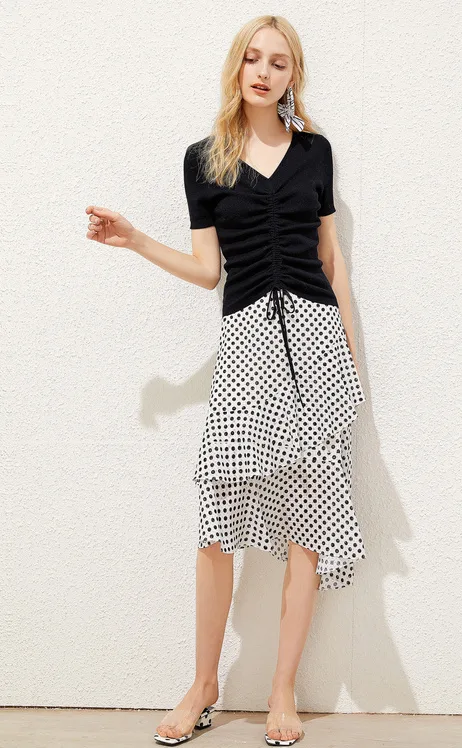
The dress collection can support a category-specific conversation about silhouette and materials. Use a relevant reference to explain the decisions the first sample should resolve. Do not assume that borrowing a visual direction also supplies the hidden pattern, internal construction, or production-ready specification needed for a different custom design.
What should buyers consider about label provisional materials before the sample arrives?
Sometimes the first garment uses a substitute fabric or temporary trim because the intended component is not yet available. That sample may still be valuable, provided its purpose and limitations are documented. Ask the factory to identify substitutions before dispatch and explain what can reasonably be assessed. The buyer should not discover the substitution only after making approval comments that depend on the final material’s behaviour.
Keep a material status list beside the sample record. Mark each item as proposed, physically reviewed, approved, or still awaiting evidence, using definitions agreed by the team. A fabric colour approved from a reference does not automatically establish the finished garment’s drape. A loose zip that operates correctly does not automatically approve its placement and appearance in the garment. Track those decisions at the level needed for the product.
Before the next round, decide whether the intended materials are necessary to answer its acceptance question. If the unresolved issue concerns an edge finish strongly affected by fabric behaviour, another substitute-fabric sample may not provide useful evidence. If the question concerns pocket location, an earlier material may be sufficient under an agreed review scope. The decision should follow the purpose of the round, not a fixed habit of always making another full garment.
How should buyers run a consistent fitting session?
Identify the sample, size, revision, wearer or form, underlayer, footwear condition, and measurement method. These details make comments comparable between rounds. A trouser fitted at a different waist position or a jacket reviewed over a much thicker top can appear to have changed even when the sample construction is similar. Consistency helps the technical team distinguish a garment issue from a difference in the review conditions.
Observe the garment from front, side, and back, then use ordinary movements relevant to its intended purpose. Describe what happens and where. A comment such as “the front opening spreads when seated” gives the technical team a clearer problem than “fit is wrong.” Avoid diagnosing a pattern correction solely from a single photograph when the available evidence does not support that certainty.
For a shirt programme, the fitting record might focus on shoulder position, collar relationship, front closure, sleeve movement, and body length. Another garment will require different priorities. The value of a consistent session is not that every style uses identical movements, but that the chosen observations can be repeated and connected to the intended product.
What should buyers consider about consolidate comments before sending them?
Collect input from design, technical, merchandising, and other relevant reviewers, then issue one agreed instruction set. Separate required corrections from questions and optional future ideas. If the team disagrees internally, resolve that disagreement before the factory begins another sample. Sending every reviewer’s unfiltered preference creates a moving target and makes it difficult to know which instruction has authority.
Use a clear location, observation, desired outcome, and requested response for each issue. Add marked photographs where they help. For example, identify the exact pocket opening that needs review and describe its behaviour under the fitting condition. Do not rely on a large photograph with an arrow and the word “fix.” A sample maker needs enough context to understand what the buyer is trying to achieve.
Ask the factory to confirm its interpretation before proceeding with substantial changes. The response should identify any linked effects, missing information, or proposed alternatives. This is especially important when a request changes several areas at once. A narrower waist, shorter body, and revised closure may interact; the technical team should have the opportunity to explain those relationships rather than treating the comments as isolated commands.
How should buyers decide whether the next round needs a full garment?
Not every unresolved question requires the same evidence. A placement artwork, label, trim, or particular seam treatment may sometimes be assessed through a focused sample or reference. The buyer and factory should agree whether that evidence is sufficient for the decision. Do not use a small detail sample to approve broader fit or material behaviour that it cannot demonstrate.
A full garment is useful when changes affect the overall relationship between parts. Revising a bodice, sleeve, or lining can influence how the complete product sits and moves. Ask what the proposed evidence will show and what it will leave untested. This approach can reduce unnecessary repetition while preserving the checks that matter. It is a decision about adequacy, not a blanket preference for fewer physical samples.
Record any approval made without another full garment. State the change, the supporting evidence, the person approving it, and the remaining checks required at the relevant later stage. That record prevents a limited detail approval from being treated as unrestricted approval of the entire style. It also gives production and inspection teams a clear explanation of why the final reference may differ from an earlier physical sample.
What should buyers consider about bring size grading into the schedule deliberately?
Base-size fit approval does not establish the whole range. Decide when grade rules will be reviewed and which size-set evidence is needed for the proposed sizes. If the buyer adds an extended range late in development, acknowledge the additional questions rather than assuming the base pattern can simply be enlarged without review. The programme should define who proposes the grading and who approves its result.
The timing matters because a major change to the base fit can affect work already done on other sizes. Discuss which base decisions should be stable before broader size development proceeds. At the same time, do not postpone all consideration of the range until the base sample is treated as untouchable. Early knowledge of the intended sizes can help the technical team identify issues worth considering before the pattern is finalised.
Keep size-set comments linked to the same style revision. If one size needs a specific adjustment, record whether it changes the general grade rule or only that size’s specification. A future production order should not depend on someone remembering an exception discussed during a fitting call. Clear records make the size range reproducible and prevent additional sample rounds caused by lost instructions.
How should buyers plan material and colour approvals as parallel decisions?
Some approvals can progress alongside fit development when the dependencies are understood. The team may review proposed labels, colour references, or packaging while a pattern correction is being made. Agree which activities can proceed safely and which depend on an unresolved design choice. For example, a final packaging dimension may need the approved garment and fold, while a branding artwork review may be possible earlier.
Do not confuse parallel preparation with permission to commit to bulk materials or production. The buyer and factory should define what is authorised at each stage and what remains provisional. If an early commitment is proposed to protect a schedule, make the assumptions and consequences concrete. The decision belongs in the project record rather than in a casual message that later becomes difficult to interpret.
A simple dependency list can be enough: the final care artwork depends on the confirmed product information; the final trim choice depends on the approved material combination; the pack sample depends on the intended sale unit. This helps the team use waiting time productively without pretending every decision is independent. It also makes a delay easier to explain in terms of the missing input that actually controls the next step.
What should buyers consider about estimate time from the actual remaining work?
Ask the factory to identify the activities included in its sampling estimate: material sourcing, pattern work, sample assembly, internal review, dispatch, buyer review, and any external assessment. Avoid comparing two timelines unless their scope is comparable. A short sample-room estimate may exclude the time needed to obtain the intended fabric or receive consolidated buyer comments.
Include decision time on the buyer’s side. A sample arriving before a team holiday or without access to the fit model may wait even when the factory has completed its work. Name the reviewers and plan how comments will be consolidated. A realistic calendar shows the handoffs and the assumptions behind them, rather than presenting every day between the brief and delivery as factory production time.
When a round changes scope, update the estimate. Introducing a new fabric or custom component may require additional sourcing and review. Ask for the revised sequence and the effect on the intended order date. Do not retain an earlier deadline as though the underlying work were unchanged. The useful question is what can be completed and approved under the new brief, with evidence, rather than how to preserve a date at any cost.
How should buyers make sample charges and revision terms explicit?
Confirm the commercial scope of the sampling arrangement before work begins. Ask what the quoted charge covers, how additional rounds are handled, which materials or custom components are included, and whether dispatch costs are separate. The actual terms depend on the programme. Do not assume a universal policy for refunds, credits, free revisions, or the number of garments supplied.
Describe how changes will be classified and agreed. A correction to an accepted requirement may be treated differently from a newly requested design feature, but the applicable arrangement should be confirmed rather than inferred. Keep commercial decisions connected to the revision log. This makes it easier to resolve a disagreement using the brief and approval history instead of competing memories of what was requested.
When comparing suppliers, consider the information and evidence included in the development proposal as well as the sample charge. A low initial price may cover a narrower scope. A more detailed proposal may still be unsuitable if it does not answer the product’s actual questions. The buyer’s task is to compare equivalent work and choose an approach that supports a reliable decision, not simply to minimise the visible cost of the first sample.
What should buyers consider about know when another round is justified?
Another round is justified when a meaningful unresolved issue requires evidence that the current sample does not provide. That might involve fit, material behaviour, construction, grading, or a changed design. State the issue and the expected evidence before proceeding. If the team cannot explain what the next sample will answer, pause the sample request long enough to clarify the decision.
Repeated problems deserve a diagnosis, not an automatic repeat. Review whether the brief is ambiguous, the material keeps changing, comments conflict, or the technical correction has not addressed the observed issue. The buyer and factory may need a focused discussion before another garment is made. A new round becomes more useful when it follows an agreed explanation of what will change and how success will be assessed.
Conversely, do not request a new sample solely because a planned round remains on a calendar if the necessary evidence has already been accepted through an appropriate process. The number of rounds is a planning tool, not an achievement target. The release decision should follow the actual approval requirements and documented product evidence, with any limitations clearly understood by the people taking responsibility.
What should buyers consider about example: a dress that needs different evidence at each stage?
Imagine a buyer developing a sleeveless dress with a fitted waist and a fluid skirt. The first sample uses a temporary fabric and resolves the neckline shape and overall proportion. The buyer records those decisions but leaves final drape and lining approval open. The next round uses the proposed materials and focuses on waist fit, movement, and internal appearance. This is a progression of questions, not two interchangeable samples.
During review, the buyer changes the back opening. The team updates the sketch, construction notes, and sample purpose instead of treating the request as a minor comment unrelated to timing. The factory explains which areas need to be reassessed. A later size-set review then examines the approved design across selected sizes, while labels and packing proceed under the agreed dependencies.
The final release record names the approved style version and its supporting evidence. It does not rely on a statement that “three rounds are enough.” Another programme might need fewer or more rounds because its starting information and unresolved risks differ. The useful lesson is to make every sample carry a clear question, a documented answer, and an explicit consequence for the next decision.
How should buyers keep sample identity intact across remote reviews?
Give each physical sample a durable identifier that links it to the style, size, date, and revision. Use that identifier in photographs, measurement reports, dispatch records, and comments. When several similar garments arrive together, an informal description such as “the newer black one” is not reliable enough. The problem becomes harder when a buyer passes samples between an office, fit model, showroom, and photographer. A consistent identity prevents a useful review from being attached to the wrong garment.
Retain the sample’s status when it leaves the development team. A photography or sales sample may be suitable for a defined presentation while still containing provisional details. If another team receives it without that information, they may publish product claims or collect orders against features that have not been approved. Supply a short status note stating the intended use, known limitations, and the current person responsible for decisions. This keeps the garment useful without allowing its presence to imply unrestricted approval.
At each review, confirm that the sample matches the file being discussed. Check identifiers before comparing measurements or describing a correction as unsuccessful. If the wrong revision was used, correct the record rather than building another round on misleading feedback. This is a practical administrative check with technical consequences: accurate comments on an obsolete sample can still send development in the wrong direction.
When the final reference is selected, record where it is held and how other teams will access the necessary evidence. Preserve earlier comments as history, but make the current instructions unmistakable. The approved reference should be easy to locate without searching a long message thread or relying on the memory of the person who attended the last fitting.
Before requesting dispatch, confirm which documents will travel with the sample and which will be shared electronically. A garment arriving without its current measurement report or substitution notes can lose review time while the buyer asks for missing context. Check the package against the stated purpose of the round. The recipient should know what to inspect, what remains provisional, and where to record the decision as soon as the garment arrives.
What should buyers consider about three actions to make the next round useful?
Action 1: Name the unanswered question
Write what the next sample must demonstrate and which decisions remain outside its scope. Agree that purpose before sample work starts.
Action 2: Issue one comment record
Resolve internal disagreements, mark photographs, and distinguish required changes from questions and optional ideas.
Action 3: Close the evidence trail
Link the approved sample, current specification, materials, comments, and commercial version so the release decision is traceable.
How can buyers discuss next steps with Yinshan Fashion?
For the broader handover from development comments to a production reference, consult the factory sampling guide.
Prepare the current brief, sample history, unresolved questions, and intended order window. Contact Yinshan Fashion to discuss a sampling sequence that connects each round with a specific decision and a clear approval record.
Factory Production buyer guide
Clothing Sampling Process: How Many Rounds Before Bulk Production?
Plan a clothing sampling process around the decisions each round must resolve: design, fit, materials, grading, and production approval.
Confirm the product brief
Connect clothing sampling process, intended use, materials, fit, quantities and approvals in one current product record.
Review the next proof
Use the next sample, material swatch or applied component to answer a named buyer question.
Record release decisions
Keep approved scope, open conditions and changes connected to the current product version.
Buyer and factory handover checklist for clothing sampling process
Use these prompts to make the current product decision reviewable. Confirm market requirements and commercial details for the specific programme.
| Decision area | What the buyer should prepare | What to ask the factory |
|---|---|---|
| Approval point 1 | Provide a complete brief, product priorities, intended sizes, and clear open questions. | Identify sample purpose, proposed materials, substitutions, and development assumptions. |
| Approval point 2 | Arrange consistent fitting conditions and a named decision owner. | Explain the response to comments and the evidence needed for unresolved issues. |
| Approval point 3 | Consolidate comments and confirm any design or commercial changes. | Confirm the current revision and remaining conditions before production release. |
Continue the production conversation
Decision table: choose the evidence before the round
| Unresolved question | Useful evidence | What it does not automatically approve |
|---|---|---|
| Overall design direction | Annotated development sample | Final materials or full size range |
| Base-size fit | Consistent fitting and measurement record | All sizes or unrelated colourways |
| Proposed material behaviour | Sample in the intended combination | Untested substitutions |
| Particular trim or detail | Agreed component or detail sample | Overall garment fit |
| Size progression | Grade rules and appropriate size-set review | New sizes added later without review |
| Production readiness | Identified final reference and closed approvals | Unrecorded changes after release |
Buyer FAQs
How many rounds should a clothing sampling process include?
There is no universal number. Plan rounds around the design, fit, material, grading, and approval questions that remain unresolved for the specific programme.
Does every revision need a complete new garment?
Not necessarily. Some limited details can be assessed through agreed alternative evidence, but changes affecting overall fit or construction may need a complete sample.
Can a substitute-fabric sample be approved?
It can support defined decisions, provided the substitution and approval limits are explicit. It should not automatically approve material-dependent details of the final product.
Why do sample rounds sometimes repeat without progress?
Common process problems include unclear briefs, conflicting comments, changing materials, and corrections made without a shared diagnosis. Clarify the issue and expected evidence before repeating work.
When is the style ready for bulk release?
When the programme’s required approvals are closed, the current product and commercial versions agree, and the responsible parties accept the identified reference and any explicitly documented conditions.