Article
What should buyers know first?
Short answer: Prepare Arabic bilingual clothing labels with approved source text, qualified language review, controlled artwork and physical application checks.
Arabic bilingual clothing labels need a controlled production brief that connects approved wording, language review, artwork and the physical garment. A label can contain the correct words yet still be difficult to read after printing, folding or sewing. It can also look attractive while carrying an outdated product description or a translation that changes the intended meaning. Buyers should review those questions separately and then bring the accepted results together in one current label package.
For a custom or private-label programme with Yinshan Fashion, identify the destination markets, product categories, label types and approved language requirements before artwork is released. This guide describes a development and proofreading workflow. It does not determine which languages or statements are legally required in a particular country, and it does not claim that one bilingual layout satisfies every Arabic-speaking market.
The brand should obtain the relevant destination-specific requirements and qualified language review. The factory discussion can then focus on a concrete production task: which approved text belongs on which component, how that component is made and positioned, and what sample evidence is needed before bulk label use.
Arabic bilingual clothing labels start with a destination brief
List the countries and sales channels intended for the actual garments. A broad regional label such as Middle East is not a complete destination brief. The buyer needs to identify the market and the party responsible for confirming the current requirements that apply to the product, including any retailer or marketplace instructions that form part of the agreed programme.
Separate confirmed requirements from preferences. The brand may prefer a bilingual presentation for customer experience even where a particular arrangement has not been established as mandatory. Record the source of each instruction and the person who approved it. This helps the design and production teams distinguish a legal or contractual requirement from a changeable brand choice.
Keep the brief tied to the intended shipment allocation. If some garments are intended for a different market, identify whether they use the same accepted label or require a separate variant. Do not assume that one layout can be applied to the whole order simply because the garments share the same style number and fabric.
Map the information to the right label component
Identify the components in the proposed label system: brand label, size label, care and composition label, hangtag, packaging label or another agreed item. Each component has a physical location, production method and information purpose. The buyer should specify where the approved text belongs rather than sending one long bilingual paragraph and asking the factory to decide how to divide it.
Create a component map that connects each item to its artwork reference, wording source, dimensions, placement and garment variants. Mark whether the component is shared across the range or specific to a style, size, material or destination. This makes it easier to estimate the required variants and avoids treating a small text difference as if it had no production consequence.
For an enquiry based on the dress collection, identify how the proposed label arrangement relates to the actual construction. A back-neck label, side-seam label and separate hangtag are different physical tasks. A catalogue photograph can provide garment context, but it does not establish the correct label content or placement for the custom order.
Establish one approved source-text record
Before translation, confirm the source information. The product name, composition, care direction, origin statement and other proposed content should come from the appropriate verified product and market records. Translating an unresolved source sentence accurately does not make the underlying information correct. Keep open technical or regulatory questions visible until the responsible person resolves them.
Use a source-text table with one identifiable entry for each text element. Include the exact wording, the relevant product or component, the source reference and its review status. Avoid mixing approved text with editorial suggestions in the same field. The translator and artwork designer should be able to recognise which entries are ready to use and which remain provisional.
When the source changes, issue a clear revision notice. A new lining, revised composition or corrected address may affect more than one language and component. Identify all affected entries and obtain the required reviews before replacing the previous text in production artwork. This is more reliable than editing one label file while leaving the translation table unchanged.
Assign language review to a qualified reader
Arabic proofreading should be performed by someone qualified to assess the intended wording for the audience and context. A production operator or graphic designer may be able to reproduce supplied text without being able to judge its meaning. The buyer should identify who owns linguistic accuracy and how that person's acceptance will be recorded.
Give the reviewer the product context and the approved source text, not only an isolated string. Explain where the wording will appear and any terminology the brand has already adopted. If a term has several possible renderings, the reviewer should help select the form appropriate to the product and audience rather than leaving the artwork team to choose based on line length.
Keep the reviewed Arabic and the paired language together in the text record. Note the reviewer, revision and any instructions that affect presentation. If an automated translation or previous label is used as a starting point, it still needs the agreed human review. A familiar-looking phrase should not bypass that review when the underlying product or intended meaning has changed.
Review mixed writing directions as a layout issue
Arabic text can appear alongside Latin brand names, numbers, size codes and punctuation. W3C's guidance on bidirectional text explains that right-to-left scripts commonly contain left-to-right elements such as numerals or Latin text. Its technical examples concern digital text layout, but the underlying issue is relevant when a label combines different writing directions.
For the label workflow, ask the language reviewer to inspect the complete rendered line, including numbers, brackets, slashes and any Latin terms. Do not assume that a correct text string will remain correctly arranged after it is pasted into a design application or exported. The proof should show the actual layout the production team is being asked to reproduce.
Keep digital implementation decisions with the people responsible for the artwork system. This guide does not prescribe software-specific settings for every label supplier. The practical requirement is an accepted visual proof and a production file that preserves it, with any conversion or export checked against the approved reference before the label is made.
Preserve characters and spacing through file conversion
Ask the artwork provider to confirm the file format and font handling needed for the chosen production method. The buyer should supply editable source material where agreed and an approved visual reference that shows the intended result. A preview image can support comparison, but it should not be mistaken for a production-ready file if the label maker requires another format.
Check the output after conversion. Missing characters, altered spacing or substituted fonts may be easier to spot in the exported file than in the original design document. The qualified reviewer should compare the rendered output with the approved wording, while the production specialist checks whether the file is usable for the agreed label process.
If text is converted to outlines or another non-editable form, retain the reviewed text record and the editable source according to the agreed handover. The outline file may preserve appearance, but it is not a convenient source for a later wording revision. Keep the relationship between the text revision, artwork revision and production export explicit so that an old export is not reused accidentally.
Decide language hierarchy without shrinking essential information
A bilingual layout needs enough space for both languages and any required symbols or identifiers. Decide the hierarchy from the approved information needs and the brand's design direction, then review the result at its intended physical size. A balanced image on a large screen may be unreadable when reduced to a narrow sewn label.
Do not shorten or remove text solely to fit an attractive layout without returning to the appropriate reviewer. An abbreviation may alter meaning, and a qualification may be essential to understanding a statement. If the content does not fit, consider a revised component size, arrangement or other permitted solution through the product and market review process.
For styles related to the blouse collection, check the available placement area and the way the label will sit inside the garment. The chosen layout should be assessed together with the proposed material, fold and seam attachment. The garment's appearance and the wearer's experience are part of the physical review, while language and compliance decisions remain with their responsible reviewers.
Treat numbers, size codes and percentages as explicit content
Numbers and codes deserve the same review as words. Identify the intended size designation, composition figures, style reference or other numeric content and the source from which it is taken. A label that carries a correctly translated sentence with the wrong size or percentage still misdescribes the product.
Use a variant matrix to connect each numeric or coded entry to the garment it belongs to. If the programme has several sizes, materials or destination variants, make those relationships visible before generating artwork files. Avoid manually copying a previous label and changing only the most obvious field while overlooking another value elsewhere in the layout.
Ask the language reviewer to inspect how the numbers and surrounding punctuation appear in the full bilingual proof. The production reviewer should then check the same entries on the physical sample. Keep the accepted arrangement as a reference rather than relying on a verbal instruction that the numbers should look normal; different team members may interpret that instruction differently.
Keep care wording tied to the accepted product information
Care information should be developed and reviewed for the actual garment, including its material and relevant components. This article does not prescribe a universal care instruction for dresses, blouses or other womenswear. The brand should obtain the appropriate technical and market review and provide the resulting approved wording and symbols for the label brief.
Where bilingual care text is used, the language reviewer should work from the accepted source instruction and understand its intended meaning. Do not let an artwork adjustment turn a precise instruction into a broader or different one. If the wording changes after a material or construction revision, identify the affected label versions and repeat the necessary review.
For a programme connected with the loungewear range, distinguish the material and construction of each proposed style rather than assuming that the whole category shares one care statement. The category reference helps describe the garment; it does not replace the product-specific evidence and approval needed for its label information.
Prepare a physical label sample before approving application
The physical sample should use the proposed label material, production method, size and finishing arrangement where those factors matter to the decision. A printed office proof can help review wording and layout, but it cannot demonstrate every feature of a woven, printed or otherwise produced garment label. Identify what each sample is intended to establish.
Review legibility at normal viewing distance and in the actual label dimensions. Ask the qualified reader to inspect the physical Arabic and paired language, including small punctuation and numbers. The production team should check the reproduction against the accepted artwork. If the method cannot reproduce the design clearly, revise the design or process through the agreed review rather than accepting a blurred approximation.
Keep the accepted physical reference identifiable. Record the artwork revision, material reference, dimensions and any conditions attached to acceptance. A loose label without that connection may be difficult to match to the later garment sample or bulk component. Photographs can support the record, while any required physical retention should be agreed between the parties.
Check folds, seam allowances and placement on the garment
A flat label proof does not show what will remain visible after folding and sewing. Specify the fold arrangement and attachment position, and ask the production team to confirm the usable information area. Text placed too close to a seam or fold can become hard to read even when the original label sample was clear.
Review the label on a representative garment sample where appropriate. Check the orientation, visibility, attachment and relationship with other components. A correct label sewn in the wrong direction or paired with the wrong size tab is a production issue that a text-only proof will not reveal. Record the accepted placement with measurements or photographs sufficient for the agreed task.
Consider the wearer's interaction with the label without making unsupported comfort or durability claims. The buyer can assess whether the proposed placement and material are suitable for the garment's intended use and request any relevant further evaluation. Keep observations tied to the sample reviewed rather than declaring that one label construction will be suitable for every fabric and wearer.
Control the label variants across sizes and destinations
Create one label matrix that identifies the style, size, material configuration, destination allocation and corresponding artwork or component reference. The matrix should show which labels are shared and which are different. This is especially useful when the visual layout remains similar while a size code or material statement changes between variants.
Check that the quantity request for each label variant follows the current garment allocation and the agreed production basis. This guide does not prescribe a universal spare-label allowance. The buyer and factory should confirm the required quantities and treatment of any additional components for the specific programme, including what happens if the order matrix changes.
Make the packing or line-level identification understandable to the people applying the labels. Similar-looking variants need clear references in their storage and working instructions. The goal is to prevent the right artwork from being attached to the wrong garment, a problem that linguistic approval alone cannot address.
Define what each reviewer is accepting
Language acceptance, product-information acceptance and production acceptance are different decisions. A qualified Arabic reviewer may confirm wording without assessing the legal requirements of the destination or the label's sewing quality. The technical team may confirm placement without being able to read every line. Record the scope of each acceptance instead of collecting an unexplained approved message.
Use a release record that identifies the current text, artwork, physical sample and garment placement references. List the responsible reviewers and any remaining conditions. If one part is still provisional, make that status visible to the team preparing bulk labels so that partial acceptance is not mistaken for a complete release.
The final release should come from the buyer's authorised process and the parties' agreed production arrangement. This guide does not assign legal responsibility by job title. It provides a way to make the actual responsibilities visible and to ensure that the accepted pieces of evidence describe the same label configuration.
Route revisions through both language and production checks
A small wording change can alter line length, spacing and physical layout. A new label size can change readability even when the wording stays the same. When a revision is proposed, identify both the content and production consequences rather than assuming that only the person who requested the change needs to review it.
For example, a corrected composition statement may require a new source entry, Arabic review, artwork export and physical proof. The exact steps should be proportionate to the change and confirmed by the responsible team. Do not reuse an old approval as evidence for a revised label whose wording or physical presentation is materially different.
Withdraw superseded working files from the active production view while retaining the necessary history. Notify the relevant label supplier, factory contact and buyer team of the current reference. If labels have already been produced or applied, ask for a factual assessment of the position and agree the next action before issuing conflicting instructions to different participants.
Test the workflow with a two-market garment example
Imagine a brand preparing the same blouse style for two destinations. One allocation uses an accepted Arabic and English label, while the other uses a different approved language arrangement. The garment specification is shared, but the label matrix identifies separate component references and quantities. The buyer's destination reviewers confirm the applicable instructions for each allocation.
During sample review, the Arabic proof is linguistically accepted, but the physical label shows that one line sits too close to a fold. The team revises the layout, checks the rendered wording again and reviews the corrected physical sample. The text acceptance remains part of the history, while the release record identifies the final layout that is actually intended for production.
This is a planning example, not evidence of a completed Yinshan Fashion order. It shows why language, artwork and application need connected but distinct checks. The process succeeds when the factory receives a clear accepted component and the buyer can trace that component back to the product and destination information it represents.
Retain the accepted package for repeat orders
Keep the approved text table, artwork, production export, physical reference record and variant matrix together. Use clear identifiers so that a repeat enquiry can refer to the accepted configuration without relying on an old photograph alone. The package should also identify the source and review status of the destination requirements used at the time.
Before a repeat order, confirm whether the product, material, market allocation or applicable requirements have changed. A familiar style name does not establish that the previous label remains appropriate. Ask the responsible reviewers to confirm what can be reused and which elements need a new check, then issue a current release reference for the repeat programme.
Use questions from earlier production to improve the brief. If the team repeatedly confused two size variants, strengthen their identification. If a fold concealed information, improve the physical specification. Record the practical improvement without treating one successful sample as a guarantee that every future label will be correct without review.
Send a complete bilingual label brief to Yinshan Fashion
Prepare the garment reference, intended markets, language requirements, approved source text and qualified Arabic translation. Add the proposed component types, dimensions, materials, placement and quantity matrix, marking anything still awaiting confirmation. Include an approved visual reference and ask the factory to assess the feasible production and sampling route for the actual enquiry.
State the next decision you need: an artwork feasibility review, a physical label sample, placement confirmation or assessment of a complete garment sample. A precise request helps the parties agree what the next output should demonstrate. It also keeps unconfirmed language or market questions from being hidden inside a general instruction to make bilingual labels.
Use the Yinshan Fashion contact page to discuss the current custom or private-label programme. The useful outcome is one traceable label package whose wording, layout and application have each received the appropriate review, ready for a project-specific production decision rather than assumed approval based on appearance alone.
Use the apparel production calendar guide to assign label review, sample confirmation and artwork release to named owners before the bulk handover.
Arabic Bilingual Clothing Labels worksheet
Three actions for the next handover
Prepare Arabic bilingual clothing labels with approved source text, qualified language review, controlled artwork and physical application checks.
Approve the source first
Resolve product facts before translating and arranging the label.
Review the rendered result
Check Arabic, numbers and paired text after file conversion.
Approve the application
Connect the physical label, folds and placement with the garment variant.
Buyer inputs and factory questions
Use this checklist with the current programme. Confirm the actual development scope, commercial terms and evidence needed for each decision.
| Decision area | What the buyer should prepare | What to ask the factory |
|---|---|---|
| Requirements | Provide destination instructions and their review owner. | Which component types and variants are in scope? |
| Wording | Supply approved source text and qualified Arabic review. | Which entries are still provisional? |
| Artwork | Provide production files and an accepted visual proof. | What export or font handling needs confirmation? |
| Application | Specify label size, folds and garment position. | Which physical sample will establish legibility and placement? |
| Release | Map styles, sizes and destinations to label references. | Which current revision may be used for each allocation? |
Continue the production conversation
Arabic Bilingual Clothing Labels: decision worksheet
| Review point | Buyer input | Evidence to review | Decision before progression |
|---|---|---|---|
| Destination | Actual markets and confirmed requirements | Qualified instructions and review owner | Which content and language arrangement applies? |
| Text | Current product facts and approved source wording | Translation table and language acceptance | Do both languages convey the intended meaning? |
| Artwork | Layout, numbers, fonts and export format | Rendered proof at intended size | Are characters and mixed writing directions preserved? |
| Physical label | Material, size, folds and attachment | Produced label and garment application | Is the accepted information visible and legible? |
| Variants | Style, size, material and destination mapping | Label matrix and release index | Will the correct component reach the correct garment? |
Buyer FAQs
What should an Arabic bilingual clothing labels brief include?
Name the destination, approved product information, qualified translation, component type, artwork, dimensions, placement and variant matrix.
Does one bilingual layout satisfy every Arabic-speaking market?
Do not assume so. Obtain current requirements for the actual product and destination from qualified sources.
Why must numbers and Latin brand names be reviewed with Arabic text?
Mixed writing directions can affect the rendered arrangement. A qualified reader should inspect the complete proof, including punctuation and numeric content.
Does a correct digital proof approve the sewn label?
No. Review the relevant physical reproduction, fold, seam area and placement on the garment.
Does the reference image demonstrate an approved Arabic label?
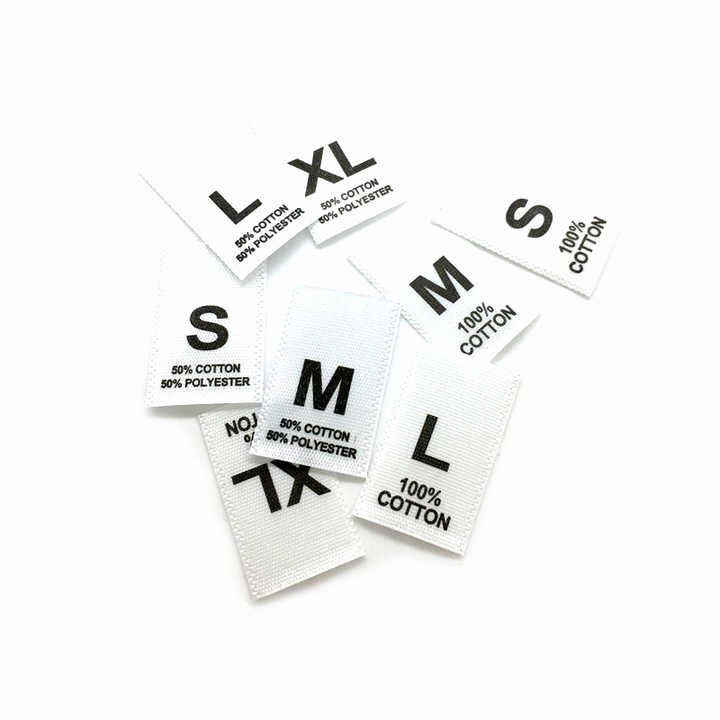
No. It illustrates generic label components only. The actual Arabic content and application require project-specific review.