Article
What should buyers know first?
Short answer: A buyer guide to comparing apparel production capacity through an order profile, material and sample readiness, bottlenecks, change control, and repeat-order records.
Editorial source: Yinshan Fashion’s product-development team. Capacity, timing, and commercial terms are confirmed for each programme.
A monthly piece count is not an answer to “Can this factory handle my order?” until the order itself has been defined. Apparel production capacity is the ability to plan, resource, and control one real programme through materials, sampling, cutting, sewing, finishing, QC, and packing. Construction, materials, colours, size mix, decoration, packing, current schedule, and open changes all affect that answer.
Editorial source: Yinshan Fashion’s product-development team. The guide is designed to improve the buyer’s production conversation; capacity, timing, and commercial terms are confirmed for each programme.
How should buyers define apparel production capacity around the order, not a headline number?
It is tempting to compare factories by asking how many pieces they can produce in a month. That may be a useful starting question, but it is not a decision on its own. One garment can have a simple construction and focused colour range; another can need multiple panels, matching fabric, several decorations, special trims, precise measurements, washes, and retail-specific packing. Treating both as equal units hides the work that determines whether a programme can be controlled.
A more useful definition has three parts. First, can the factory develop and approve the product route? Second, can the right materials, people, equipment, and quality checkpoints be planned at the relevant time? Third, can the factory keep the approved instructions visible through final packing? A buyer does not need a factory to claim unlimited capacity. The buyer needs a credible discussion of the capacity that relates to the actual style.
Capacity is also different from availability. A factory can have skills relevant to a category but have a schedule that needs confirmation for a particular period. Conversely, an open slot has little value if the factory has not yet understood the fabric, construction, or quality controls the style needs. Ask about both fit and timing; then record which parts remain conditional.
Why monthly output figures are incomplete comparisons?
A number without assumptions is difficult to compare. It may refer to a different garment category, an established repeat style, a different material route, or a production period with different priorities. It may also leave out time needed for development, sample comments, material preparation, artwork confirmation, finishing, inspection, or packing. A buyer who compares an unqualified capacity number with a fully specified order can make a false like-for-like comparison.
Instead, request the assumptions behind the answer. Ask what product type the factory is considering, whether the quote assumes a confirmed sample, whether materials and trims are available, which finishing or decoration steps matter, how colours and sizes are divided, and what packing level is included. Do not expect a public production-volume promise. A useful response identifies what the answer depends on and what must be confirmed before a production plan is released.
This protects the factory as well as the buyer. If a buyer has not yet chosen fabric, finalised graphics, closed label artwork, or agreed a measurement specification, an early estimate should be treated as a planning conversation. It becomes more reliable only as the assumptions become controlled. Buyers should be wary of answers that sound precise but do not ask any questions about the order.
What should buyers check about begin with a complete order profile?
The order profile is the information a factory needs to determine whether the production route is workable. It should include the product category, reference sample, tech pack or clear drawings, intended customer, fabric direction, trims, colours, size range, quantity by style and colour, decoration, labels, packaging, target market, sample needs, and required delivery window. A buyer does not need every field perfectly final before the first conversation, but open points should be labelled as open.
The profile should also explain priorities. One buyer may need a particular hand feel and be flexible on fabric composition. Another may need a specific garment finish while keeping decoration simple. A third may need a retail packing standard that changes how the product is folded and counted. These priorities help the factory identify where capacity needs specialist attention and where the buyer can consider alternatives.
Early in the discussion, compare the style with the relevant Yinshan Fashion product directions. The purpose is not to force a catalogue product onto a custom programme. It is to give both teams a shared category language for discussing silhouette, fabric behaviour, construction, decoration, and the likely production controls.
How should buyers check how construction and process change the production route?
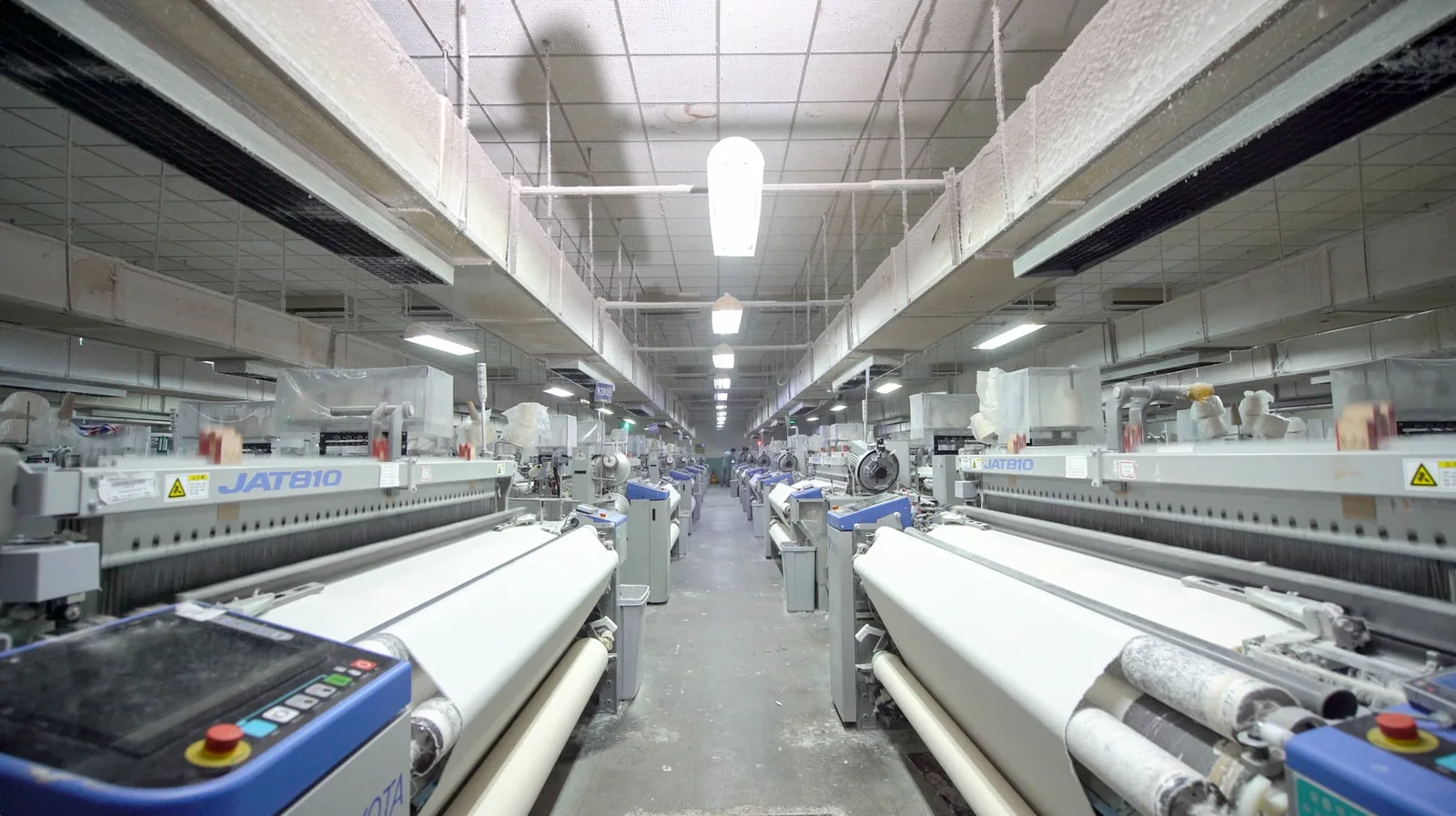
Capacity is created through a sequence of operations, not a single sewing-room number. Pattern preparation, material inspection, cutting, printing, embroidery, sewing, washing or finishing where relevant, pressing, measurement checks, labelling, individual packing, carton packing, and final inspection can all change the route. The mix of those operations depends on the style.
A basic jersey garment, a lined woven dress, a heavy fleece style with decoration, and a stretch activewear set can each place pressure on different steps. The right question is not which one is “easier” in general. Ask which operations are critical for your product, what information those operations need from the approved sample, and where a delay or variation would be noticed first.
Construction details can be decisive. Multiple panels, pockets, collars, bindings, elastic, zippers, contrast inserts, linings, special seams, appliqué, and decorative treatments all create decisions that must be settled before bulk. A factory should be able to describe the route in practical terms, without pretending that every new detail has no effect on planning.
The buyer can make this discussion more useful by identifying which details are non-negotiable and which can be reviewed for feasibility. For example, a brand may be fixed on a garment silhouette and logo placement but open to two fabric directions. Another may be fixed on a particular wash effect but willing to simplify a trim package. This does not ask the factory to redesign the collection. It gives the team a way to focus development effort on the items that actually determine the product and to flag any trade-off before it becomes an urgent production issue.
Where a garment has related styles, do not assume they all follow the same route. A shared fabric can reduce one set of material decisions, while different collars, pockets, decorations, lengths, or packing methods create different operations and QC focus. Keep one collection overview, but retain a clear style-level record so a factory does not plan a complex style from the assumptions of a simpler sibling product.
What should buyers check about look for bottlenecks, not just the size of the production floor?
A bottleneck is the step that limits how smoothly an order can move through the process. It may be a material decision, a specialised operation, a decoration approval, a wash or finish, a quality issue, or a packing requirement. Buyers do not need to diagnose the factory’s internal workflow themselves. They do need to ask how the factory identifies the style-specific step that requires the closest planning.
The answer should relate to the product. If the style depends on a custom print, artwork and placement confirmation may be critical. If it uses complex embroidery, backing, placement, and sample approval may need attention. If it uses special fabric or a wash effect, the material and finished-garment reference may require extra review. If the programme contains many colours and size splits, cutting, shade control, assortment, and packing records may become more important.
Buyers should listen for an explanation of how open points are escalated. A responsible capacity discussion includes a way to flag a material, sample, quality, or packing issue before it becomes a late production surprise. It does not need to reveal every internal planning detail. It should make clear who owns the project conversation and how a buyer receives information when a decision could affect the agreed route.
How should buyers confirm material and trim readiness before treating capacity as available?
Garments cannot move through a reliable production plan if the materials and trims are still uncertain. Fabric availability, colour direction, dyeing or finish route, labels, elastic, hardware, drawcords, artwork, embroidery backing, hangtags, protective packing, and carton marks all need a project-specific status. A factory can begin feasibility work while some points are open, but the buyer should distinguish that from a final release to bulk.
Material readiness does not mean that every buyer must solve every detail alone. It means the factory and buyer should identify what is approved, what has a reference, what is still being developed, and what could change the programme. A similar-looking fabric or trim is not automatically interchangeable. It can change hand feel, fit, sewing behaviour, appearance, cost assumptions, care direction, or the sample route.
This is one reason a buyer should not compare two capacity answers until their order assumptions are aligned. One answer may assume stock material and a focused trim package; another may assume a custom material route with several open components. Neither is automatically wrong, but they describe different production realities.
The buyer should also ask what “ready” means for each component. A fabric may be selected but still need a colour decision. A label may have artwork but no approved placement. A packing direction may state a polybag need but leave barcode, folding, cartons, or assortment instructions open. Turning every component into a simple status—approved, under review, or not yet specified—helps the factory plan honestly and gives the buyer a clear list of the decisions that could affect bulk.
This status view is especially useful before a launch with several moving parts. It lets the buyer distinguish a production constraint from an internal brand decision. If the logo file, care-label content, size ratio, or packout is still being considered internally, the factory can note its dependency without being blamed for a delay it cannot resolve. Clear ownership makes capacity planning less about promises and more about coordinated action.
How should buyers use the sample route to reduce capacity risk?
Sample development is part of capacity control because it establishes the garment and instructions that bulk work must follow. A reference image may be enough to begin a feasibility discussion, but it is not a complete production standard. The sample route can clarify fabric, fit, construction, measurements, decoration, labels, finishing, and packing before the larger commitment begins.
Ask which sample stage is being discussed. A development sample may prove an idea. A fit sample focuses on silhouette and measurements. A pre-production sample can provide a stronger bulk reference when the relevant material and trim route is confirmed. The appropriate sequence depends on the style, product risk, and buyer requirement. The important point is that a buyer should not call an early sample “approved for bulk” without knowing what it represents.
When comments change a pattern, material, trim, artwork, or packing direction, consolidate the final instruction. A production team needs one current version, not an email history with competing decisions. This reduces rework and gives a factory a clearer basis for planning people, operations, and QC checkpoints.
The sample route should make it clear what has been approved at each stage. A garment may look acceptable in a photograph while still needing a physical check for hand feel, stretch, balance, seam appearance, label placement, decoration texture, or the way it behaves after the intended finish. Record the purpose of the review and the result. If an item is approved subject to a later material, colour, or packing confirmation, write that condition into the current record rather than treating it as a final bulk release.
This is where capacity and commercial discipline meet. A buyer may be able to move quickly when the product data is complete, but rushing past unresolved sample points usually transfers risk into bulk. A deliberate approval route can be shorter than a sequence of late corrections because the factory receives the usable production information before it plans the larger order.
How should buyers review production flow and quality checkpoints together?
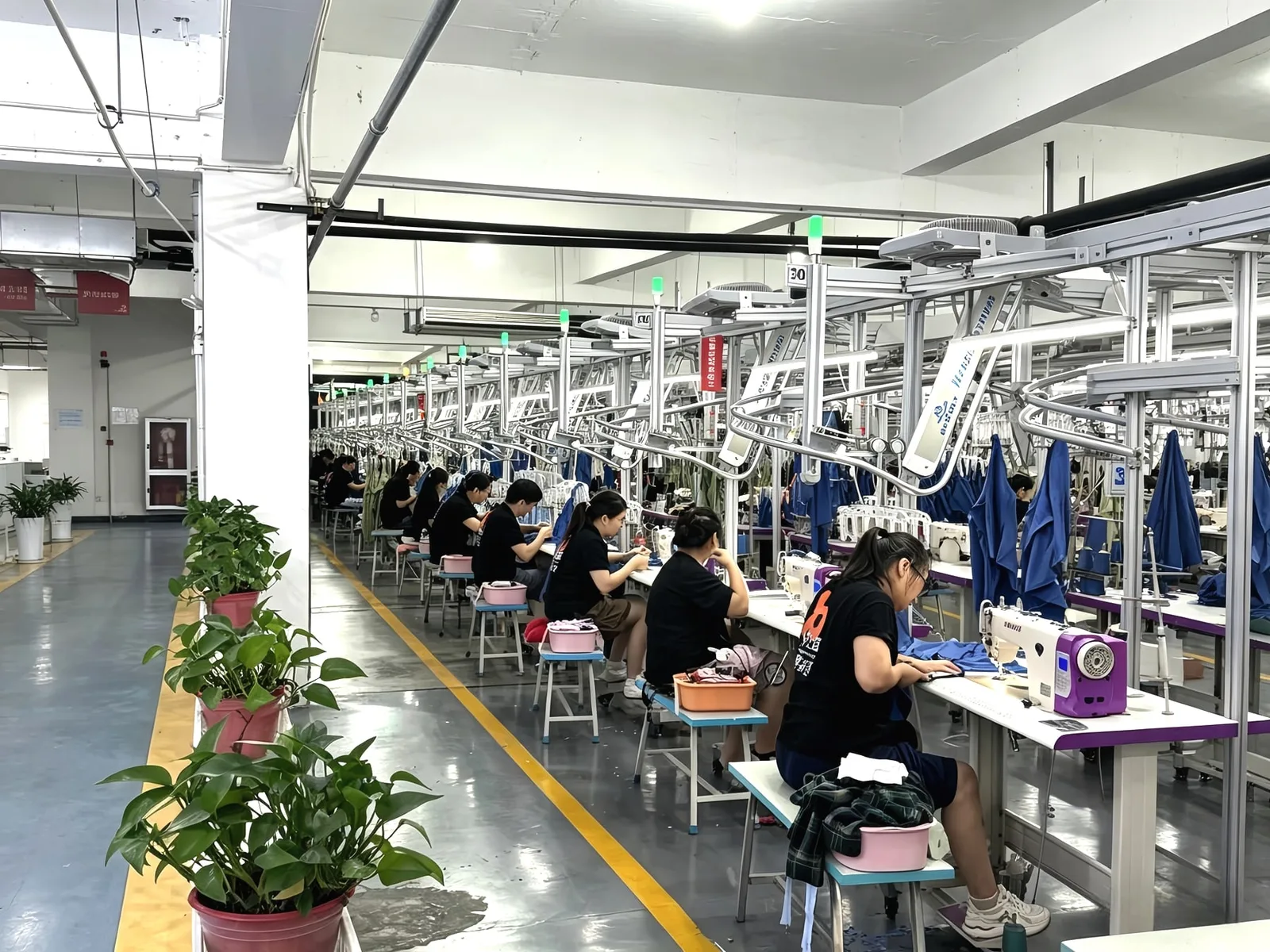
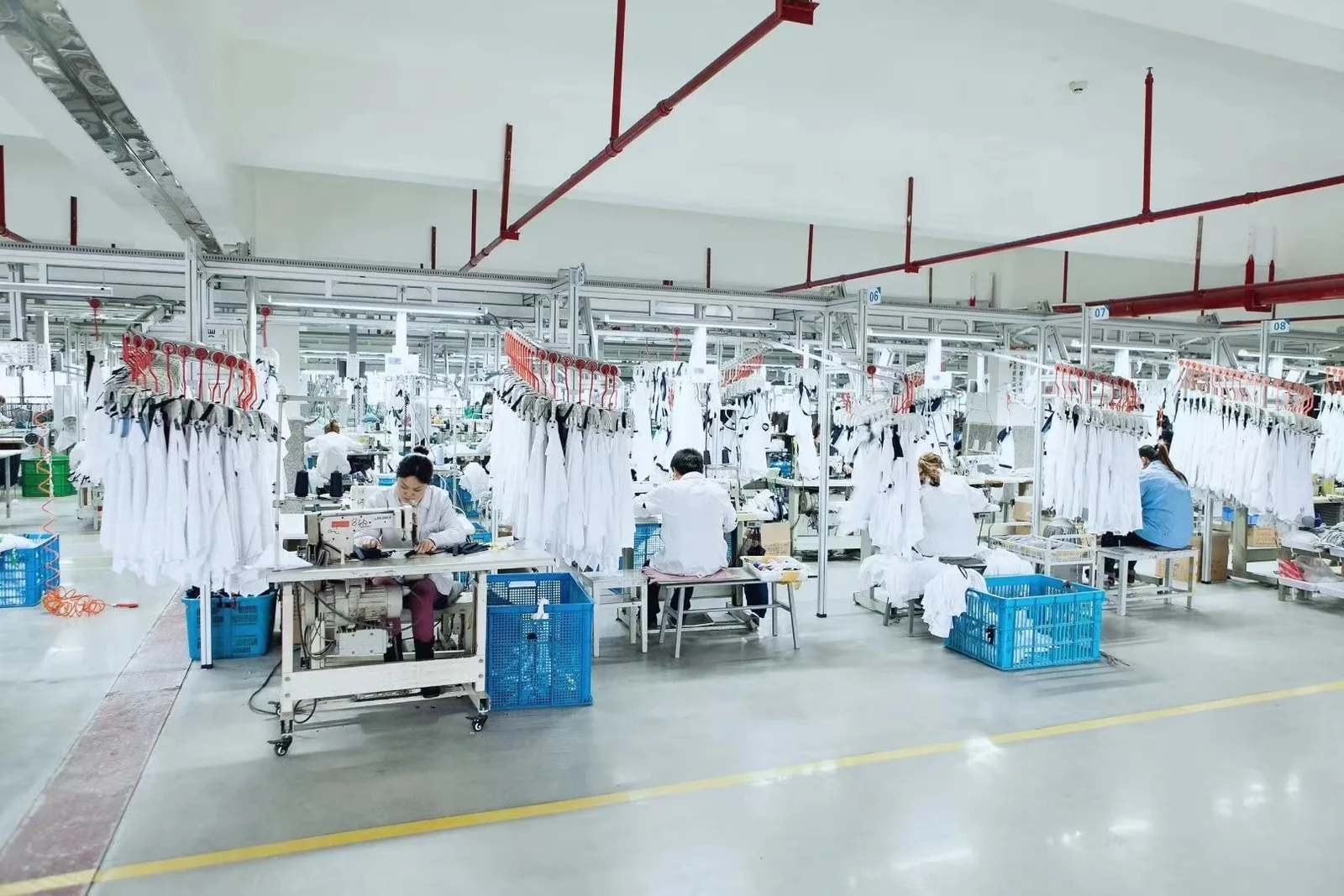
An organised line or hanging workflow can make work-in-progress easier to follow through operations, but it does not replace product instructions. Capacity and quality are connected: if an approved sample, measurement specification, fabric reference, or packing instruction is unclear, a fast-moving order can still produce the wrong result.
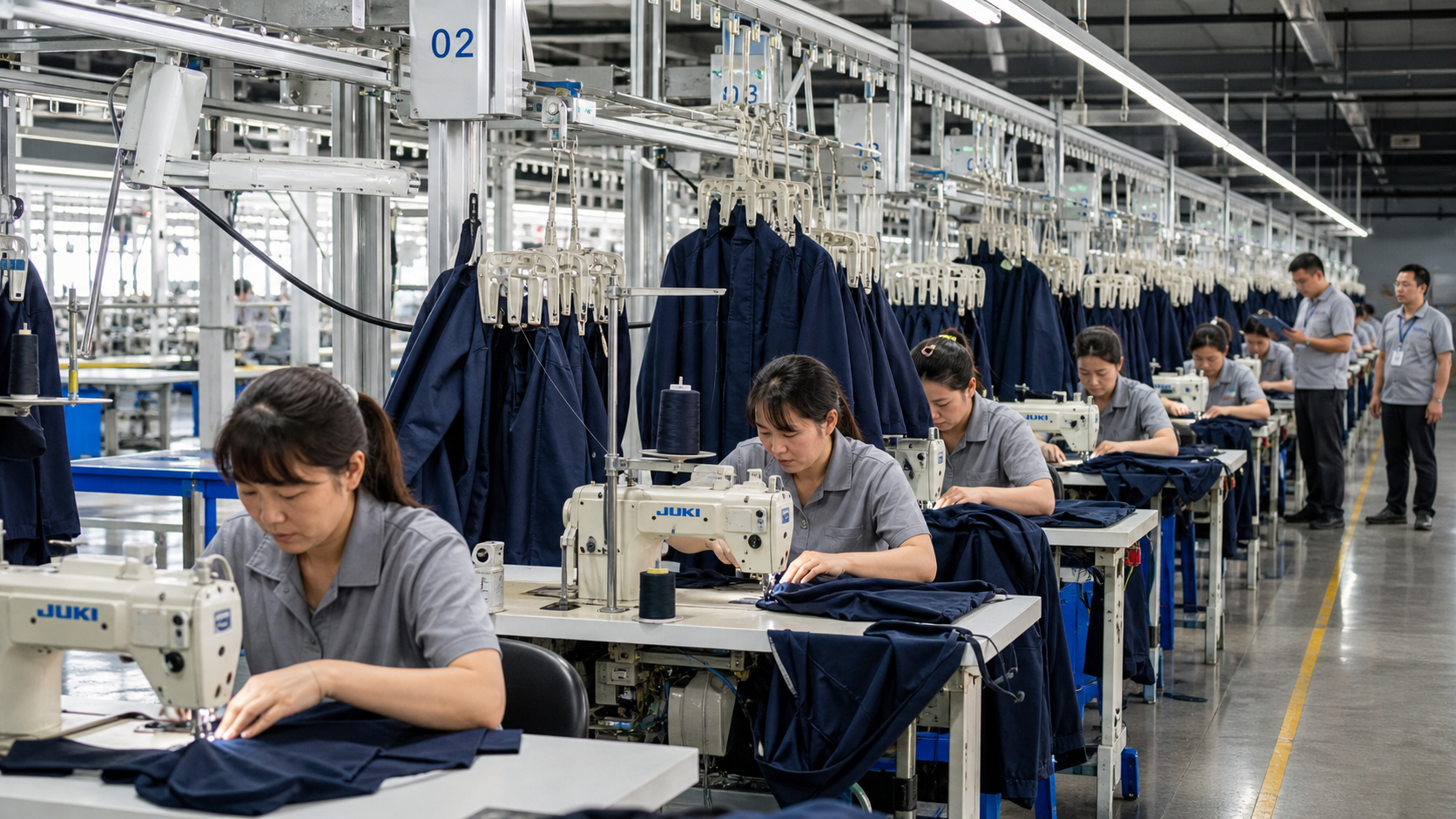
Ask what checks happen before cutting, during production, before finishing, and before packing. The answer should be proportionate to the style’s risks. For example, a graphic garment may need close review of artwork position; a soft loungewear style may need fabric, elastic, and presentation checks; a tailored garment may need fit balance, seam appearance, and component placement reviewed carefully. The exact checks depend on the project, and any buyer-specified testing or market requirements should be confirmed before bulk.
Buyers can review Yinshan Fashion’s manufacturing capability and the broader fashion production process to understand how development, production, QC, packing, and export coordination are intended to connect. Those pages support the capacity conversation; they do not replace a project-specific plan.
For production control, a buyer should ask how the approved reference travels through the project. The physical sample, current specification, material notes, artwork version, label files, and packing instructions need to be available to the people who use them. A process can be organised and still fail if different teams work from different versions. One visible reference pack is more useful than a large volume of scattered messages.
The QC conversation should distinguish prevention from final sorting. Checking a finished garment is important, but it cannot fully recover a fabric, pattern, construction, decoration, or packing decision that was unclear before cutting. Ask which decisions are confirmed early, which points are checked during work, and which appearance or packing points are verified at the end. The answer should focus on the programme’s actual risk rather than a generic assurance that quality is controlled.
How should buyers ask how the factory handles changes and exceptions?
Change is normal in apparel development. A buyer may update a colourway, switch a trim, revise label artwork, add a size, or adjust packing. A factory may need to flag a material or process difference. Capacity risk grows when these changes are treated as small messages rather than as decisions that may affect the production route.
For each change, establish what it affects. Does it apply to all styles or only one? Does it affect fabric, pattern, measurement, decoration, labels, packing, price assumptions, or timing? Does it need a revised sample, material submission, artwork proof, or written approval? A clear answer prevents a late change from being silently interpreted by different teams in different ways.
The buyer should also know how exceptions are recorded. If an alternative is accepted, record the specific item, the reason, the scope, and whether it applies only to the current order or a future repeat. This helps preserve the approved standard and avoids treating a temporary workaround as the normal specification.
Compare capacity evidence, not sales language
The strongest comparison is evidence-based. Put the same order profile in front of each potential factory, then note whether the response asks relevant questions, identifies material or sample dependencies, explains critical operations, names the information needed before bulk, and gives a traceable route for approval and updates. A lower price or a bigger output claim may still be part of the decision, but it should not hide a difference in what each factory has assumed.
Buyers can use a simple comparison sheet. Record product fit, materials, sample route, construction, decoration, size and colour split, packing, project ownership, QC checkpoints, open risks, and the documents needed before bulk. This creates a more useful discussion than asking each factory to promise a broad capacity level with no style context.
A credible apparel production capacity answer states what the factory can assess now, what depends on the project, and which approvals are needed before bulk is planned.
Use the comparison sheet to capture unanswered questions as well as answers. If one factory has identified an open material decision and another simply promises a result without discussing it, the difference is meaningful. It does not automatically make one supplier the right choice, but it tells the buyer which discussion is grounded in the project’s current facts. A buyer can then ask both parties for the same clarification before choosing a route.
The comparison should remain fair. Do not ask a factory to guarantee a schedule or price without a stable brief, and do not interpret a conditional answer as a lack of capability. The useful distinction is whether the factory can identify the variables, explain what evidence is needed, and communicate the next decision in a way that protects the order.
Keep capacity records useful for repeat orders
Repeat orders benefit from retained records, but they should not be treated as automatic copies. Keep the final approved sample reference, fabric and trim direction, measurement specification, artwork, labels, packing standard, QC notes, shipment-related records, and decisions on any exceptions. Then compare a new order with those records before assuming it uses the same route.
A repeat may need another review when materials, colours, quantity split, size range, construction, decoration, target market, packing, or timing change. The buyer should identify what is unchanged, what is revised, and what needs confirmation. This makes the factory’s planning discussion more efficient without implying that fabric availability, schedule, or prior outcomes can be guaranteed.
Capacity records also make it easier to preserve learning from the first order. If a particular measurement, trim, packing detail, or artwork placement needed additional attention, add that point to the repeat-order checklist. A good repeat process uses the earlier record to ask better questions, not merely to reissue an old file.
A well-kept record also supports a clearer conversation when a buyer wants to scale a programme. The buyer can show which styles, materials, and packing routes have already been approved, then isolate the new variables in a proposed expansion. This is more informative than asking a factory to extrapolate from a single piece count. It lets both sides separate the known repeatable elements from the parts that need new development or planning.
What should buyers check about buyer action and factory confirmation checklist?
Before treating a production slot or capacity statement as relevant to your order, use this working checklist:
- Share the current style reference, tech pack or drawings, intended product category, and key fit priorities.
- State fabric, trims, colours, sizes, quantity split, decoration, labels, packing, target market, and required delivery window; mark unknown items clearly.
- Ask which operations, material decisions, and sample approvals are critical for the particular style.
- Confirm the sample stage that will act as the bulk reference and consolidate final comments into one current version.
- Ask what checks happen before cutting, during production, before finishing, and before packing.
- Record the project contact, open points, decision owner, and evidence required to release bulk.
Buyer action: provide the product information and identify what is fixed versus flexible. Factory confirmation: explain the style-specific dependencies, required approvals, key checkpoints, and any conditions that must be resolved before bulk planning.
What should buyers check about next step: prepare a capacity conversation around your real programme?
To discuss a specific garment programme, share your fashion product brief with reference images, tech pack or drawings, product category and construction, fabric and trim direction, colours, size range, quantity split, decoration, labels, packing requirements, sample needs, target market, and requested delivery window. Yinshan Fashion can then review the practical development and production variables that should be confirmed before bulk planning. An apparel production capacity discussion is most useful when those project inputs are specific enough to identify the material, sample, process, and packing dependencies.
Order-specific planning
Three questions behind a meaningful capacity conversation
A capacity answer becomes useful when a factory can see the product, process, materials, sample status, quality priorities, packing, and timing behind the question. A monthly piece count alone leaves too much of that work hidden.
Describe the actual order
Share the product, construction, materials, colourways, size split, decoration, labels, packing, and target timing before comparing any production answer.
Find the critical operation
The limiting step may be a material, special construction, print, wash, finish, QC requirement, or packing detail—not the floor area or an average monthly total.
Keep changes visible
Capacity can change when a sample, material, graphic, label, or pack changes. Record the owner, scope, and evidence instead of treating a late message as a minor detail.
Apparel capacity: buyer action and factory confirmation
Use the same questions for every factory comparison. They do not create a public capacity promise; they give both sides a like-for-like order profile to assess.
| Decision area | What the buyer should prepare | What to ask the factory |
|---|---|---|
| Order profile | Send the style, construction, materials, colours, sizes, quantity split, decoration, labels, packing, market, and requested delivery window. | Which assumptions are being used to assess this order, and which input is not yet defined well enough for a planning answer? |
| Sample and material readiness | Identify the sample stage, approved reference, outstanding comments, fabric, trims, artwork, labels, and packing status. | Which material or sample dependency changes when this programme can move into a reliable production plan? |
| Critical operations | Explain the construction, decoration, wash, finish, quality, and packing details that make the style different from a basic unit count. | Which operation or decision is likely to control flow for this style, and how will that risk be reviewed? |
| Change control | Name the owner and decision route for material substitutions, pattern changes, artwork revisions, labels, packing, or requested schedule changes. | Which change would affect materials, production sequence, quality checks, or packing and need a revised plan? |
| Repeat order | Keep the final order profile, material and sample records, packing standard, QC notes, and exceptions with the product file. | What is unchanged on the next order, and which variable needs a fresh confirmation before capacity is discussed? |
Continue the production conversation
Apparel production capacity: what buyers should compare
| Comparison area | Buyer should provide or ask | Why it matters | Evidence to retain |
|---|---|---|---|
| Order profile | Style, category, construction, materials, colours, sizes, quantity split, decoration, packing, timing | A capacity answer without product assumptions is not comparable | Current brief or tech pack and open-item list |
| Sample route | Sample stage, approved reference, outstanding comments | Production planning must follow a current style standard | Sample record and consolidated comment closure |
| Material readiness | Fabric, colour, trims, labels, artwork, and packing status | Open components can change the route or schedule | Material and trim references with approval status |
| Critical operations | Style-specific construction, decoration, finishing, QC, and packing questions | The bottleneck is rarely the same for every garment | Factory response and project risk notes |
| Change control | Scope, owner, evidence, and approval for changes or substitutions | A late change can affect multiple production steps | Versioned decision record |
| Repeat-order record | What remains unchanged and what needs reconfirmation | A repeat should use evidence, not memory | Final specification, QC, packing, and exception records |
Buyer FAQs
Is a factory’s monthly output a reliable capacity measure?
Not by itself. It can be a starting reference, but a useful assessment depends on the product, material route, construction, decoration, colour and size split, quality requirements, packing, current schedule, and the approvals still open. Compare capacity only against the same order assumptions.
What information should a buyer share before asking about capacity?
Share the style reference or tech pack, product category, fabric and trim direction, colours, size range, quantity by style and colour, decoration, labels, packing, target market, sample needs, and target delivery window. Mark any unknowns so the factory can explain what still needs confirmation.
Can a factory discuss capacity before the sample is approved?
Yes, a factory can discuss feasibility and likely dependencies early. Treat that as a conditional planning conversation. Before bulk is released, the relevant sample, material, measurement, construction, decoration, label, and packing decisions should be aligned with the production route.
What is a production bottleneck in apparel manufacturing?
A bottleneck is the operation or decision that most limits the smooth movement of a particular order. It can be a material, special construction, decoration, wash or finish, quality issue, or packing requirement. Ask how the style-specific risk will be identified and managed.
How should a buyer compare capacity between two factories?
Give both factories the same order profile and compare the assumptions, questions, sample route, material dependencies, production controls, open risks, and approval records. Do not compare headline numbers without knowing what each one includes.